Inside Oz Pearlman’s ‘Interrupted Mind‑Reading’: How One White House Shock Turned The World’s Top‑Rated Mentalists Into Crisis Performers Overnight
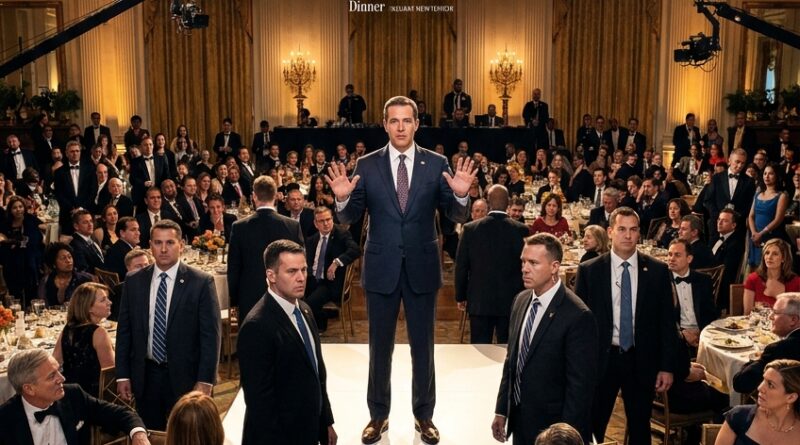
It is frustrating when you tune in for a big, polished performance and instead get confusion, tension, and a room that suddenly feels unsafe. That is exactly why the Oz Pearlman White House Correspondents Dinner mentalist incident has hit such a nerve. Fans expected slick mind-reading. Event planners expected a reliable pro in a high-pressure room. What people saw instead was something more revealing. A top mentalist trying to hold attention and calm while the mood shifted fast because of a security scare. That moment matters more than any card reveal or prediction ever could. When a live show goes sideways, the real test is not how amazing the trick looks. It is whether the performer can read the crowd, avoid making things worse, and help the room settle. Last night in Washington turned a celebrity performance into a stress test. And for anyone booking live talent, that is the part worth paying attention to.
⚡ In a Hurry? Key Takeaways
- Oz Pearlman’s White House Correspondents Dinner moment became less about tricks and more about how a performer handles a room under stress.
- If you book a mentalist, ask about crisis experience, crowd control style, and how they work with venue security when a show is interrupted.
- The safest and smartest performers know when to pause, simplify, reassure the audience, and let security lead.
Why this incident got people talking so fast
The White House Correspondents Dinner is not a normal gig. It is packed with political figures, media personalities, security layers, and a crowd that can flip emotionally in seconds. One minute people are there for laughs and spectacle. The next, all eyes are scanning the room.
That is what makes the Oz Pearlman White House Correspondents Dinner mentalist incident so important. It was not just an awkward interruption. It was a public example of what happens when entertainment collides with real-world tension.
Most coverage has focused on the political drama around the evening. Fair enough. That is the clicky part. But if you care about live events, performance, or even just basic crowd behavior, the more useful question is this. What should a great mentalist do when the room stops being a show and starts feeling like a problem?
What likely changed in the room
In any high-profile setting, a security disruption changes audience psychology almost instantly. People stop following the performer and start looking for signals from staff, security, and the faces around them.
That means a mentalist loses the usual tools very quickly. Misdirection becomes less useful. Playfulness can feel tone-deaf. Big reactions can look risky. Even a simple line meant to relax the room can land badly if people are worried.
So the performer has a new job. Not entertainer first. Stabilizer first.
The hidden skill most fans never rate
People love to rank mentalists by TV appearances, sold-out tours, viral clips, or impossible reveals. But those things only measure performance under controlled conditions. A real pro is also being judged on softer skills that suddenly become very visible in a crisis.
Can they lower their own energy without losing control of the room? Can they stop talking at the right moment? Can they avoid stepping on security protocol? Can they keep people from panicking by not feeding the tension?
Those are not flashy talents. They are important ones.
What professionalism looks like when a show derails
We do not need to turn a disrupted performance into a myth. This is not about calling anyone superhuman. It is about recognizing what good live-event instincts look like.
1. Reading the audience fast
Mentalists make a living reading people, but crisis reading is different from stage reading. It is less about body language for a routine and more about broad mood. Are people confused, nervous, amused, annoyed, or waiting for instruction?
The best performers adjust in seconds. They stop trying to win the room and start trying to steady it.
2. Not fighting the interruption
This one matters a lot. A weaker act may try to push through, make a joke, or force the crowd back into “show mode.” That can backfire. If security is active, the performer should not compete with that energy.
Knowing when to pause is part of the job.
3. Using calm, plain language
In a tense room, fancy patter and big theatrical lines stop helping. Short, clear language works better. A calm tone works better. People borrow emotional cues from whoever seems most in control.
That is true on stage. It is also true in offices, airplanes, and conference halls.
4. Letting venue and security staff lead
A star performer may be the visible person in the room, but they should not become the authority figure during a security event unless asked. Good pros know where their role ends.
That restraint is a mark of experience, not weakness.
Why this matters for fans, not just event planners
If you are a fan, it is easy to judge a mentalist by whether the reveal landed. But live performance is bigger than the trick. The interrupted White House set gave viewers a rare look at the part of the job usually hidden behind applause.
It showed that “world’s highest rated” should not only mean clever methods or celebrity endorsements. It should also mean composure, timing, judgment, and respect for the room.
That is a healthier way to talk about performers after a public incident. It moves the conversation away from gossip and toward actual skill.
What event planners should ask before hiring a mentalist
If there is one practical lesson here, it is this. Do not just ask for a demo reel. Ask what happens when things go wrong.
Questions worth asking
Ask whether the performer has handled interrupted shows before. Ask how they coordinate with venue staff. Ask whether they are comfortable cutting a bit short or stopping entirely if the room changes. Ask how they work in high-security or high-profile environments.
These are not rude questions. They are responsible ones.
Watch for the red flags
Be careful with anyone who answers like every situation can be solved with charisma. That is not how live risk works. You want someone who respects chain of command, understands audience behavior, and does not need constant spotlight control.
The best answer is usually calm and boring. That is good news.
What performers can learn from the Washington moment
For working magicians and mentalists, this incident is a reminder that stagecraft and safety are linked. Your job is not just to create wonder. It is also to manage energy in the room.
That means building flexible sets. It means having clean stopping points. It means knowing how to reset if attention breaks. It means avoiding routines that could be misread in a tense environment.
And yes, it means understanding that sometimes the best performance choice is to do less.
So, was this a failure or proof of professionalism?
Probably neither in the dramatic way internet debates like to frame things. A security scare interrupts the normal rules. Once that happens, the performance is no longer being judged on entertainment alone.
The better way to read the Oz Pearlman White House Correspondents Dinner mentalist incident is as a case study. It shows how thin the line is between showmanship and situational awareness. It shows that the rarest skill in live entertainment may not be fooling people. It may be helping them feel steady when the room gets weird.
At a Glance: Comparison
| Feature/Aspect | Details | Verdict |
|---|---|---|
| Entertainment value | Audience came for mind-reading, but the interruption shifted attention away from the act itself. | Secondary once the room felt unsettled. |
| Crisis composure | The key skill became staying calm, reading the crowd, and not adding to the tension. | More important than any individual trick. |
| Booking takeaway | Planners should vet performers for flexibility, safety awareness, and coordination with staff. | A must for high-profile events. |
Conclusion
The useful lesson here is not whether one interrupted set was still “amazing” enough. It is that live talent should be judged by more than applause clips and social media hype. This helps the community today because every conversation about mentalists is suddenly tied to what happened in Washington last night, yet most headlines only chase the Trump drama and ignore the professional skills on display when a show derails. If we talk more about safety, crowd psychology, and real-world professionalism, fans get a smarter way to judge performers, event planners get better hiring questions, and working mentalists get a clearer picture of what excellence really looks like under pressure. That is a far more useful standard than any flashy ranking.