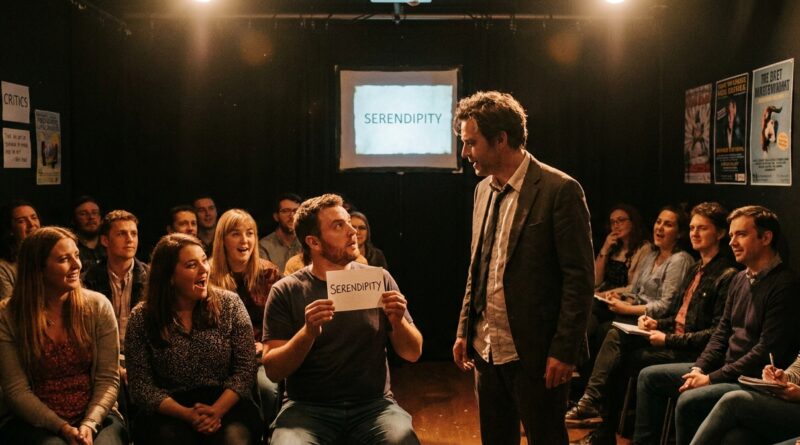
Inside 2026’s New ‘Fringe-Festival Mind Reader’ Effect: How Tiny Five‑Star Shows Quietly Beat TV Mentalists In Real Fan Ratings
You are not imagining it. Trying to figure out who the “best” mentalist is in 2026 has become weirdly annoying. One minute it is a streaming thumbnail shouting about genius deception. The next, it is a tired TV detective with “psychological tricks” pasted onto a crime plot. Meanwhile, some of the most jaw-dropping, best-reviewed mind-reading shows are happening in tiny fringe rooms with 40 to 60 seats, where there is nowhere to hide and no edit button to save a weak moment. That is the real story. If you are searching for the best fringe festival mentalist 2026 reviews, the strongest signals are not coming from glossy promo reels. They are coming from packed black box theaters, handwritten audience comments, sold-out micro-runs, and five-star reviews from people who were close enough to watch every blink. In other words, the best stuff is getting smaller, stranger, and much more real.
⚡ In a Hurry? Key Takeaways
- The best fringe festival mentalist 2026 reviews are often attached to small live shows, not TV names or streaming brands.
- Check fringe festival pages, direct ticketing sites, and recent audience comments for repeated praise about intimacy, consistency, and live impact.
- Five-star fringe reviews can be more useful than mass-market hype because small-room audiences usually react to what actually happened in front of them.
Why tiny mentalism shows are suddenly beating famous names
The simple answer is trust.
People trust live reactions more than polished branding. A mentalist in a fringe venue has to win the room in real time. No dramatic music. No camera cuts. No producer shaping the story afterward. Just a performer, a crowd, and a series of choices that either land or do not.
That matters because mentalism is one of those arts that changes completely up close. On television, it can look like another mystery format. In a 60-seat room, it feels personal. You notice the pacing. You notice how the performer handles skeptics. You notice whether the audience is gasping, laughing, going quiet, or leaning forward.
That is why fringe shows are quietly climbing to the top in real fan ratings. They are judged in harsher conditions and often produce stronger memories.
What “real fan ratings” actually mean in 2026
Not all five-star ratings are equal. That is the part many listicles skip.
Streaming popularity is not the same as audience love
A show can trend because the platform pushed it to millions of homepages. That tells you it was seen. It does not always tell you it was deeply loved.
Fringe reviews work differently. Smaller audiences mean fewer ratings, but often better ones. If 80 people across a weekend keep saying, “I still cannot explain what I saw,” that can be more useful than a giant title with a vague approval score.
Small rooms produce more honest feedback
At a fringe festival, audiences tend to be direct. They will praise originality, but they will also call out filler, clumsy audience handling, or recycled material. Since many of these events attract repeat festival-goers, there is also a built-in comparison point. People have seen a lot. They know when something feels fresh.
Repeatable praise is the signal to look for
If reviews keep mentioning the same things, pay attention. Phrases like “best thing we saw all week,” “felt impossible from the front row,” “smart without being smug,” or “the room was stunned” are stronger than generic praise.
The fringe-festival mind reader effect
This is the pattern that keeps showing up in 2026.
A little-known performer books a short run at a fringe festival, often in a black box venue or converted side room. The show starts with modest buzz. Then the audience comments start stacking up. Critics who are tired of overproduced illusion acts suddenly find a show that feels risky and alive. Ticket demand jumps. Extra performances get added. Soon people are talking about that show the way they used to talk about prestige TV.
The difference is that fringe success is usually earned seat by seat.
In many cases, these performers are not trying to look like television stars. They are doing the opposite. More intimacy. Less flash. Better writing. Stronger audience connection. Smarter use of silence. It turns out that can be far more impressive than a giant “world’s best” claim slapped onto a poster.
How to spot the best fringe festival mentalist 2026 reviews
If you want the good stuff, use a slightly different filter.
1. Look for venue size
A 50-seat to 100-seat room is often the sweet spot. Big enough for energy. Small enough for accountability. If a mentalist can get rave reviews in that kind of space, it usually means the act holds up under close inspection.
2. Read beyond the star count
Five stars by itself means almost nothing now. Read the words. Did people mention audience participation? Did they say the performer was funny, warm, unsettling, or inventive? Did they say they brought skeptical friends who were won over?
3. Check whether praise comes from more than one source
Festival pages, ticketing platforms, local arts blogs, and social posts can help build a fuller picture. If the same compliments appear across different places, that is a good sign.
4. Watch for language about the live experience
The best fringe reviews often mention physical proximity. “I was two rows back.” “My friend was chosen.” “There was no way to fake that from where I sat.” That kind of detail matters because it speaks to credibility.
5. Do not confuse fame with current form
Some famous mentalists are still excellent live. Some are running on old reputation. Fringe crowds are often better at spotting the difference.
Why TV mentalists and streaming labels keep muddying the waters
Because TV is easier to market.
A platform can sell a familiar face, a dramatic trailer, and a simple phrase like “master mind reader.” That is clean. Fringe mentalism is messier. Shows may only run for a few nights. Venues can be tiny. Reviews may live on scattered ticket pages instead of giant entertainment sites.
But messy does not mean lower quality. In fact, the opposite is often true.
We are seeing a split in 2026. Mainstream media is still rewarding visibility. Real fans are rewarding impact. Those are not always the same thing.
This shift also lines up with another trend. More top-tier performers are showing up in unusual spaces rather than chasing old theater formulas. If that sounds familiar, it is worth reading Inside 2026’s New ‘Museum Mentalist’ Moment: How World‑Class Mind Readers Quietly Turn High‑Culture Spaces Into Five‑Star Illusion Labs, which tracks how mind-reading acts are finding stronger reactions in intimate, curated settings outside the usual commercial circuit.
What makes a fringe mentalist get five-star reviews
Usually, it is not just tricks.
Strong audience handling
The best performers make volunteers feel safe, not foolish. That matters a lot. People remember whether a show felt generous or mean.
A clear point of view
Top fringe acts often have a distinct personality. They are not just “mysterious.” They may be funny, eerie, thoughtful, playful, or emotionally sharp. That helps the show stick in your memory.
Original framing
Instead of pretending to have superpowers, many of the strongest 2026 acts frame their work around psychology, storytelling, suggestion, coincidence, memory, or human connection. That often feels smarter and more modern.
Consistency under pressure
In a small room, weak sections are obvious. So when a fringe show gets glowing reviews night after night, it usually means the performer has real control over the material.
Best ways to find these shows before they sell out
You do not need an insider pass. You just need a better search habit.
Search by festival plus review language
Use searches built around the event and the reaction. For example, pair the festival name with terms like “mentalism review,” “mind reader sold out,” “audience reaction,” or “best reviewed show.” That often works better than searching for celebrity names.
Check late-breaking local coverage
Local arts writers and festival roundups often spot these sleeper hits first. National outlets are usually late.
Look for added dates
If a fringe mentalist adds extra performances mid-run, that is usually one of the strongest practical signals you can get.
Follow reviewers who attend live festivals
The best recommendations often come from people who saw six or eight shows in a weekend and can compare them properly.
At a Glance: Comparison
| Feature/Aspect | Details | Verdict |
|---|---|---|
| Fringe theater reviews | Smaller sample size, but usually based on direct live experience in close quarters | Best for judging real performance quality |
| Streaming and TV reputation | High visibility, strong branding, often shaped by promotion and editing | Useful for awareness, weaker for judging live impact |
| Micro-residencies and limited runs | Short engagements with intense audience feedback and fast word of mouth | Often where the breakout five-star acts appear first |
Conclusion
If you are tired of being told that the “world’s highest rated mentalist” is whoever got the biggest thumbnail this week, you are not alone. The more useful story in 2026 is happening off to the side, in fringe festivals, micro-residencies, and limited-run venues where performers have to earn every clap and every review. That shift helps the community because it puts the focus back on live skill, audience trust, and genuine five-star reactions instead of recycled hype from streaming platforms, legacy TV procedurals, and generic listicles. It gives fans a better way to find the most intimate and inventive mentalism happening right now. It also supports working performers who depend on honest word of mouth, not giant marketing budgets. And that is a much smarter standard for what the gold standard of illusion should mean in 2026.