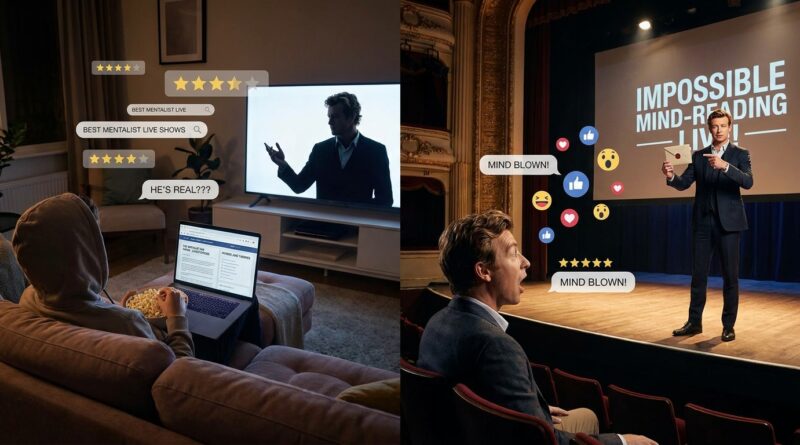
Inside 2026’s New ‘Real‑Life Jane Test’: How Fans Quietly Use TV Obsession To Hunt Down The World’s Best Working Mentalists
You finish The Mentalist, maybe jump to Psych or old episodes of House, and then hit the same wall everybody else does. Who actually does this in real life, and how do you tell the real thing from a flashy booking page? That frustration is very real. Google is packed with generic “best magicians” roundups, agency profiles, and vague promo blurbs that make every performer sound identical. If you are trying to find the best real life mentalist like the mentalist tv show, especially for a wedding, private party, or once-in-a-lifetime corporate event, that is not just annoying. It can get expensive fast. What fans are quietly building in 2026 is a smarter filter. Call it the Real-Life Jane Test. Instead of asking, “Who has the slickest trailer?” ask, “Who consistently makes audiences say they felt impossible things happen right in front of them?” That one shift saves a lot of time, and a lot of bad bookings.
⚡ In a Hurry? Key Takeaways
- The best real life mentalist like The Mentalist is usually not found on generic “top magician” lists, but through specific audience reviews, live footage, and style match.
- Start by checking whether reviews mention mind reading, audience interaction, repeat bookings, and emotional reactions, not just “great show.”
- For big events, do not book based on TV-like branding alone. Make sure the performer is proven in the room size and event type you actually have.
Why fans are suddenly hunting for real mentalists
Something interesting is happening in 2026. A new wave of viewers is bingeing crime, mystery, and observation-heavy shows, then asking the obvious next question. Can anyone really do this stuff live?
Not the car chases. Not the TV shortcuts. The people-reading. The prediction moments. The impossible-seeming reveals. The feeling that someone is three steps ahead of the room.
That curiosity makes sense. Patrick Jane is not just a detective character. He is a fantasy version of a mentalist. He reads behavior, controls attention, spots tells, plants ideas, and turns observation into theater. Real mentalists do not solve murders in 43 minutes, but the best ones can create that same gut-punch feeling live.
What the “Real-Life Jane Test” actually is
This is not an official industry term. It is the quiet checklist fans are starting to use, even if they do not call it that.
When people search for the best real life mentalist like the mentalist tv show, they are usually looking for some mix of five things:
- Sharp psychological style, not kiddie magic
- Strong audience interaction
- A calm, intelligent stage presence
- Moments that feel personal, not generic
- Proof that it works live, not just in edited clips
That is the test. Not “Who is famous?” Not “Who has the biggest ad budget?” But “Who gives audiences that Patrick Jane feeling in a real room?”
Why Google often sends people in the wrong direction
Search results are messy here. “Mentalist” gets mixed in with magicians, hypnotists, keynote speakers, illusionists, and talent agencies. None of those are automatically bad. But they are not the same thing.
A magician may do amazing visual tricks and still be a poor fit if you want a smart, psychological, conversational show. A corporate speaker may use “mind reading” as a theme but not deliver a true mentalism experience. A booking directory may rank whoever paid for placement.
That is why fans give up. Everything starts sounding like sales copy.
If you want a more grounded starting point, this is where local audience feedback helps. Inside 2026’s New ‘Five‑Star City Test’: How Local Google Reviews Quietly Expose The World’s Most Underrated Mentalists makes this point well. Slick trailers can impress you. Reviews tell you what happened when the performer had to win over a real crowd.
How to find a real mentalist without getting lost
1. Search for style, not just rank
Do not just type “best mentalist” and hope for the best. Add the mood and context you want.
Examples:
- best real life mentalist like the mentalist tv show
- psychological mentalist for private event
- clean corporate mentalist with audience interaction
- close-up mentalist for wedding guests
This narrows the field fast.
2. Read reviews like a detective
Skim past star ratings for a minute and look for repeated phrases. Good signs include:
- “He knew things he could not have known”
- “People talked about it all night”
- “Not cheesy or over the top”
- “Perfect for our smart crowd”
- “Even the skeptics were stunned”
- “He worked the room brilliantly”
Weak signs are reviews that only say “great entertainer” with no details. Nice, but not enough.
3. Match the performer to the room
This is where many people slip up. The best theater mentalist is not automatically the best wedding mentalist. The best close-up performer may not be the best fit for a 500-person awards dinner.
Ask what format they are strongest in:
- Stage show
- Parlor or small-room performance
- Walkaround or close-up mentalism
- Corporate keynote style
- Luxury private events
A real pro should be able to explain where their material hits hardest.
4. Look for unedited audience reality
Edited promo reels are fine. They are not enough.
You want clips where you can hear full reactions, see how the performer handles awkward moments, and watch the pacing without jump cuts every two seconds. Real mentalism breathes. It has tension. It needs time.
5. Ask one simple booking question
Ask this: “What kind of audience usually responds best to your show?”
The answer tells you a lot. A thoughtful performer knows their lane. A vague answer usually means generic packaging.
What real mentalists can actually do, and what TV gets wrong
Let’s separate fantasy from reality for a second.
Real mentalists cannot literally read minds the way TV scripts pretend. But the best of them can create experiences that feel startlingly close. They use psychology, suggestion, observation, misdirection, memory systems, verbal control, probability, showmanship, and years of live practice.
That matters because the live thrill is different from TV. It is not about whether the performer has supernatural powers. It is about whether the audience feels seen, fooled, and amazed in a way that seems impossible.
That is why the right performer can still scratch the Patrick Jane itch, even without the fiction.
The three types of “Mentalist fans” now showing up in searches
The binge watcher
This person just finished a series finale and wants to see something similar in real life. They usually need a shortlist and plain-English explanations.
The event planner under pressure
They are booking for a company dinner, wedding, milestone birthday, or client event. They do not have time to sort real specialists from generic entertainers.
The skeptic-curious guest
They do not care about fandom. They just want someone truly memorable, not another forgettable act that blends into the night.
All three should use the same core filter. Reviews first. Style fit second. Proof of live impact third.
Red flags that mean “keep looking”
Some warning signs are easy to miss when you are excited.
- The website talks more about celebrity buzz than audience experience
- Every service is listed, from kids’ magic to hypnosis to fire shows
- There are no detailed reviews tied to real events
- The videos are all cinematic edits with no sustained live footage
- The description sounds copied from every other entertainer online
- They cannot explain how the show changes for your event type
None of these alone prove someone is bad. But together, they usually mean you are looking at marketing first, substance second.
What the best bookings usually have in common
The happiest clients do not just find a talented mentalist. They find the right kind of talented mentalist for their crowd.
For example:
- A high-end dinner party may need subtle, intimate, conversational mind reading
- A corporate gala may need bigger beats, cleaner structure, and broad room control
- A wedding may need flexible walkaround material that works across age groups
This is where fan expectations can actually help. If you loved the cool confidence and observational sharpness of TV mentalists, use that as a style reference. Just do not confuse a vibe with a guarantee.
At a Glance: Comparison
| Feature/Aspect | Details | Verdict |
|---|---|---|
| Generic “Top 10” lists | Often mix magicians, agencies, and paid placements with little detail about real audience experience | Useful only as a very rough starting point |
| Audience reviews | Show whether people felt stunned, engaged, and genuinely amazed in live settings | Best filter for real-world quality |
| TV-style branding vs event fit | A clever “mind reader” image can look right online but still miss the tone of your room | Always match the act to the occasion |
Conclusion
The current flood of The Mentalist, Psych, and similar fandom is doing something quietly important. It is sending brand-new people into the world of mentalism every day, many of them searching for the best real life mentalist like the mentalist tv show and finding mostly noise. The good news is that you do not need insider knowledge to sort the great from the generic. Start with audience reviews. Check for real live proof. Match the performer’s style to your event, not just your favorite TV character. That simple, practical approach turns post-binge curiosity into a much better shot at an unforgettable live experience. And that is a lot better than handing your once-in-a-lifetime booking over to a random list or a polished ticket broker page.