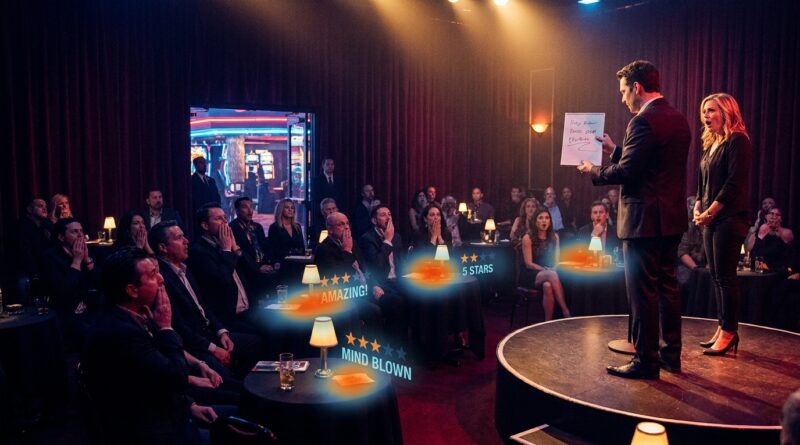
Inside 2026’s New ‘Residency Reality Test’: How Live Review Surges Quietly Re‑Rank Vegas’s Highest‑Rated Mentalists
Every Vegas mentalist seems to be “the best,” “the highest rated,” or “the one you cannot miss.” That sounds helpful until you actually try to book tickets. Then it all blurs together. Five-star reviews pile up, posters get louder, and suddenly you are supposed to tell the difference between real audience heat and polished marketing. That is frustrating, especially if you are planning a trip and do not want to burn a premium night in Vegas on a show that only looks great online.
What is quietly changing in 2026 is this. Residency runs are becoming the real test. Not the TV special. Not the one-night tour stop. A Vegas residency puts a mentalist under live-review pressure week after week. If audience reaction jumps fast and stays high during that stretch, that is often the clearest signal you can get when searching for the best rated mentalist show in las vegas 2026. The trick is knowing what kind of review movement matters, and what is just noise.
⚡ In a Hurry? Key Takeaways
- The best signal in 2026 is not old star averages. It is a recent surge of specific, repeated audience praise during a Vegas residency.
- Check for short bursts of detailed reviews mentioning pacing, volunteer handling, new material, and strong endings. Those clues usually beat generic “amazing show” comments.
- Do not book from billboards alone. A long residency can expose weak acts fast, which makes Vegas one of the fairest places to judge real consistency.
Why Vegas ratings feel less useful than they used to
If you have looked up a few mentalist shows lately, you have probably seen the same pattern. Big star numbers. Glowing one-line reviews. Claims that sound almost copied and pasted from one listing to the next.
The problem is not that all those reviews are fake. It is that average ratings flatten everything. A show that was hot 18 months ago can still coast on old praise. A performer who has changed the structure of the act in the last six weeks may be delivering something much stronger, but the score alone will not tell you that.
That is where the 2026 “residency reality test” comes in. It is less about the total star count and more about whether live feedback suddenly gets sharper, more detailed, and more excited during an active Vegas run.
What the “Residency Reality Test” actually means
A residency is a grind, in the best possible way. The room is different every night. Tourists show up tired, skeptical, overbooked, half-distracted, and hard to impress. If a mentalist can consistently win that crowd, it says a lot.
Think of it like a restaurant on the Strip. One brilliant opening night is nice. Delivering every night for months is the real proof.
What counts as a meaningful review surge
Not every bump matters. A real signal usually looks like this.
- A cluster of fresh reviews in a short window, not spread thinly over a year.
- Specific comments, not generic praise.
- Repeated mentions of the same strengths from different audience members.
- References to moments inside the show, especially newer bits, stronger endings, or better crowd work.
If ten people in two weeks all say some version of “the last 20 minutes were unbelievable” or “he made audience volunteers feel safe and funny instead of awkward,” pay attention. That is usually a live-performance shift, not just marketing momentum.
Why residencies re-rank mentalists more honestly than old “best of” lists
Legacy rankings tend to reward fame. Residencies reward stamina. That is a big difference.
A famous mentalist can sell tickets off name recognition alone. But if the pacing drags, if the audience interaction feels forced, or if the act relies too much on old TV polish, the reviews start to cool. Quietly at first, then faster.
On the other hand, a performer without the biggest billboard can climb quickly if people keep leaving the theater saying the same thing. “That was smarter than I expected.” “That felt personal.” “The room went crazy at the end.”
If you want a broader version of this idea beyond Vegas, the piece Inside 2026’s New ‘Standing Ovation Map’: How Real‑World City‑By‑City Crowd Data Quietly Re‑Ranks The World’s Highest‑Rated Mentalists makes a similar point. Crowd response in the real world often tells a truer story than recycled top-ten lists.
How to tell if a top-rated Vegas mentalist is really earning it
1. Look for detailed review language
Specificity is your friend. “Great show” tells you almost nothing. “Started slow but built into a wild final reveal” tells you a lot. So does “the audience volunteers were the best part” or “he changed my mind because it felt more like theater than tricks.”
Detailed reviews are harder to fake at scale and more useful for readers.
2. Watch for repeated mentions of the same stage choices
This is where things get interesting. Strong review jumps often tie back to on-stage changes like:
- Tighter opening minutes
- Less filler between reveals
- Better use of audience volunteers
- More intimate storytelling
- A cleaner, more memorable finale
When several recent reviews mention these same points, that is often proof the show has improved in a real, current way.
3. Separate hype from consistency
A sold-out weekend does not automatically mean “best rated.” It may just mean great promotion or a lucky travel spike. Consistency matters more. Are people saying the performer connects with the room on random midweek nights too? That is much harder to fake.
4. Check whether newer reviews sound more excited than older ones
This is a simple trick, but a good one. If reviews from six months ago were positive but mild, and the latest wave sounds more energized, something probably changed for the better. That is often the sweet spot for booking.
The stage choices that are quietly changing the rankings
The best Vegas mentalists in 2026 are not just reading minds. They are editing ruthlessly.
The audience has changed. People are used to fast content, sharp storytelling, and direct payoff. That does not mean a mentalist has to rush. It means dead spots get punished faster in live reviews.
Shorter setup, stronger payoff
Shows that get to the point faster tend to get better recent feedback. Audiences do not mind suspense. They do mind rambling.
Audience members treated like people, not props
This one matters a lot. If a volunteer looks embarrassed, reviews often mention it. If they look amazed, comfortable, and central to the fun, reviews mention that too. The strongest residencies right now tend to be the ones where audience interaction feels generous instead of showy.
Finales that people can describe on the way out
The best closers create word-of-mouth. Not just applause in the room, but usable language outside the theater. When people can explain the final moment to friends without sounding confused, that usually helps review velocity.
How to search smarter for the best rated mentalist show in las vegas 2026
If you are comparing options, do not just sort by stars. Use a simple three-step filter.
Start with recency
Look at the latest 10 to 20 reviews first. Forget the lifetime average for a moment. What are people saying right now?
Then look for pattern, not perfection
Every long-running show gets a few mixed reviews. That is normal. What you want is a pattern of specific praise. If the same positives keep coming up, that is useful.
Finally, match the style to your taste
Some mentalists lean creepy and mysterious. Some go warm and funny. Some build almost like a stage play. A “higher rated” show is not automatically the better show for you if the style is wrong for your night out.
What this means for travelers booking a Vegas trip
If you are flying in, timing matters more than ever. A residency in a hot stretch can be a much better bet than a more famous act coasting on old reputation.
That is the quiet shift here. Vegas is acting like a live scoreboard. Not a perfect one, but a much more useful one than static review averages or giant ad campaigns.
So if two shows look evenly matched on paper, pick the one with the freshest burst of detailed praise. That usually means audiences are reacting to something real happening on stage now.
At a Glance: Comparison
| Feature/Aspect | Details | Verdict |
|---|---|---|
| Old star average | Useful for a quick screen, but often inflated by older reviews and broad praise | Weak on its own |
| Recent review surge | Best when it includes specific comments about pacing, volunteers, and endings during an active residency | Strongest signal |
| Billboards and promo claims | Great for visibility, not great for proving current quality night after night | Treat with caution |
Conclusion
Vegas residencies are quietly becoming the place where mentalists either prove they can deliver a world-class show night after night, or get exposed by real audiences who expected more. That is why the smartest way to judge the best rated mentalist show in las vegas 2026 is not to chase the loudest ad or the oldest five-star average. Look for short, sharp jumps in authentic audience feedback. Look for repeated mentions of strong stage choices. Look for signs that the show is getting better right now. Do that, and you stand a much better chance of spotting the mind readers who truly earn the title today, instead of the ones who just bought the bigger billboard.