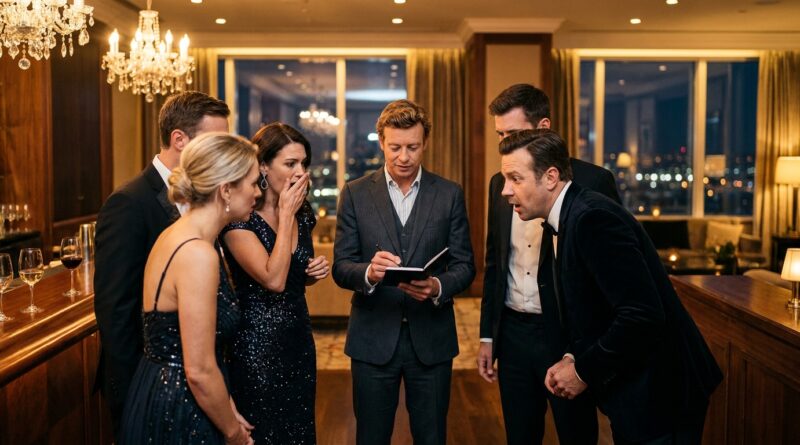
Inside 2026’s New ‘Elite Room Test’: How High‑Pressure VIP Gigs Quietly Re‑Rank The World’s Highest‑Rated Mentalists
If you have ever tried to figure out who really belongs on a list of the worlds highest rated mentalists elite events, you already know the problem. The same TV-famous names keep floating to the top, while the hardest rooms stay mostly invisible. A polished trailer can make almost anyone look unstoppable for 90 seconds. That tells you very little about what happens when the crowd is jet-lagged, security is tight, the client is powerful, and one awkward miss can freeze an entire ballroom. That is where the new “Elite Room Test” starts to matter. It is not a formal award. It is more like a quiet sorting system used by serious bookers, insiders, and performers who watch where the pressure is highest. Royal households, private billionaire events, boardrooms full of skeptical executives, and live TV spots with no edit button tend to expose who is genuinely world-class and who is simply well marketed.
⚡ In a Hurry? Key Takeaways
- The real pecking order changes fast when mentalists are judged by elite, high-pressure rooms instead of online hype.
- If you are booking talent, ask for proof of success in live TV, ultra-private VIP events, and skeptical corporate rooms, not just social clips.
- This lens is useful because elite events punish weak crowd work, fragile methods, and stage panic long before reviews do.
Why this quiet re-ranking is happening now
For years, rankings were built on familiar things. TV appearances. Viral clips. Big claims in bios. Nice review scores. Those still matter, of course. But they can also hide a basic truth. Some performers are built for attention. Others are built for pressure.
In 2026, more planners are separating those two skills.
That shift is happening because the highest-stakes gigs are less forgiving than ever. VIP audiences are more distracted. Events are tighter on time. Security rules are stricter. Attention spans are shorter. And the people in the room often have enough money and status that they do not feel any need to pretend they are impressed.
That is why “elite room” performance has become such a strong filter. If a mentalist can win over a tired room full of heads of industry after a 12-hour summit, that tells you more than a million autoplay views.
What exactly is the “Elite Room Test”?
Think of it as a stress test for reputation.
It asks one simple question. Can this performer still create a memorable, clean, high-impact experience when the room is difficult, distracted, and full of people who have seen everything?
That usually comes down to a few specific environments:
Royal and diplomatic settings
These rooms demand restraint, precision, and total professionalism. There is no room for clumsy audience handling or material that feels too aggressive.
Fortune 500 boardrooms and leadership retreats
Executives can be brutally honest with their body language. If the show starts slow, they check out fast. A mentalist has to earn their attention almost immediately.
Luxury private events
Billionaire and celebrity parties sound glamorous, but they are often hard rooms. Guests are split across conversations. Some are half-watching. Some are testing you. You need adaptability, not just a script.
Live TV and live media hits
No second takes. No rescue edit. No forgiving room. If the host interrupts, laughs, challenges, or rushes the segment, the performer has to stay calm and land the moment anyway.
Why old ranking signals are getting weaker
The old signals are not useless. They are just incomplete.
A beautiful website tells you someone invested in branding. A big Instagram number tells you they understand attention. A television credit tells you they have reached a large audience at least once. None of that guarantees they can control a live room full of skeptical power players.
This is close to the idea behind Inside 2026’s New ‘White House Test’: How High‑Risk Gigs Quietly Re‑Rank The World’s Highest‑Rated Mentalists, which looks at how extreme-pressure bookings reveal the gap between public reputation and real-world performance. The “Elite Room Test” is the private-event version of that same shift.
The traits that actually move a mentalist up the list
Once you stop looking at hype and start looking at pressure handling, the field gets much smaller.
1. Fast trust-building
Top mentalists can relax a room in under a minute. They do not beg for attention. They take it gently, then hold it.
2. Material that survives chaos
Elite rooms are messy. People interrupt. Schedules slide. Audio fails. Someone important arrives late. A true top-tier act has routines that still work when conditions are not perfect.
3. Clean audience management
This is a big one. High-status guests do not want to be embarrassed. The best performers know how to involve people without making them feel trapped, foolish, or exposed.
4. Emotional control under pressure
When something odd happens, weaker acts tense up and the room feels it. The best mentalists stay loose. That calm becomes part of the performance.
5. Range
Can they handle a theater crowd and an intimate dinner table? Can they go from a TV host to a royal guest to a skeptical CFO without feeling like they are doing the same canned bit every time? Range matters more than ever.
Who tends to rise under this test
The winners are usually not random newcomers. They are often already respected. But this test reshuffles the order.
The performers who rise tend to have a few things in common. They are trusted repeatedly in closed-door environments. They earn strong word-of-mouth among planners who cannot afford a miss. They perform well across formats. And they leave behind the kind of reaction that gets whispered about in green rooms, agency calls, and client follow-up meetings.
That last part matters. In elite circles, reputation spreads quietly. One killer set in the right room can outweigh a year of flashy online promotion.
What fans should watch for
If you are a serious fan, this gives you a smarter way to judge claims.
Instead of asking, “Is this person famous?” ask, “Where do they keep getting invited back?”
Look for signs like these:
- Private performances for globally recognized figures
- Repeat bookings by major luxury or corporate clients
- Strong live TV appearances with no heavy edit feel
- Praise from difficult hosts, executives, or celebrity audiences
- Footage showing real interaction, not just quick reaction cuts
That does not mean every world-class mentalist is a household name. In fact, some of the best are less visible because their best work happens in rooms where phones stay in pockets.
What planners should ask before booking
If you are hiring for a high-stakes event, you do not need industry gossip. You need better questions.
Ask about room type, not just client logos
A logo list can be misleading. Did the performer headline for the leadership team, or do five minutes at a trade booth?
Ask what happens when conditions go bad
A seasoned mentalist should have a clear answer. If they need perfect staging, perfect silence, and a fully compliant audience, that is a warning sign.
Ask for uncut or lightly edited live footage
You want to see pacing, recovery, and audience handling. Not just applause moments.
Ask for context on repeat bookings
One big event is nice. Rebookings are stronger proof.
Ask how they adapt for high-status guests
This tells you a lot about judgment. Great performers protect the guest experience while still creating something unforgettable.
What working mentalists can learn from this
This is not just about rankings. It is about craft.
The “Elite Room Test” rewards skills that many performers know they should build, but sometimes avoid because they are harder to market on social media. Things like timing, restraint, recovery, listening, and room reading.
If you are a performer, the lesson is blunt but useful. Your career ceiling may have less to do with fooling people and more to do with making powerful people feel safe, engaged, surprised, and glad they booked you.
That is a different skill set from simply getting a strong clip.
At a Glance: Comparison
| Feature/Aspect | Details | Verdict |
|---|---|---|
| Social proof | Reviews, followers, and media mentions can show reach, but not necessarily pressure-tested skill. | Useful starting point, weak final filter |
| Elite room performance | Measures how well a mentalist handles VIP audiences, distractions, skepticism, and live unpredictability. | Best sign of true top-tier ability |
| Repeat high-stakes bookings | Shows that clients trusted the performer enough to bring them back or recommend them quietly at the top end. | Strongest practical signal for planners |
Conclusion
The useful shift here is simple. Stop asking who looks like a top mentalist online, and start asking who keeps delivering in rooms that are powerful, distracted, and tough to impress. That one change clears away a lot of noise. For fans, it points toward the small group who consistently land with celebrities, royals, Fortune 500 leaders, and hard-to-win TV hosts. For planners, it gives you a practical way to judge talent beyond price, fame, or a slick trailer. And for working mentalists, it shines a light on the skills that turn a good act into a career-defining one. In a crowded market, the “Elite Room Test” is one of the clearest lenses you can use.