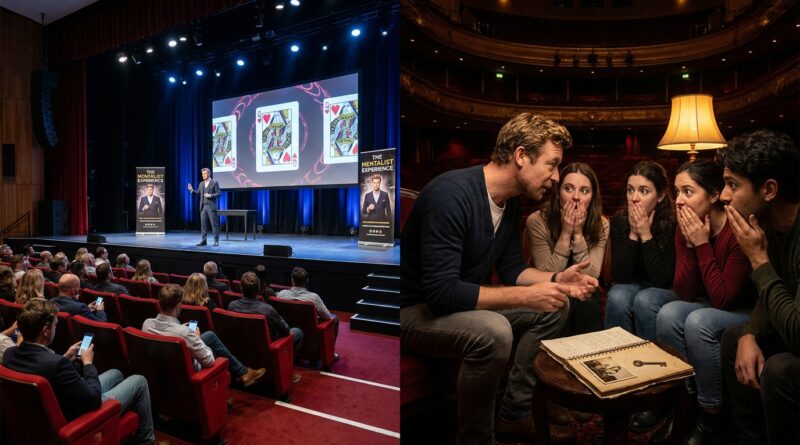
Inside 2026’s New ‘Copycat Trick Test’: How Fans Quietly Punish Mentalists Who All Do The Same Act
You are not imagining it. A lot of modern mentalism really does start to blur together after a while. One viral clip shows a chair prediction. The next has a phone unlock. Then comes the same “think of a word” beat, the same gasps, the same big reveal. If you watch enough talent-show clips or Vegas promo videos, it can feel less like mystery and more like karaoke with secret pockets. That frustration matters, because when every act looks cloned, great performers get buried with lazy ones. Fans stop trusting the whole category. Bookers overpay for safe, TV-friendly material that already feels old. The good news is audiences have quietly built a useful test for this. You can see it in comment sections, review threads and post-show chatter. People are starting to reward mentalists who create specific, memorable experiences, and punish the ones recycling the same tricks with a different jacket. That filter is simple, and you can start using it today.
⚡ In a Hurry? Key Takeaways
- Fans now spot copycat mentalism fast by looking for repeated TV-style routines instead of unique audience-specific moments.
- Read reviews for concrete memories, not just “mind blown” praise. Specific stories usually point to a more original show.
- This helps you avoid paying premium prices for generic acts and find the best original mentalist shows not all the same tricks.
What the “Copycat Trick Test” actually is
This is not a formal scorecard. It is more like a gut check the audience has learned to trust.
After seeing enough similar acts, people now ask a very simple question. “If I swapped this performer with three others, would I even notice?” If the answer is no, the act has a problem.
That is the new test.
Fans are quietly punishing sameness in a few predictable ways. They leave flat reviews. They say “good, but familiar.” They compare clips side by side. They stop recommending the show to friends. Most damaging of all, they forget it by the next day.
A mentalist does not fail this test just because they use a classic method or structure. Plenty of great performers do. They fail when the whole experience feels mass-produced.
Why audiences are suddenly harsher about it
Because viewers have seen too much.
Streaming clips, talent competitions, short-form video and polished theater promos have made the genre easier to sample than ever. That is good for exposure, but bad for anyone doing the same routine everyone else is doing.
Once a fan has seen five versions of “I predicted your seat,” the sixth version does not feel impossible. It feels booked.
This is also tied to trust. Audiences are already skeptical of editing, camera cuts and planted helpers. If the material is familiar too, the whole thing starts to feel canned. That is one reason readers have also been drawn to pieces like Inside 2026’s New ‘Fact‑Check The Mind Reader’ Trend: How Fans Quietly Build Their Own List Of The World’s Most Trustworthy Mentalists, because originality and trust now travel together.
How to spot a recycled act before you buy a ticket
1. Look for specific memories in reviews
The easiest clue is whether people describe a unique moment or just a category of trick.
Generic review: “He guessed names and blew our minds.”
Useful review: “He built the whole show around stories from our town, brought my skeptical husband onstage, and revealed a prediction tied to something that happened in the lobby before the show.”
Specific memory usually means the performer is doing more than unpacking a standard kit.
2. Watch for repeated phrases in comments
If you keep seeing “same tricks as TV,” “saw this before,” “felt polished but familiar,” or “good performer, standard material,” that is audience code for copycat fatigue.
By contrast, stronger comments often sound messy and personal. “I still cannot explain what happened with my friend’s drawing.” “The second half got under my skin.” “We argued about one routine all night.”
That kind of reaction matters. It suggests the show left a mark, not just a clip.
3. Check whether every promo clip ends on the same beats
If every highlight reel is chairs, phones, sealed envelopes and one-word reveals, you are probably looking at a familiar package. That does not mean the show is bad. It does mean you should be careful before paying top-tier prices.
The best original mentalist shows not all the same tricks tend to sell the feeling of the night, not just the same three proof shots.
4. Notice whether the performer adapts to the room
Originality is not only about brand-new effects. It is also about whether the act feels alive.
Do reviews mention custom material for the city, company, audience type or current event? Do people say the mentalist made use of strange things that happened in real time? Did the crowd become part of the story?
That is often where the best performers pull away from the pack.
The difference between “same trick” and “same experience”
This is where people get tripped up.
Many arts reuse classic structures. Comedians have callbacks. Musicians cover standards. Magicians and mentalists also work with classic plots. So the issue is not that two performers both use predictions or thought-reading.
The issue is whether the audience feels they have seen this exact emotional ride before.
A fresh performer can use a familiar effect and still make it feel personal, risky and impossible. A lazy one can buy an expensive routine and make it feel like airport wallpaper.
So when you are reading chatter online, ask this. Are people reacting to the performer, or only to the trick category?
If the applause belongs to the prop, that is not a great sign.
How fans quietly punish copycat acts
They stop sharing the clips
People still watch. They just do not pass it along with excitement.
They downgrade the recommendation
Instead of “you have to see this,” it becomes “if you like that sort of thing, it is fine.” That sounds small, but it kills momentum.
They compare the act to better-known names
Once audiences say “this felt like a budget version of somebody else,” the performer loses ownership of their own image.
They become price-sensitive
Fans will pay for mystery. They hate paying premium rates for familiarity. This is huge for corporate buyers and theaters.
What original mentalists tend to do differently
They create stories people can retell.
That sounds obvious, but it is the whole game. A strong act gives the audience a memory with texture. A weak one gives them a summary.
Original mentalists often:
- Build routines around the real people in the room
- Use local details or event-specific information in meaningful ways
- Mix humor, tension and surprise instead of repeating one emotional note
- Let moments breathe, rather than rushing from reveal to reveal
- Take risks that make the show feel less factory-made
Most importantly, they leave behind post-show debate. People keep talking. They do not just clap and move on.
A practical filter for bookers and casual fans
If you are hiring or buying tickets, use this three-part test.
Ask: What do people remember?
If reviews only mention broad categories of tricks, be cautious.
Ask: Could another performer swap into this promo unchanged?
If yes, the act may be polished but generic.
Ask: Did the audience talk about the show like an event or like content?
An event lingers. Content scrolls away.
This is a better buying tool than star ratings alone. Five stars can mean “pleasant and professional.” It does not always mean unforgettable.
At a Glance: Comparison
| Feature/Aspect | Details | Verdict |
|---|---|---|
| Review language | Generic acts get vague praise like “mind blown.” Original acts get detailed stories and personal memories. | Specific beats broad praise every time. |
| Promo material | Recycled acts lean on the same TV-friendly stunts. Stronger acts show atmosphere, crowd connection and unusual moments. | If every clip looks interchangeable, be careful. |
| Post-show chatter | Copycat acts get quick reactions. Original acts spark arguments, retellings and “how did that happen?” conversations days later. | Lingering debate is a strong sign of value. |
Conclusion
The current backlash is not fans being picky for no reason. It is a useful correction. Right now talent-show threads and Vegas review posts are full of people saying every mentalist feels the same, which is poison for both serious artists and curious newcomers. The smart move is not to give up on mentalism. It is to get better at reading the signs. Use reviews, comments and crowd chatter as a live filter. Look for unique memories, not canned praise. Look for acts that create one-off experiences, not just clean versions of familiar TV stunts. That helps everyone. Buyers avoid overpaying for generic shows. Casual viewers find performers who can still surprise them. Working pros get a clear message that safe material is no longer enough. And the best artists, the ones worth your time and money, get pushed to keep making the impossible feel new again.