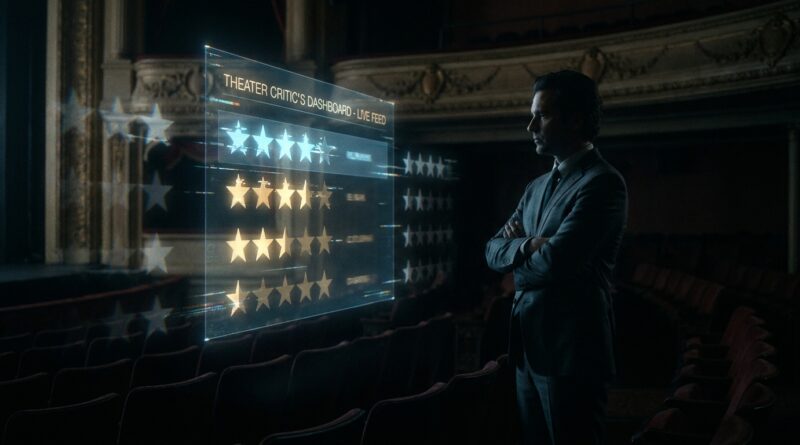
Inside 2026’s New ‘Silence Gap Test’: How Missing One-Star Reviews Quietly Reveal The World’s Most Bulletproof Mentalists
You can spend an hour staring at five-star ratings and still have no clue if a mentalist is actually safe to book. That is the frustrating part. The internet is packed with glossy clips, standing ovations and suspiciously perfect reviews, but none of that tells you what happens when the room is tight, the crowd is sober, and the person you booked has nowhere to hide. That is where the new “Silence Gap Test” comes in. Instead of asking who has the highest average, start by asking a simpler question. Where are the bad nights? If a busy performer has years of shows, active buzz and real ticket sales, yet almost no one-star complaints anywhere, that silence can tell you more than a mountain of praise. It is not foolproof, but it is one of the smartest ways to answer the real question behind all the hype: how to find the best mentalist using reviews without getting fooled by polished marketing.
⚡ In a Hurry? Key Takeaways
- The best clue is often not the five-star praise, but the lack of one-star horror stories across multiple platforms.
- Check Google, TripAdvisor, Reddit and ticket sites together, then compare that silence with crowd size, booking volume and current buzz.
- Do not trust any single score. A strong act should hold up in small rooms, private events and imperfect conditions, not just viral clips.
What the “Silence Gap Test” actually means
Think of it like buying a used car.
If 300 people rave about it, that is nice. But what you really want to know is whether a few owners are quietly saying the engine died after six months. A mentalist works the same way. Praise is easy to find. Pain is harder. And pain is usually more honest.
The Silence Gap Test looks for a mismatch. If a performer is heavily promoted, often booked and clearly seen by lots of people, you would expect at least some rough feedback somewhere if the act is inconsistent. When that negative pattern is missing across several public spaces, it can be a strong sign that the performer is genuinely reliable.
Not perfect. Reliable.
Why five-star averages keep fooling people
Ratings flatten everything into one number. That is the problem.
A mentalist with a 4.9 average from 80 reviews may be less dependable than one with a 4.7 average from 1,400 reviews. Why? Because volume matters. So does context. So does the shape of the criticism.
Here is what five-star averages miss:
Promotional bias
Happy fans are often prompted to leave reviews right after a good show. That pushes positive comments to the top. It does not mean the praise is fake. It means it may be curated.
Venue bias
A performer can crush in a big theater with lighting, music and stage distance, then struggle badly at a wedding reception or corporate dinner where guests are three feet away and distracted.
Platform blind spots
Google might look spotless while Reddit has skeptical threads. A ticket platform may show glowing comments while TripAdvisor has a few cold, specific complaints. If you only check one place, you only see one slice.
How to find the best mentalist using reviews
If you want a practical method, use this four-step check.
1. Start with the busiest public platforms
Search the performer on Google Reviews, TripAdvisor, Ticketmaster or local ticketing sites, Reddit, and venue pages if they do repeat runs.
You are not just counting stars. You are looking for signs of stress.
Search terms to try:
- “[Performer name] bad review”
- “[Performer name] disappointed”
- “[Performer name] Reddit”
- “[Performer name] boring”
- “[Performer name] corporate event review”
2. Look for missing one-star reviews, not just positive scores
If someone has done hundreds or thousands of shows and has barely any one-star comments anywhere, that matters. It suggests consistency.
But be careful. “No bad reviews” can mean two different things:
- They are excellent and resilient.
- They are obscure, lightly reviewed or operating in places where criticism never surfaces.
The trick is to match the silence with real visibility. Big buzz plus broad silence is meaningful. Tiny footprint plus silence means very little.
3. Read the worst reviews closely
One-star reviews are not all equal.
Some are nonsense. “Parking was bad.” “My seat was blocked.” “I do not like audience participation.” Those do not tell you much about the performer.
Others are gold. Watch for repeated complaints like:
- Relies on planted helpers
- Weak in close-up settings
- Embarrasses guests
- Feels scripted and impersonal
- Great online, flat in person
- Not worth premium pricing
One complaint can be random. A pattern is a warning.
4. Cross-check against room size and event type
This is where many fans miss the point.
A mentalist may look unstoppable in large venues, yet the real test for your proposal, board dinner or birthday party is whether they stay sharp in a room of 20, 40 or 80 people.
Front-row credibility matters more than cinematic clips.
If the reviews mention smaller shows, private events or close audience contact and still stay clean over time, that is a better sign than applause-heavy theater footage.
The strongest acts tend to leave the same clues
When a mentalist is genuinely durable, the review pattern often looks a certain way.
The criticism is thin, scattered and boring
You may still find negatives, but they are often about taste, seating or someone not enjoying the style. They are not dramatic accusations about the act falling apart.
The praise is specific
Good reviews mention details. Things like:
- “He handled a noisy room well”
- “She adapted when the tech failed”
- “Everyone from teens to grandparents stayed engaged”
- “Worth it even from the front row”
Specific praise is usually more trustworthy than generic lines like “Amazing show!!!” repeated 50 times.
The performer survives different settings
Great mentalists do not just succeed in one ideal room. They keep delivering at private events, hotels, comedy clubs, cruise spaces, trade shows and intimate theaters.
That is also one reason readers have been paying attention to trends like Inside 2026’s New ‘Couple’s Mind‑Link Test’: How Married Mentalists Are Quietly Becoming The World’s Most Trusted Mind‑Readers. Trust builds faster when an act has to work in real human settings, not just on polished promo videos.
Red flags that the hype may be fragile
Some acts look massive online but wobble the moment you inspect the edges.
Lots of short, breathless reviews posted in bursts
If 30 glowing reviews land in a narrow window and then activity goes quiet, that can be a sign of campaign behavior rather than steady fan response.
No trace of discussion outside controlled pages
If the only praise exists on the performer’s site or a single social channel, be cautious. Real audience reaction usually leaks into messy places too.
Negative comments hide on smaller platforms
This is common. Google looks pristine, but Reddit has firsthand disappointment. Or the venue page is glowing while an older ticket platform mentions weak audience handling. The corners matter.
Reviews praise personality, not performance
“So nice to work with” is helpful for event planners. It is not the same as “the show killed in a difficult room.” You want both.
A simple scoring method anyone can use
If you are comparing two or three mentalists, try this plain-English scorecard:
Give one point for each of these
- Strong review volume on more than one platform
- Very few one-star reviews over a long timeline
- No repeated complaints about weak material or awkward audience handling
- Specific praise from small rooms or private events
- Evidence the act works without ideal staging
- Independent discussion outside official promo pages
A performer who scores 5 or 6 is usually a much safer booking than someone with prettier averages but thinner evidence.
What performers can learn from this too
This is not only useful for fans.
If you are a working mentalist, the lesson is simple. Build a reputation that can take a punch. That means clear expectations, strong audience care, adaptable material and enough consistency that even your off nights do not become public disasters.
The goal is not to erase criticism. It is to make bad experiences rare, dull and unrepeatable.
At a Glance: Comparison
| Feature/Aspect | Details | Verdict |
|---|---|---|
| Five-star average | Useful as a starting point, but easily shaped by timing, prompting and platform bias. | Helpful, not enough on its own. |
| Missing one-star reviews | Most meaningful when the performer is busy, visible and reviewed across multiple public sites. | Strong sign of real consistency. |
| Small-room proof | Reviews from private parties, proposals, corporate dinners and front-row settings reveal whether the act works without production help. | Often the best predictor of booking safety. |
Conclusion
The smartest question is no longer “Who has the most stars?” It is “Where are the bad nights?” That shift matters because fans are buried under rankings that obsess over averages, spikes and timestamps, while missing the simplest clue of all. A truly bulletproof mentalist should not just look good at a distance. They should stay solid when the room is small, the lighting is rough and the audience is close enough to catch every weak beat. By hunting for missing one-star reviews across Google, TripAdvisor, Reddit and ticket platforms, then checking that silence against real buzz and crowd size, you get a far more useful way to judge risk before booking a show for a proposal, corporate gala or milestone birthday. It helps fans spend wisely, and it gives performers a clear standard too. Build an act that can survive scrutiny, not just one that photographs well.