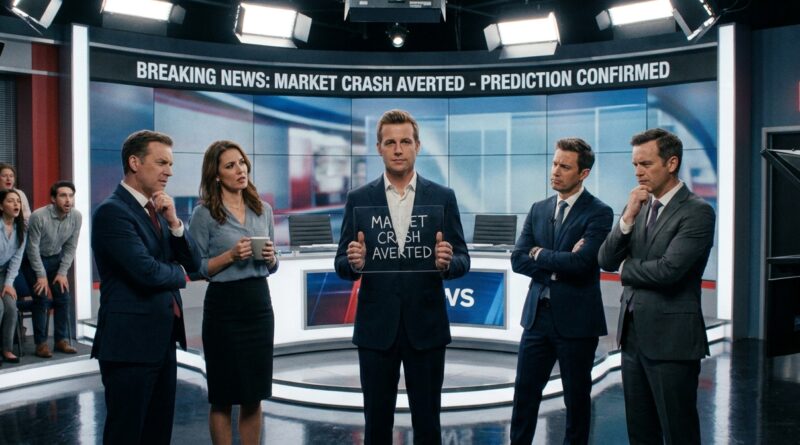
Inside 2026’s New ‘Newsroom Mind Reader’ Moment: How Live TV Challenges Are Quietly Creating The Next ‘World’s Highest‑Rated’ Mentalists
It is frustratingly easy to mistake a slick 40-second clip for proof that someone is the world’s highest rated mentalist. A smiling anchor gasps, the audience claps, and social media decides a new king has arrived. But live TV is a very different beast from a polished stage special or a carefully cut promo reel. There are bright lights, rushed producers, nervous guests, skeptical hosts, bad audio, hard time limits, and almost no room to recover if a reveal lands flat. That is exactly why these newsroom appearances matter so much in 2026. They are becoming the stress test that separates a performer who can really think on their feet from one who simply had one lucky viral hit. If you want to judge a mind reader fairly, or hire one without guessing, you need to know what live TV actually measures, and what it absolutely does not.
⚡ In a Hurry? Key Takeaways
- Live news spots can reveal real skill, but one viral segment alone does not prove someone is the world’s highest rated mentalist.
- Watch for consistency under pressure, clean audience handling, and how the performer responds when conditions are messy.
- For buyers and fans, short clips are useful clues, not final proof. Full-show reputation still matters.
Why live TV has become the new pressure cooker
The phrase “worlds highest rated mentalist live tv news challenge” sounds dramatic, but it captures something real. News studios are now acting like public proving grounds.
A mentalist on a live morning show has to work fast. They often meet the host minutes before going on air. The volunteer may be skeptical. The producer may cut the segment from five minutes to three. The camera crew wants clean sight lines. The anchor wants a big reaction. None of that is ideal.
And that is the point.
When a performer can still create a strong, clear, impossible-looking moment in that environment, people notice. Fans notice. Booking agents notice. Corporate clients notice too.
That is why these appearances are quietly becoming reputation-makers. Not because TV automatically means quality, but because live TV removes a lot of the safety net.
What a newsroom challenge actually tests
Think of a live TV segment like test-driving a car on a crowded city street instead of admiring it in a showroom. You learn different things.
1. Can they explain the effect quickly?
On stage, a mentalist may have ninety minutes to build mood and tension. On local or cable news, they may get two minutes and a host who keeps interrupting.
The best performers can make the premise easy to follow. The audience at home should know what is supposed to happen before it happens. If viewers are confused, the trick may still be clever, but the segment will feel weak.
2. Can they handle unpredictable people?
This is a huge one. Live TV volunteers are not trained audience members. Hosts joke around. They talk over instructions. They forget what to do. Some try to “catch” the performer.
A true pro does not get rattled. They gently control the room without seeming bossy. That is a real skill, and it often matters more in paid bookings than any one impossible reveal.
3. Can they recover when something goes sideways?
A dropped cue card. A missed camera shot. A host who blurts out information too early. Bad studio sound. It happens all the time.
The elite performers have recovery gear. They can pivot. They can simplify. They can turn awkwardness into comedy or suspense. If you only watch whether the final reveal hit, you miss half the story.
4. Can they create trust fast?
Mentalism works best when the audience feels they are in safe hands. In a hostile or skeptical studio, that trust has to be built almost instantly.
If the performer comes off smug, defensive, or too eager to fool people, the segment can sour. If they feel warm, calm, and playful, the same method can land much bigger.
Why one viral clip can fool you
This is where fans and bookers often get tripped up.
A viral clip rewards speed, shock, and replay value. That is not the same as rewarding a full working professional. A ten-second reaction shot tells you very little about whether a performer can carry a theater, work a gala, or entertain a private client for a full evening.
It is similar to judging a laptop by how nice the commercial looks. The ad can be great. You still need to know battery life, keyboard quality, repair history, and whether it overheats after an hour.
With mentalists, the missing questions are these:
- Do they deliver repeatedly, not just once?
- Can they succeed with different hosts and audiences?
- Are their strongest clips all from one unusually favorable setup?
- Do people who saw the full show rave about the whole experience, or just one trick?
That is why “highest-rated” can get messy. Ratings in social media are often just attention scores. They are not always quality scores.
How to spot the real standouts on live news
If you are trying to separate the genuinely elite from the merely viral, here is a more useful filter.
Look for clarity, not chaos
Some clips look impressive because they are confusing. Quick cuts, overlapping reactions, loud music, and a stunned host can hide weak structure.
A stronger performer makes the effect understandable. You know the conditions. You know the choices. You can tell why the reveal matters.
Look at the host, not just the audience
The host is often the hardest person in the room to win over. They are thinking about timing, ad breaks, legal notes, producer cues, and whether the guest is making good TV.
If a skeptical anchor relaxes and starts playing along, that tells you a lot. It means the performer is managing both the trick and the room.
Watch the moments before and after the climax
The reveal is only part of the test. Notice whether the setup feels smooth. Notice whether the performer talks too much when under pressure. Notice whether they can exit cleanly after the applause instead of stepping on their own ending.
That is seasoned broadcast instinct. It matters more than most people realize.
Check for repeat appearances
One booking can happen because a producer liked a clip. Repeat bookings usually mean the first one went well behind the scenes too.
That is a big clue. Producers remember guests who are easy to work with, safe on live air, and able to deliver in a short window.
What “hostile studio” really means
People hear that phrase and imagine a dramatic showdown. Usually it is less theatrical than that.
A hostile studio can simply mean:
- A host who openly doubts the act
- A rushed team with no time for rehearsal
- A noisy or distracted live audience
- A segment placed between serious news blocks
- Very little control over props, camera angles, or volunteer choice
That kind of room exposes weak performers fast. It also gives excellent ones a chance to show why they are trusted at higher levels.
Advice for fans buying tickets
If you saw a jaw-dropping news clip and now want tickets, great. Just do one extra step before you buy.
Look for evidence of a full show. Reviews help. Longer audience-shot clips help. Testimonials from theaters, corporate events, and repeat venues help even more.
Ask yourself a simple question. Did this person create one excellent TV moment, or do they seem to create strong experiences over and over?
That is the better buying filter.
Advice for private bookers and event planners
If you are hiring for a company event, fundraiser, or private party, live TV clips should be treated like a product demo, not the whole product.
Useful things to ask:
- Have they worked events of your size before?
- Can they adapt to a mixed crowd, not just a TV host?
- Do they have references from actual clients?
- Can they perform in a room that is not built like a theater?
- What happens if your event runs late or the room is noisy?
A performer who thrives on live news may be an excellent hire. But the real gold is when that same person also has a strong track record in normal, messy, real-world venues.
Advice for working mentalists trying to break through
This trend cuts both ways. Yes, it can be unfair when a whole reputation gets squeezed into one short segment. But it also opens a door.
A single strong newsroom performance can now travel far beyond the original broadcast. It can reach clients, agents, and fans who would never sit through a full special.
So if you are a performer, the lesson is not “go viral.” It is “be broadcast-ready.”
Build pieces that survive interruption
If your best routine only works with ten minutes of setup and perfect silence, it may not survive TV. Develop effects that stay clear even when the host talks over you.
Practice with skeptics
Friendly crowds can make anyone look strong. Skeptical volunteers are better training.
Design for one clean headline moment
Producers and viewers remember a simple story. “He named the city she was thinking of” lands harder than a routine that takes three paragraphs to explain.
Think beyond the clip
The segment should not just spike your views for a day. It should send people somewhere useful, a ticket page, a reel, a professional site, or a booking contact that proves you are more than one lucky moment.
Why “highest-rated” needs a reality check
This label gets thrown around loosely. Sometimes it means ticket sales. Sometimes it means social reach. Sometimes it means TV ratings. Sometimes it is just marketing copy repeated often enough that it starts sounding official.
For regular people, that creates confusion. For the best mentalist community, it can distort who gets attention and who gets dismissed too early.
The healthier way to judge is to combine signals:
- Live TV performance under pressure
- Full-show audience response
- Repeat bookings
- Professional reputation
- Consistency across different environments
No single metric tells the full story. But together, they give you something much closer to the truth.
At a Glance: Comparison
| Feature/Aspect | Details | Verdict |
|---|---|---|
| Single viral news clip | Great for attention and first impressions, but often too short to judge consistency or range. | Useful clue, not final proof. |
| Repeat live TV appearances | Suggests producers trust the performer to deliver under pressure and behave well on set. | Strong signal of real professionalism. |
| Full-show reviews and bookings | Shows whether the performer can sustain audience interest beyond one big reveal. | Best long-term measure of quality. |
Conclusion
Live newsroom spots are becoming one of the clearest windows into who can really perform when the pressure is high and the safety net is gone. That does not mean every viral clip reveals a future legend, and it does not mean every great mentalist gets a fair shot on TV. But it does give fans, bookers, and working pros a smarter way to judge what they are seeing. This helps the Best Mentalist community right now because more top performers are being judged on tiny TikTok and cable-news moments instead of full shows, which skews who gets labeled “highest-rated” and who never gets a fair look. Once you understand what a hostile studio with a live audience and skeptical anchor actually tests, you can choose tickets and private bookings with more confidence. And if you are the performer, one hard-won segment can become more than a one-day spike. It can become proof that you belong in the top tier.