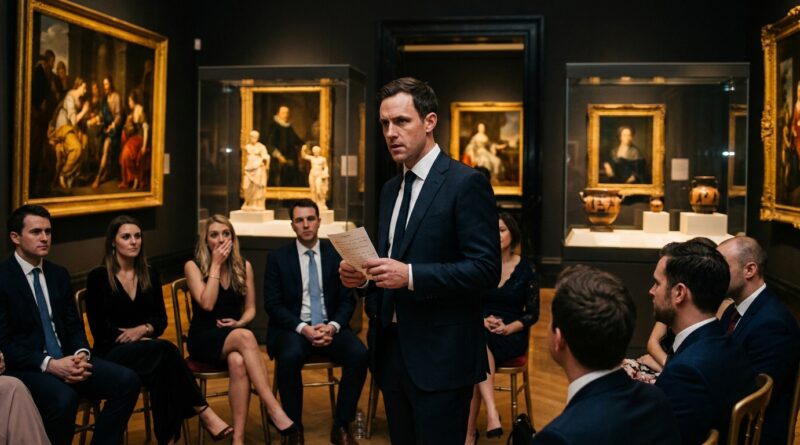
Inside 2026’s New ‘Museum Mentalist’ Moment: How World‑Class Mind Readers Quietly Turn High‑Culture Spaces Into Five‑Star Illusion Labs
Trying to find the worlds highest rated mentalist live show 2026 is oddly annoying. The big names are everywhere, but the actual ticket options often feel wrong. Too flashy. Too packaged. Too aimed at tourists who just want to say they saw a mind reader in Vegas. And when you do hear about a truly special live performer, the run is already sold out or hidden inside a cultural program you were never told to watch. That is why 2026’s most interesting shift is happening in museums, galleries, and other high-culture spaces. Quietly, these venues have become a testing ground for elite mentalists. Not the loudest ones, necessarily. The best curated ones. If you want a smarter way to spot serious talent before the hype machine turns them into impossible tickets, start looking where curators, not casino marketers, are doing the filtering.
⚡ In a Hurry? Key Takeaways
- The smartest place to find elite mentalists in 2026 is often museum and cultural programming, not mainstream residency listings.
- Look for signals like “curated by,” limited-run performances, and illusion themes tied to exhibitions. Those often point to stronger artistic quality.
- Do not confuse viral fame with live-show quality. Small, high-trust venues can be a better filter than social media buzz.
Why museums suddenly matter for live mentalism
For years, most people looked in the obvious places. Vegas. Resorts. Cruise lines. Corporate events. That made sense. Those venues are visible, easy to market, and built for volume.
But they are not always the best places to judge artistic quality. They are often built to sell a night out first and a performance second.
Museums and cultural institutions work differently. They usually have smaller calendars, tighter budgets, and more pressure to justify every program. If they book a mentalist, there is often a reason beyond “this person is trending.” The show may connect to an exhibition, a historical theme, psychology, perception, memory, spiritualism, or performance art.
That is where things get interesting. A mentalist who can hold a room in that setting usually has more than a few easy applause lines. They need taste. Structure. Restraint. Real audience control.
The “Museum Mentalist” moment in 2026
This is not about replacing traditional stages. It is about a new signal. In 2026, high-culture spaces are acting like review labs for the next wave of top-tier performers.
Think of it like this. A casino booking says, “We think this can sell.” A museum booking often says, “We think this is worth presenting.” Those are not the same thing.
That difference matters if you are trying to find the worlds highest rated mentalist live show 2026 before the wider market catches up.
What makes these spaces different
High-culture venues tend to reward a few things that mainstream listings can miss:
- Original framing, not just recycled tricks
- Shows that fit a theme or idea
- Audience intimacy and credibility
- Better-written program notes and curator context
- Short runs that create quality control instead of endless repetition
In plain English, these rooms often expose whether a performer is actually great or just famous.
How to spot a serious mentalist in a museum program
You do not need insider access. You just need to know what clues to read.
1. “Curated by” is a strong signal
If a performance is part of a curator-led series, festival strand, or museum late-night program, pay attention. A curator is putting their reputation on the line. That usually means somebody has watched the act closely.
It does not guarantee genius. But it is a better starting point than a random ad with dramatic lighting and words like “unbelievable.”
2. Limited runs are often better than long open-ended bookings
A three-night run inside a respected institution can tell you more than a six-month tourist show. Limited runs usually mean the performance has been selected for a specific purpose. That tends to attract sharper audiences and better post-show reactions.
It also means you need to move fast. These are exactly the kinds of dates that vanish before broad media notices.
3. The best listings explain the concept clearly
If the event copy mentions memory, influence, deception, ritual, psychology, or a direct link to an exhibition, that is a good sign. It suggests the performer has built a show with shape and meaning.
If the listing is just “prepare to be amazed,” keep your expectations in check.
4. Watch for post-show language from the venue
Good institutions often share audience comments, curator notes, and photography after the event. Look for phrases like “participatory,” “thought-provoking,” “site-specific,” or “intimate.” Those usually point to a mentalist who can do more than standard stage business.
Why this matters more now than hype cycles
The mentalism world is dealing with a trust problem. Viral clips travel faster than honest audience feedback. Review scores can be shallow. Headlines can make one performer feel unavoidable.
That is why it helps to read the room around the performer, not just the performer. If you have been following the debate around big-name credibility, our piece on Inside 2026’s New ‘Fact‑Check The Mentalist’ Backlash: How Reviewers Quietly Turned Oz Pearlman’s Viral Fame Into A Trust War shows how quickly fame can split audiences into believers and skeptics.
Museum and cultural bookings do not solve that completely. But they give you another filter. A calmer one. A more useful one.
A better search method for 2026
If you want to find under-the-radar stars before everybody else, stop searching only by performer name. Search by venue type and program language.
Use searches like these
- museum mentalist 2026
- gallery performance mentalism live
- curated illusion program 2026
- mind reading museum late 2026
- psychology live show exhibition mentalist
- worlds highest rated mentalist live show 2026 museum
Then check:
- Museum event calendars
- Performing arts centers tied to universities
- Festival fringe sidebars with curator notes
- Members-only previews and donor nights
- Cultural newsletters, not just ticket sites
What bookers and working performers should notice
If you book talent, this trend matters because museum placement can reveal who has real crossover value. A performer who succeeds in a design museum, history museum, literary house, or modern art setting may be far more adaptable than someone who only works in loud commercial rooms.
If you are a performer, these bookings can become proof of seriousness. They show that your act can survive close attention. Not just noise, drinks, and easy applause.
And if you are simply a fan, this is your chance to catch somebody before they become impossible to see at a sane price.
Red flags to avoid
Not every cultural booking is automatically top-tier. A fancy venue can still host a weak show.
Be careful if you see:
- No mention of why the performer fits the program
- Generic promo copy copied from a corporate events page
- No photos or reviews from previous live audiences
- Heavy emphasis on celebrity clients instead of the actual show
- A “museum show” that is really just a rented room with no venue endorsement
The difference between “presented by” and “room rental” matters a lot.
How to judge quality when reviews are thin
This is the tricky part. Many of the best cultural bookings do not have thousands of reviews.
So use a simple three-part test:
Context
Was the show selected as part of a serious program, or just dropped into a calendar slot?
Concept
Does the description suggest thought and originality, or just generic mystery language?
Consistency
Can you find a pattern of similar bookings at respected venues, even if each run is small?
If the answer is yes on all three, you may be looking at a performer with stronger real-world quality than someone with ten times the online buzz.
At a Glance: Comparison
| Feature/Aspect | Details | Verdict |
|---|---|---|
| Museum or cultural booking | Often curated, theme-driven, limited-run, and tied to an exhibition or program concept | Best early signal for serious artistic quality |
| Vegas or tourist residency | Easy to find, heavily marketed, built for broad appeal and ticket volume | Good for convenience, weaker as a quality filter |
| Viral online fame | Fast visibility, strong clips, but mixed trust and uneven live-show expectations | Useful for awareness, not enough on its own |
Conclusion
If you are tired of the usual list of residencies, hotel lounges, and corporate names, this is the fresh angle worth using. Treat museum and high-culture bookings as a new review laboratory. They can help you find under-the-radar, highest-rated mentalists before they land on every mass-market roundup. More importantly, they teach you what to look for. “Curated by” credits. Limited runs. Themed illusions tied to exhibitions. Those clues often point to serious craft instead of just another card trick night with mood lighting. For fans, that means better tickets and fewer disappointments. For bookers, it means a smarter talent pipeline. For working performers, it shows where the next credibility ladder may be. The next great mind reader may not be shouting from a casino billboard. They may be quietly selling out a museum after hours.