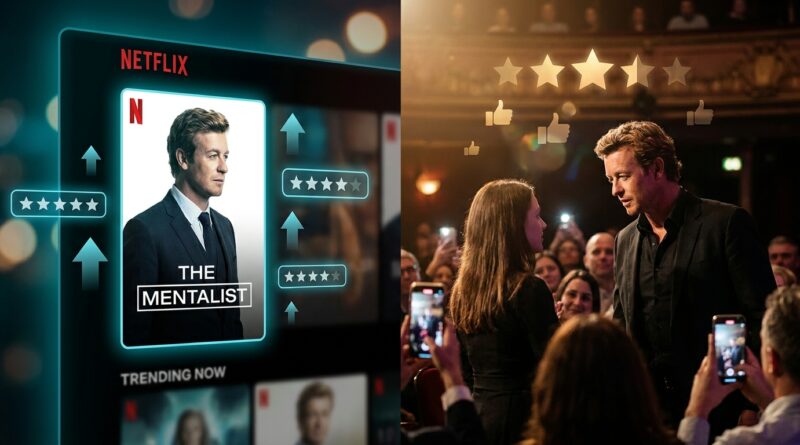
Inside 2026’s New ‘Netflix Mentalist Effect’: How A 10‑Year‑Old Crime Show Quietly Hijacked Today’s Five‑Star Mind‑Reading Rankings
You search “world’s best mentalist,” expecting a clear answer, and instead you get a pile of hype. One site worships TV fiction. Another pushes a viral clip. Reddit turns into a shouting match about who is “real” and who is “fake.” That confusion has a reason. In 2026, Netflix’s renewed popularity of The Mentalist is quietly changing how everyday viewers judge live mentalists, even when they do not realize it. Simon Baker’s character, Patrick Jane, was written to look superhuman. Charming, all-seeing, impossible to fool. Now that old show is back in front of millions of people, and it is warping review expectations for real performers who work on stages, at private events, and in theaters. If five-star rankings suddenly seem weird, inconsistent, or unfair, you are not imagining it. The “Netflix Mentalist Effect” is real, and it is making fiction the yardstick for live entertainment.
⚡ In a Hurry? Key Takeaways
- The netflix mentalist effect on real mentalist ratings is simple: viewers are comparing real performers to a fictional TV genius, which skews five-star reviews.
- When reading ratings, check for comments about audience connection, clarity, and live experience, not just “he knew everything” style praise.
- A high rating is useful, but it is safer to trust detailed reviews, recent footage, and real event context over dramatic claims or fan hype.
Why this is happening right now
Timing is everything. An older crime drama lands on a major streaming platform, hits the charts, and suddenly a whole new wave of viewers starts using the word “mentalist” again.
That sounds harmless at first. But then the search habits change. People who just binged The Mentalist jump over to Google and start looking up terms like “best mentalist in the world,” “real Patrick Jane,” or “top rated mentalist near me.”
And that is where the trouble starts.
They are not starting from a neutral place. They are starting from a polished TV fantasy where every room has perfect lighting, every clue matters, every reveal lands, and the lead character almost never misses. Real performers do not get scriptwriters, retakes, dramatic music, or a detective plot to help the trick feel bigger.
What the “Netflix Mentalist Effect” actually means
The netflix mentalist effect on real mentalist ratings is not about Netflix reviewing performers. It is about Netflix shaping the audience’s mental checklist.
After watching Patrick Jane, casual viewers often expect a “great” mentalist to do some very specific things:
- Read people instantly
- Spot tiny clues with perfect accuracy
- Expose lies on command
- Feel mysterious, but never awkward
- Appear almost psychic, while still sounding rational
That makes for terrific television. It makes for messy reviews.
Why? Because live mentalism is a performance art. It is built on psychology, suggestion, misdirection, stagecraft, audience management, and presentation. Sometimes it is intimate. Sometimes funny. Sometimes theatrical. It is not a weekly crime procedural where every beat is designed to prove one man is the smartest person in the room.
How fictional standards sneak into five-star rankings
1. Viewers reward “character” more than craft
A real mentalist may be technically brilliant, but if they do not project that cool, knowing, Patrick Jane style, some viewers mark them down. Not because the show was weak, but because it did not match the vibe in their heads.
2. Reviews start praising impossible things
You can spot the effect in review language. Instead of describing a live show clearly, people write things like “He actually knew everything about us” or “This felt like watching The Mentalist in real life.”
That sounds flattering. It is also a warning sign. The reviewer may be grading against fiction, not against what a strong live performance is supposed to do.
3. Skepticism gets sharper at the same time
This is the weird twist. The same show that raises expectations also raises suspicion. Viewers think, “Nobody can really do what Patrick Jane does,” so they become harder to impress. A performer can be excellent and still get a lukewarm response because the audience is half amazed and half defensive.
Why real mentalists are in a tougher spot in 2026
In earlier years, a lot of audience members came in with vague ideas about hypnosis, magic, body language, or mind reading. Now many arrive with a full TV template.
That template is stronger than people realize.
It affects how they book shows. It affects how they leave reviews. It affects what event planners think clients want. And it affects who gets described as “world-class.”
This is also why regional stars and live-show specialists can get overlooked online. A performer may have packed theaters, strong corporate demand, and glowing local feedback, but if they do not fit the TV-fueled image that searchers expect, they may not dominate broad “best in the world” searches.
You can see a related version of this in live-show buzz outside the Western TV bubble too. For example, Inside 2026’s New ‘India’s Biggest Mentalism Show’: How A Kerala Mind Reader Quietly Turned Local Hype Into Global Five-Star Buzz shows how local reputation and real audience reactions can grow into global attention, even when mainstream search results are muddy.
How to read mentalist ratings like an insider
If you want to cut through the noise, stop asking only “Who has the most stars?” Start asking “What are those stars actually measuring?”
Look for detailed reviews, not dramatic ones
A useful review mentions things like:
- How the audience reacted
- Whether the performer was engaging or flat
- If the show worked well for a wedding, theater, or corporate event
- How recent the experience was
- Whether the reviewer sounds like a real attendee
A less useful review sounds like fan fiction.
Check whether the performer’s style matches the event
The “best” mentalist for a luxury corporate dinner may not be the best for a comedy club or a college crowd. Five-star rankings often flatten those differences.
A TV-inspired searcher may want “the smartest man in the room.” A real client may need “the performer who can hold 300 guests after dessert and keep the CEO happy.” Those are not always the same person.
Watch for recency
One of the big problems with search results is stale praise. A performer who went viral years ago can still dominate search pages long after their current market presence has shifted. In a moment like this, with Netflix reviving old interest, recent reviews matter even more.
What casual viewers get wrong about “mind reading”
The biggest misunderstanding is simple. Many people still think a top-rated mentalist should look impossible first, entertaining second.
That is backwards.
The best live mentalists know that mystery without connection gets cold fast. A strong act is not just about fooling people. It is about pacing, audience trust, humor, timing, and creating a memorable shared experience.
TV can skip that part because the camera controls your attention. Live performance cannot.
How performers can respond to this shift
If you are a fan, this matters because it helps you support the right artists. If you are a performer, it matters because your review profile may now be shaped by people who walked in expecting scripted genius.
That means the smartest performers in 2026 will likely do three things:
- Set expectations early, so audiences understand the show they are about to see
- Use social proof that highlights live reactions, not vague claims
- Encourage detailed reviews that describe the actual experience
This does not mean fighting the Netflix buzz. It means guiding it. If viewers arrive curious because of Patrick Jane, great. The goal is to help them see what real, skillful mentalism looks like when there is no script and no second take.
At a Glance: Comparison
| Feature/Aspect | Details | Verdict |
|---|---|---|
| TV mentalist image | Scripted brilliance, perfect deductions, polished drama, almost superhuman confidence | Great entertainment, bad benchmark for judging live performers |
| Real mentalist ratings | Often shaped by audience context, event fit, showmanship, and review quality | Useful only when you read beyond the star count |
| Best way to compare performers | Use recent detailed reviews, live footage, event type, and consistent audience feedback | Most reliable way to avoid fiction-driven hype |
Conclusion
The fresh spike in mentalist chatter is not random. An old TV drama is climbing Netflix again, and that is quietly changing how people search, compare, praise, and doubt real performers. Once you see the pattern, the messy rankings make a lot more sense. Simon Baker’s fictional genius has become a hidden filter for what casual viewers think a top-rated mentalist should be. That is exactly why this conversation matters now. It helps fans read reviews more carefully, helps buyers make smarter booking choices, and helps direct attention back to living performers who earn their reputations in real rooms, in front of real audiences. If Best Mentalist keeps explaining this new review landscape clearly, it can turn confusion into something useful and help more people find the artists who truly deserve that “world-class” label.