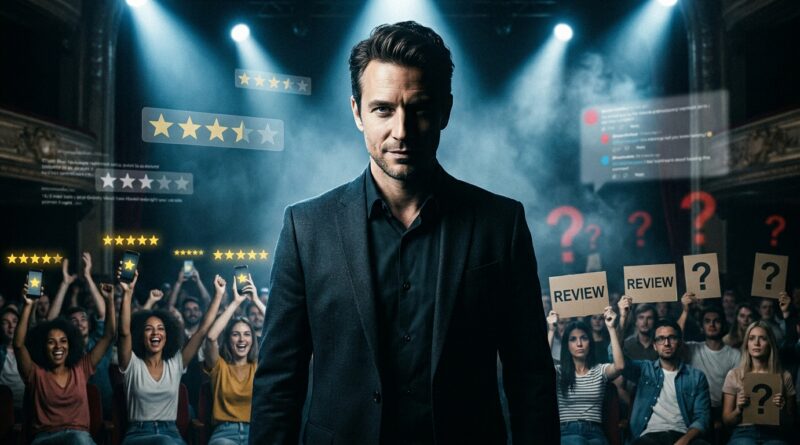
Inside 2026’s New ‘Fact‑Check The Mentalist’ Backlash: How Reviewers Quietly Turned Oz Pearlman’s Viral Fame Into A Trust War
If you follow mentalism at all, this split probably feels exhausting. One feed shows Oz Pearlman as the polished, impossible-to-ignore star with glowing audience reactions. The next feed says the whole thing is overhyped, the reviews are soft, and anyone impressed is being played. That whiplash is the real story in the Oz Pearlman mentalist controversy reviews 2026 debate. This is no longer just a fight about methods or whether mentalism is “real.” It is a fight about trust. Which clips feel honest. Which reviews sound independent. Which critics are fact-checking, and which are just farming outrage. For fans, ticket buyers, and working performers, that matters more than ever. A five star score can now boost a career and also attract a backlash cycle within days. So the smarter question is not “Did he read minds?” It is “Why do some audiences still feel delighted while others feel sold to?”
⚡ In a Hurry? Key Takeaways
- Oz Pearlman’s 2026 backlash is less about exposing tricks and more about whether audiences trust the clips, the framing, and the reviews around them.
- If you are judging a mentalist, separate stagecraft from review quality. Check recent ticket-buyer feedback, repeat complaints, and whether praise sounds specific or generic.
- For performers, the danger is not skepticism itself. It is letting vague marketing, overclaiming, or defensive responses turn strong ratings into “proof” for critics.
What actually changed in 2026
There have always been people who love mentalism and people who want to explain it away. That part is normal. What changed in 2026 is speed.
A viral performance no longer just earns applause. It triggers a second wave almost immediately. First come the clips. Then come reaction posts. Then the “fact-check the mentalist” videos. Then the threads accusing reviewers of being naive, bought, or too dazzled to ask basic questions.
That is the new cycle. Fame and distrust now rise together.
In Oz Pearlman’s case, the backlash seems to be fueled by three things at once. One, his visibility is high enough that every TV hit gets picked apart. Two, reviewers often describe the experience emotionally, which fans enjoy but skeptics read as weak evidence. Three, online audiences increasingly treat confident showmanship as a possible red flag instead of a selling point.
Why reviewers got pulled into the fight
This is the part many fans miss. Reviewers did not just report on the show. They became part of the argument.
When a reviewer says a performer was “unbelievable,” “impossible,” or “like real mind reading,” that language works fine in entertainment coverage. But in a skeptical online environment, those same words can sound careless. Critics then jump in and say the reviewer is helping sell a false claim, even if the review was clearly about the experience, not a literal supernatural ability.
That shift turned ordinary praise into evidence in a trust war.
The old review style now looks soft to some readers
For years, many entertainment reviews focused on atmosphere, crowd reaction, pacing, and wow factor. That still matters. It is how live shows are often judged.
But now readers want more specifics. Did the reviewer attend in person? Was the crowd pre-screened? Did the show rely heavily on editing, audience selection, or vague statements? Did the reviewer explain the difference between “I was fooled” and “this appears impossible”?
If those details are missing, skeptics fill in the blanks for them.
Five star praise can backfire
Oddly, a wall of glowing ratings can make suspicion worse, not better. If every quote sounds polished and every review sounds breathless, critics may treat consistency as a warning sign. Fair or not, that is how some readers process it now.
The issue is not that high ratings are fake. The issue is that modern audiences often trust mixed, detailed feedback more than perfect feedback.
What the anti-Oz posts are really saying
Most anti-Oz explainer posts are not making one single claim. They usually bundle several complaints together.
1. “He’s not really reading minds”
This is the easiest claim to make, and also the least surprising. Mentalism is performance. For most informed fans, that point is not a scandal. It is the premise.
The problem starts when audiences think a performer or a review is blurring the line too aggressively. If the marketing sounds like a wink, people enjoy the mystery. If it sounds like a hard claim, some people feel manipulated.
2. “The reviews are gullible hype”
This complaint lands when reviews use big emotional language and few concrete details. Readers now want to know what happened, not just how amazed the writer felt.
Specificity builds trust. Vague amazement can trigger doubt.
3. “TV and viral clips are a different product than a live show”
This is a fair concern in general. Camera framing, editing, and segment selection can make any performance look tighter than it felt in the room. That does not prove dishonesty, but it does mean TV praise should not be treated as the whole picture.
That is why fresh ticket-buyer ratings matter so much. They show whether real audiences walked out happy when there was no edit bay and no viral caption helping the moment along.
What the ratings still tell us
Here is the part that gets lost during backlash cycles. Strong audience ratings do not prove every claim around a performer is perfect. But they do show something important. People who paid, attended, and judged the full experience often still rate the show highly.
That matters because live entertainment is not a courtroom. The real measure for most buyers is simple. Was it engaging? Was it sharp? Did it feel worth the price? Did the performer leave the room buzzing?
If the answer is yes across a large set of recent reviews, the backlash may be more about framing than about the underlying quality of the act.
That is also why broader reputation tests matter. We touched on this in Inside 2026’s New ‘Presidential Mind Reader’ Test: Why Oz Pearlman’s White House Gig Could Quietly Rewrite How We Rank The World’s Highest‑Rated Mentalists. High-profile bookings can reshape rankings and public trust at the same time. They raise status, but they also raise the standard of scrutiny.
How to read mentalist reviews without getting played by either side
If you are a fan or potential ticket buyer, you do not need to become a debunker. You just need a better filter.
Look for review texture
Good reviews mention the setting, the crowd, the pacing, and what kind of reactions happened without pretending to prove the impossible. You want detail. Not just adjectives.
Separate enjoyment from literal belief
A person can love a mentalism show without thinking supernatural powers were involved. In fact, many of the strongest reviews come from people who understand that tension and still had a great time.
Watch for repeated complaints
One angry thread is noise. Ten independent comments raising the same issue is a pattern. That could be about scripting, audience interaction, pricing, or overhyped promotion.
Be careful with “exposé” content
Some explainer videos are useful. Some are just reverse clickbait. They promise truth but deliver certainty without evidence. If a creator seems more interested in dunking on fans than explaining the show fairly, that is its own trust signal.
What top-rated mentalists should learn from this now
This is where the story becomes useful for the industry, not just dramatic for social media.
1. Tighten the language around claims
Leave room for wonder, but do not push so hard that audiences feel baited. Mystery works best when people feel invited, not cornered.
2. Encourage reviews that are specific
Performers cannot script independent reviews, and they should not try. But they can create conditions where audience feedback is detailed. Clear post-show prompts can help. Ask people what stood out, not just whether it was amazing.
3. Treat skepticism as normal, not hostile
Defensiveness often makes criticism look bigger. Calm confidence works better. The audience knows mentalism involves technique, psychology, structure, and performance. Most people are fine with that. They just do not want to feel talked down to.
4. Protect the live experience
If online clips feel much slicker than the full show, the trust gap grows. The closer the real experience matches the viral version, the safer the reputation.
Why this story is bigger than one performer
Oz Pearlman is simply the clearest example right now because he is visible, searchable, and easy to argue about. But the same pressure now hits many top performers. The public is not only rating the act. They are rating the honesty of the package around the act.
That includes captions, interviews, review language, and the tone of promotional material. It also includes whether fans feel free to be enthusiastic without being mocked as gullible.
That last part matters. A healthy mentalism culture should allow two truths at once. You can know it is a performance. You can still be thrilled by it.
At a Glance: Comparison
| Feature/Aspect | Details | Verdict |
|---|---|---|
| Backlash driver | The loudest complaints focus on trust, framing, and review language more than on any shocking new reveal about methods. | Mostly a reputation and credibility fight. |
| Audience reviews | Recent ticket-buyer reactions still matter because they reflect the full live experience, not just edited clips or reaction content. | Still one of the best reality checks. |
| Best response for performers | Use precise marketing, welcome informed skepticism, and aim for detailed audience feedback instead of empty superlatives. | Smartest way to protect five star momentum. |
Conclusion
The useful lesson from the Oz Pearlman mentalist controversy reviews 2026 debate is not that fans should stop enjoying mentalism, or that skeptics should never ask hard questions. It is that trust now moves faster than applause. This helps our community today because the mentalism conversation has stopped being about who fooled who and started being about who the public actually trusts. By dissecting the new anti‑Oz explainer videos, skeptic posts and “he’s not really reading minds” threads alongside fresh ticket buyer ratings, we get a clearer, data-first snapshot of how fast reputation can swing in 2026, which claims audiences now treat as red flags, and what top-rated mentalists can do right now to keep five star scores from turning into backlash fuel. That is good for fans, fair to buyers, and honestly better for the art itself.