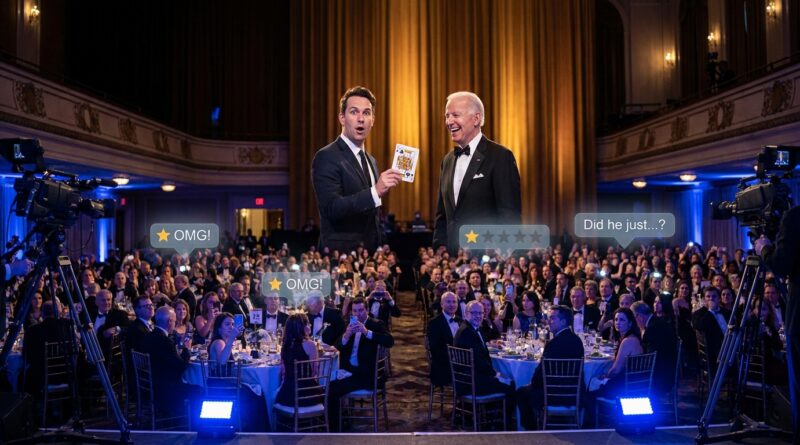
Inside 2026’s New ‘Presidential Mind Reader’ Test: Why Oz Pearlman’s White House Gig Could Quietly Rewrite How We Rank The World’s Highest‑Rated Mentalists
It is easy to get annoyed by the noise around celebrity ratings, especially when one performance suddenly gets treated like a career referendum. That is exactly what is happening with Oz Pearlman and the White House Correspondents’ Dinner. Fans want a simple answer. Did this huge, politically loaded room boost his standing as the world’s most celebrated mentalist, or did it expose the limits of hype? The frustration is real because mentalism is already hard to judge from clips, headlines, and secondhand reactions. Add Trump’s first appearance at the dinner, a crowd packed with critics, and the shadow of a coming Netflix special, and one night starts carrying way too much weight. Still, this event matters. It puts Pearlman in one of the toughest live environments possible. If you want to make sense of the Oz Pearlman White House Correspondents Dinner mentalist reviews, the best way is to look at what this room actually tested, and what it did not.
⚡ In a Hurry? Key Takeaways
- Oz Pearlman’s White House Correspondents’ Dinner set is unlikely to settle “best mentalist” debates on its own, but it is a serious pressure test of his live skill, timing, and crowd control.
- When you read reviews, separate reactions to the politics in the room from reactions to the actual performance. Those are not the same thing.
- This matters because a high-profile political gig can distort public opinion fast, so a before-and-after view gives you a fairer way to judge his status.
Why this one performance suddenly feels so important
The White House Correspondents’ Dinner is not a normal stage. It is part comedy roast, part political theater, part media spectacle. That makes it a brutal place for a mentalist.
A regular theater crowd shows up wanting to be amazed. This room often shows up ready to judge. Some people are there to laugh. Some are there to survive the night. Some are watching every beat for political meaning, even if the performer is just trying to read a name on a card.
That is why the Oz Pearlman White House Correspondents Dinner mentalist reviews matter more than a standard tour stop. This was not just another booking. It was a stress test in front of one of the hardest audiences in America.
What the room was really testing
1. Can he win over a divided crowd?
This is the biggest question. Great mentalists do not just fool people. They lower tension. They create trust fast. In a room loaded with political baggage, that skill becomes even more important.
If Pearlman got the audience to relax, laugh, and lean in, that helps his case a lot. If the room stayed stiff, that does not automatically mean the tricks were weak. It may just mean the environment was rough. Reviewers who miss that are grading the event, not just the act.
2. Can his style survive outside a friendly fan base?
Pearlman’s broader reputation has been built on polished TV appearances, corporate work, celebrity encounters, and highly watchable reactions. That is a real skill set. But the White House dinner asks something different. It asks whether that style still works when the audience is distracted, skeptical, and politically split.
This is why the night connects so closely with the bigger conversation around his rise. If you want a sense of how his public image has been building, Inside Oz Pearlman’s ‘5‑Star Reality Check’: How The World’s Most Televised Mentalist Is Quietly Rewriting What A Mind‑Reading Hit Looks Like On Netflix lays out why so many people now see him as a mainstream benchmark, not just a niche favorite.
3. Can one live set change global rankings?
Short answer, not by itself.
Mentalist rankings are always fuzzy. Some fans care about live ticket sales. Some care about TV reach. Some care about peer respect. Some care about social media clips and review averages. So no single dinner appearance can fully rewrite the list.
What it can do is shift momentum. It can change tone. It can make critics sound more cautious or more confident. That is often how reputations move in the real world.
How fans and critics are likely to split
Most reaction to this kind of event usually falls into three buckets.
The supporters
These are the people who will argue that just surviving this room is proof of elite talent. Their point is fair. A mentalist who can hold attention in a crowd like this is doing something difficult.
The skeptics
These viewers will say the event was too political, too staged, or too awkward to count as a clean win. They may also argue that mainstream hype around Pearlman has outrun the actual evidence.
The industry watchers
This group tends to be the most useful. They are more likely to notice practical things. Was the pacing sharp? Did volunteer moments land cleanly? Did he adapt to the room? Did jokes help or hurt? These details tell you more than whether someone on social media liked the guest list.
What would count as a real win for Oz Pearlman?
Not universal praise. That was never realistic.
A real win would look like this:
- Reviewers agree he stayed composed in a difficult room.
- Even mixed critics admit the material was strong.
- Audience chatter focuses on memorable moments, not secondhand controversy.
- The performance adds credibility ahead of the Netflix special.
If those boxes are checked, then his standing probably improves, even if some headlines stay snarky.
What would count as damage?
Again, not a few partisan complaints. Those were inevitable.
The bigger warning signs would be different:
- Multiple reviews say the act felt flat, overproduced, or poorly matched to the room.
- Industry insiders question his adaptability in tough live settings.
- Fan discussion shifts from amazement to overexposure.
- The dinner becomes a cautionary footnote before the Netflix release.
That would not erase his career. But it could chip away at the “highest-rated” framing people have been using around him.
Why the Netflix angle changes the stakes
This is where things get more interesting. A White House Correspondents’ Dinner set does not just live for one night anymore. It feeds the story around what comes next.
If Pearlman looked smooth under pressure, that becomes part of the sales pitch. He is not just TV-friendly. He is battle-tested. If he struggled, critics may use the moment to question whether his style is stronger in edited formats than in messy real rooms.
That is why this event sits right next to the Netflix conversation instead of apart from it. People are not only judging a dinner performance. They are deciding what kind of headliner they think he really is.
How to read the reviews without getting fooled by the noise
Separate politics from performance
If a review spends most of its time on Trump, the dinner’s symbolism, or media drama, it may tell you very little about the mentalism itself.
Look for specifics
Good reviews mention concrete things. Timing. Audience management. Strength of reveals. Recovery when a bit gets messy. Bad reviews stay vague.
Check a mix of sources
Fan posts, mainstream critics, and magicians all notice different things. You need all three to get a balanced picture.
Do not confuse visibility with proof
A massive booking raises profile. It does not automatically prove someone is better than every other top mentalist working today.
So, does this rewrite his ranking?
Probably not in a clean, dramatic way. But it can absolutely move the conversation.
If the night is remembered as poised, funny, and surprisingly effective in a brutal room, Pearlman’s “most celebrated” label gets more believable. If it is remembered as awkward, overhyped, or swallowed by the politics around it, the label gets shakier.
That is the quiet rewrite people are really watching for. Not a formal ranking update. A change in confidence.
At a Glance: Comparison
| Feature/Aspect | Details | Verdict |
|---|---|---|
| Audience difficulty | Political, skeptical, distracted, and packed with media figures instead of dedicated magic fans. | A strong showing here helps his reputation more than an easy theater win. |
| Impact on rankings | One dinner set cannot settle who is the world’s top mentalist, but it can shift tone, momentum, and reviewer confidence. | Important, but not final. |
| Netflix relevance | The performance feeds the story around whether Pearlman is built for huge, high-pressure mainstream moments. | Could strengthen or complicate the Netflix buildup. |
Conclusion
The smart way to judge this night is not to ask whether everyone loved it. That was never going to happen. The better question is whether Oz Pearlman looked like a top-tier mentalist under the kind of pressure that exposes weak performers fast. That is why this helps the community today. His White House Correspondents’ Dinner set is one of the clearest mentalism stress tests in years, landing right as he is being framed as the world’s most celebrated mind reader and gearing up for Netflix. By sorting critic takes, fan chatter, and insider reaction into a simple before-and-after picture, readers get something more useful than hot takes. They get a grounded way to decide whether this unusual political stage really cements his place among the world’s highest-rated mentalists, or simply shows how messy public rankings can be when show business and politics share the same room.