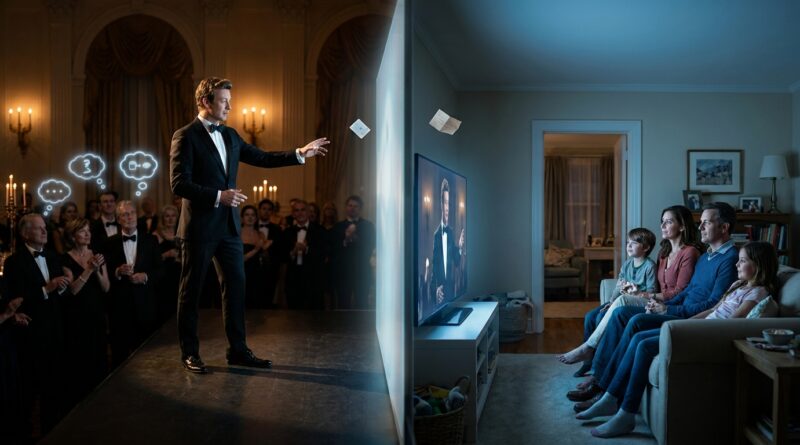
Inside Oz Pearlman’s ‘5‑Star Reality Check’: How The World’s Most Televised Mentalist Is Quietly Rewriting What A Mind‑Reading Hit Looks Like On Netflix
If you are feeling a little worn out by the hype around Oz Pearlman, you are not alone. Every other blurb seems to call him the most televised mentalist alive, or the guy who made history at the White House Correspondents’ Dinner, but that still does not answer the question regular viewers actually care about. Is his Netflix special going to feel amazing on your couch, or is this another case where the marketing is more impressive than the mind-reading? That is the real reality check. Oz Pearlman is the rare performer whose reputation was built across live TV, corporate rooms, celebrity appearances and stage work, not just social clips. That matters. It usually means stronger audience control, cleaner pacing and less dependence on editing tricks. Still, Netflix specials can flatten live energy if the format leans too hard on reaction shots. So the smart way to judge this one is simple. Watch for structure, fairness and repeatability, not just gasps.
⚡ In a Hurry? Key Takeaways
- Oz Pearlman’s Netflix special is likely worth a watch if you like polished, mainstream mentalism, but the real test is whether the routines feel fair and understandable without TV over-editing.
- When reading Oz Pearlman Netflix mentalist reviews, focus on whether critics mention live audience flow, clear conditions and full routine buildup, not just celebrity reactions.
- Do not confuse “most televised” with “best ever.” It does suggest consistency under pressure, which is a good sign, but camera presentation can still change how strong a trick feels at home.
Why people are struggling to read the hype
Netflix has a way of turning niche performance art into a living-room event. That is great for exposure. It is not always great for clarity.
Mentalism is especially tricky here because the average viewer is being asked to judge two things at once. First, the performer. Second, the production. If a routine looks impossible, was it Oz being brilliant, or was it framing, editing and selective cuts doing some heavy lifting?
That is why so many Oz Pearlman Netflix mentalist reviews are going to miss the point. A lot of them will review the vibe, not the method discipline. They will say he is charismatic, smooth, funny, surprising. All useful. But not enough.
The better question is this. Does the special make you feel like you saw a strong piece of mind-reading happen under conditions that seemed fair?
What “most televised mentalist” actually tells you
This phrase sounds like publicist wallpaper until you unpack it a bit.
Being the most televised mentalist does not automatically mean someone is the deepest thinker in the field. It does mean they have passed one brutal test over and over. They can deliver under time pressure, with producers in their ear, skeptical viewers at home and very little margin for dead air.
TV is unforgiving. A mentalist who keeps getting invited back usually has three things.
1. Fast trust-building
They can make strangers comfortable quickly. This is a bigger skill than many people realize. If a participant feels awkward, the whole routine suffers.
2. Clear effect design
The audience needs to understand what is supposed to be impossible. If the setup is muddy, the payoff dies. Oz’s TV background suggests he understands this part well.
3. Reliable hit rate
Mentalism often lives or dies on confidence. TV producers do not love uncertainty. A heavily booked TV mentalist is usually someone with material that lands consistently.
So yes, “most televised” is partly hype. But it is also a useful clue. It points to repeatable performance quality.
Why the White House Correspondents’ Dinner matters more than it sounds
That event is not just another celebrity booking. It is one of the toughest rooms in public life.
You are dealing with powerful people, media professionals, political staffers and a crowd trained to spot spin from a mile away. It is loud, distracted and filled with people who think they have seen everything. If a mentalist can command that room, that says something real about presence and control.
It does not prove every Netflix minute will be gold. But it supports the idea that Oz Pearlman is not just a camera creature. He is someone who can handle difficult live conditions.
What makes a great mentalism special at home
A lot of stage acts lose something on TV. Mentalism can either shrink badly or become even stronger, depending on how it is shot.
Here is what separates a five-star special from a forgettable one.
Fair conditions
You should be able to follow the rules of the effect. Who picked what. When they picked it. Whether the performer touched anything suspicious. If the special gets fuzzy here, your trust starts to leak away.
Clean editing
Editing is not cheating by itself. Every special is edited. The question is whether the cuts support clarity or create suspicion. If reaction shots interrupt the logic of the trick, viewers notice.
Strong participant management
The best mentalists make ordinary people look natural on camera. The worst make them look coached or confused. This is one of the easiest ways to tell pros from pretenders.
Escalation
A special should build. Small impossibilities should lead to bigger ones. If every trick feels like the same guess in different clothes, the show starts to drag.
My read on Oz Pearlman’s likely strengths
If you know his work from television appearances and live reports, a pattern shows up pretty quickly.
Oz is usually strongest when he is doing direct, easy-to-track thought revelation. He tends to sell astonishment through speed, confidence and human connection rather than weird dark theatrics. That is good news for Netflix. Broad audiences usually respond better to material that is clear and personal than material that is overly mysterious for its own sake.
He also has a very watchable quality that matters more than fans sometimes admit. He does not seem desperate for you to believe he has supernatural powers. That lighter touch makes mainstream viewers less defensive.
For a home audience, that can be the difference between “this is fun, let me keep watching” and “this feels smug, I’m out.”
Where a Netflix special could still go wrong
Even very good mentalists can get trapped by the streaming format.
Too much polish
If everything is cut too tightly, people stop enjoying the mystery and start auditing the footage. The more impossible it looks, the more they wonder what they were not shown.
Celebrity overload
If the special leans too hard on recognizable faces, the effect can feel borrowed. Celebrity reactions are not a substitute for strong construction.
One-note pacing
Mentalism needs rhythm. A prediction, then a reveal, then another prediction, then another reveal can get repetitive fast. The best specials mix emotional tones and effect types.
At-home disconnect
Some routines destroy in the room but feel ordinary on a sofa. If a trick depends mostly on atmosphere, it may not survive the jump to streaming.
How to read Oz Pearlman Netflix mentalist reviews without getting fooled
This is probably the most useful part if you are trying to decide whether to spend your time on the special.
Look for reviews that answer these questions.
Do they describe complete routines?
If a reviewer only says “people were stunned,” that tells you almost nothing. Good reviewers explain the effect clearly enough that you understand why it mattered.
Do they mention fairness?
This is the big one. Reviews worth trusting will mention whether choices seemed free, whether the camera stayed honest and whether the sequence was easy to follow.
Do they separate performance from production?
A sharp review can like Oz’s presence while still questioning how a segment was shot. That balance is a good sign.
Do they compare him to the right peers?
Comparing every mentalist to Derren Brown is lazy. Better comparisons would be to televised performers who balance broad appeal with believable impossibility. The point is not whether Oz is the most experimental mind in the field. It is whether he delivers clean, satisfying astonishment for a general audience.
So, will the five-star hype hold up?
Probably for many viewers, yes. But maybe not for the exact reason the headlines suggest.
If you go in expecting some secret revolution in method, you may come away underwhelmed. If you go in expecting a highly polished, camera-aware performer with a strong record of making mind-reading feel accessible and exciting, the odds are much better that you will enjoy it.
The likely sweet spot is this. Oz Pearlman will probably not rewrite mentalism itself. What he may rewrite is how mainstream viewers think a mentalism hit is supposed to look on Netflix. Less spooky nonsense. More speed, clarity and social ease. More “how did he know that?” and less “look at this gloomy man in a dramatic hallway.”
What viewers should watch for in the first 15 minutes
You can usually tell pretty quickly whether a mentalism special is going to earn your trust.
- Are the premises easy to understand right away?
- Do participants seem genuinely surprised instead of oddly vague?
- Does the camera stay put when it should?
- Are reveals spaced out well, or is the show rushing to prove itself?
- Do you feel impressed and curious, rather than pushed and managed?
If the answer is yes to most of those, the special is probably on solid ground.
Who this special is most likely for
This matters because not every five-star review means five stars for you.
Good fit
Viewers who like polished performance, people-based astonishment and easy-to-follow mystery. Also good for families or casual watchers who want something impressive without needing deep knowledge of magic.
Less ideal fit
Hardcore magic fans who want novel method thinking, darker theatrical framing or long-form psychological experimentation may find it more mainstream than groundbreaking.
At a Glance: Comparison
| Feature/Aspect | Details | Verdict |
|---|---|---|
| Performance credibility | Years of television spots and high-pressure live appearances suggest strong consistency, audience handling and clear effect structure. | Strong positive sign |
| Netflix presentation risk | Streaming specials can overuse edits, reaction shots and celebrity framing, which may weaken trust even when the performer is excellent. | Watch carefully |
| Overall viewer payoff | Best for audiences who want smart, accessible mind-reading with broad appeal rather than ultra-niche or experimental mentalism. | Likely crowd-pleaser |
Conclusion
Oz Pearlman’s crossover moment is happening right now, and that is exactly why a calm reality check matters. Between Netflix, social clips and the White House Correspondents’ Dinner glow, people are about to get buried in hot takes and borrowed hype. The useful move is not to ask whether he is overhyped or underrated in some abstract way. It is to look at what is actually on screen. Are the routines fair? Is the structure clear? Does the astonishment feel earned? If the answer is yes, then the special deserves your time and your good review. If not, you will know why, and you will not need a flashy press quote to decide for you. That helps the community because it gives regular viewers a way to separate true top-tier mentalism from clever TV packaging, manage expectations and spend their attention where it counts.