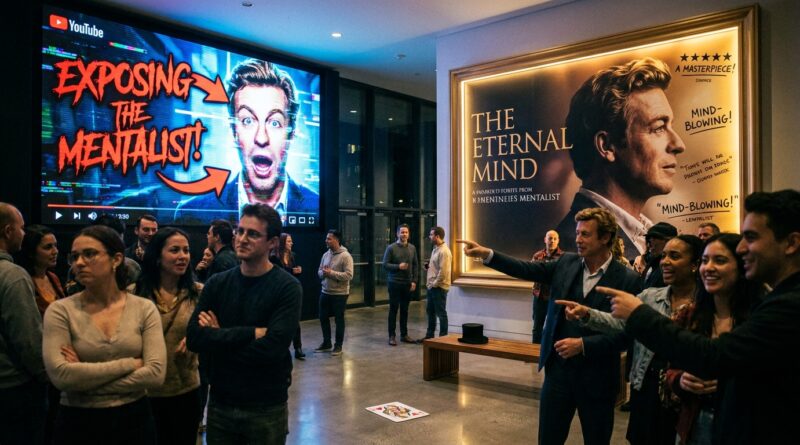
Inside 2026’s New ‘Exposed Yet Sold Out’ Paradox: How Mentalists Survive 5‑Hour YouTube Takedowns And Still Pull Five‑Star Reviews
You can see why people are annoyed right now. A mentalist gets torn apart in a five hour YouTube takedown, Reddit piles on, clips get shared everywhere, and then somehow that same performer is still sold out next weekend with a wall of five star reviews. If you are a fan, it starts to feel like you cannot trust anything. If you are a performer, it feels like one viral “debunk” could wipe out years of work. The strange part is that both sides are partly right. Some acts really do survive exposure because the audience experience is still strong, honest, and memorable. Others survive for a while on old reputation, stale ratings, and customers who never saw the backlash. The trick is to stop asking, “Were they exposed?” and start asking, “Did the reviews get better, sharper, and more human after the exposure hit?” That is the real signal in the mentalists exposed but still getting five star reviews 2026 mess.
⚡ In a Hurry? Key Takeaways
- The best clue is not the star rating itself. It is whether post-backlash reviews sound specific, recent, and emotionally real.
- Before booking, sort reviews by newest first and look for comments written after the controversy, not years-old praise.
- A mentalist being “exposed” does not automatically mean the live show is bad, but vague five-star ratings can hide a drop in quality.
Why this paradox keeps happening
Here is the simple version. A takedown video and a live show are not the same product.
A long exposé might prove that a performer uses stock techniques, recycled lines, heavy editing online, or claims that sound bigger than what is really happening. Fair enough. But a paying audience at a theater often cares about something else. Did they laugh? Did they feel seen? Did the room buzz afterward? Did their partner talk about it all the way home?
That gap is where this “exposed yet sold out” pattern lives.
People do not buy a ticket to grade secret methods. They buy a night out. If the performer still gives them a strong night out, bookings can survive even when the internet is furious.
That does not mean every exposed act deserves a pass. It means you need a better filter than raw outrage or raw stars.
The review pattern that matters most in 2026
If you only remember one thing, remember this. Fresh reviews tell the truth faster than average ratings do.
What strong post-backlash reviews look like
Good recent reviews usually get more detailed after a controversy. They say things like:
- “I was skeptical because of what I saw online, but the crowd interaction was fantastic.”
- “He was clear that this was psychological entertainment, not supernatural power.”
- “The new material felt tighter than the clips I had seen before.”
- “My wife ended up being part of the show and still talks about it.”
See the pattern? Specific. Recent. Emotional. Grounded in the live experience.
What weak five-star reviews look like
Weak reviews are usually short and foggy. Things like:
- “Amazing show.”
- “Best ever.”
- “Mind blown.”
- “Must see.”
Those are not useless, but they do not help much. A stack of vague five-star posts can hide almost anything, especially if many were written before the backlash.
Why some mentalists actually improve after getting exposed
This is the part many fans miss. Public criticism sometimes forces a performer to get better.
When the heat is on, smart mentalists tighten disclaimers, clean up misleading marketing, cut weak bits, and spend more time on audience connection. They stop selling “I have real powers” and start selling “this is a thrilling, interactive show.” That shift often leads to better reviews, not worse ones.
The strongest survivors usually do three things.
1. They change the promise
They stop making claims that invite angry debunks. Instead of pretending to be a guru, prophet, or human lie detector with impossible certainty, they frame the act as entertainment built on psychology, observation, suggestion, showmanship, and mystery.
2. They improve the room, not just the brand
Bad press makes some performers work harder on pacing, audience selection, sound, seating, meet-and-greets, and the emotional ending. That matters more than online drama for real ticket buyers.
3. They let fresh reviews do the talking
Instead of arguing with every critic, they focus on giving current audiences something worth describing in detail. Over time, the review section becomes less about the scandal and more about the actual night.
How to tell who is worth your money
If you are trying to pick a mentalist right now, use this quick filter.
Check the timeline first
Find the date when the big takedown, Reddit pile-on, or controversy hit. Then read reviews posted after that date. If the best reviews are all older than the backlash, be careful.
Look for specificity
Recent praise should mention moments, structure, tone, and audience interaction. The more concrete the review, the more useful it is.
Watch for honesty in the marketing
If the website and ticket page now describe the act more clearly, that is a good sign. If the performer still uses loaded claims that sound designed to fool people, that is a red flag.
See whether criticism changed the act
Did the performer update material, sharpen the script, or become more transparent? Improvement matters. Stubbornness usually shows up in the reviews.
Ignore the loudest comment section voices
Comment sections reward certainty, not nuance. A person can be right about a method and still wrong about whether the live show works. Keep the two questions separate.
For performers: how not to get crushed by the next “debunk”
If you are on the other side of this, the lesson is uncomfortable but useful. Exposure culture is not going away. You cannot control the internet. You can control what happens after the hit lands.
The performers who recover best usually do not panic-post. They make the customer experience better, fast.
- Update your show description so it sounds fair and clear.
- Remove claims that create the wrong expectation.
- Ask recent attendees for honest reviews, not generic praise.
- Fix dead spots in the show that critics can easily mock.
- Train staff and venue partners so the full night feels polished.
If reviews after the backlash become more detailed and warmer, you are moving in the right direction.
Why old five-star averages can mislead you
This is where many buyers get fooled. Rating platforms are sticky. A performer can hold a 4.9 average for a long time because hundreds of old reviews are still doing the heavy lifting.
That number may reflect a version of the act from two or three years ago. It may also reflect a period before the public criticism exposed weak claims or sloppy habits.
So do not ask, “Do they still have five stars?” Ask, “What happened to review quality after the heat arrived?”
This same kind of hype distortion is also showing up in audience demand more broadly. If you have noticed renewed interest in slick TV-style mind readers, Inside 2026’s New ‘Netflix Mentalist Revival’: How A 15‑Year‑Old Crime Show Quietly Hijacked Today’s Five‑Star Mind‑Reader Rankings is worth a look. It helps explain why some performers get a boost in bookings even when online criticism is swirling around them.
The simplest decision tool for fans
Here is a practical way to book smarter tonight.
Book the artist if:
- Most strong reviews are recent.
- Reviews mention feelings, moments, and audience treatment.
- The marketing now sounds clearer and less inflated.
- People who mention the backlash still say the live show delivered.
Hold off if:
- The five-star score is mostly carried by older reviews.
- Recent praise is vague or repetitive.
- The act still depends on claims that feel slippery.
- Newer reviews mention disappointment, bait-and-switch, or cold audience handling.
At a Glance: Comparison
| Feature/Aspect | Details | Verdict |
|---|---|---|
| Post-backlash reviews | Detailed, recent comments that describe actual moments, audience interaction, and how the show felt after the controversy. | Best indicator of current value |
| Overall star average | Can stay high for months or years because old reviews keep the score inflated. | Useful, but not enough on its own |
| Marketing after exposure | Clearer language, fairer promises, and a stronger focus on entertainment suggest the performer learned from the backlash. | Strong positive sign |
Conclusion
The current mess is real. Five-hour takedowns, angry threads, and blanket claims that every mentalist is a fraud have made fans nervous and performers defensive. But you do not need to choose between blind trust and total cynicism. There is a middle path. Look past the headline drama and study what happened after it. The mentalists worth booking are the ones whose reviews got sharper, more specific, and more emotional once the backlash hit. That usually means the live experience improved, the promise got clearer, and the audience still felt they got their money’s worth. The ones to avoid are the acts still hiding behind old five-star averages and vague praise from a calmer era. That is the practical test the community needs right now, and it is a much better guide than either hype or outrage alone.