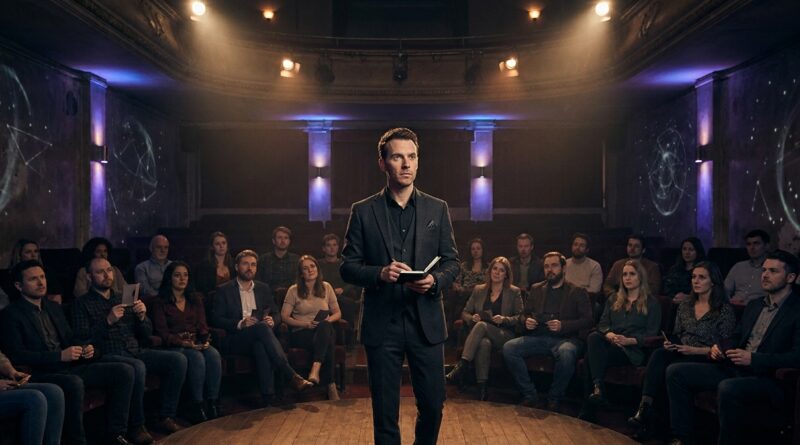
Inside 2026’s New ‘Immersion Test’: How Full-Sensory Shows Quietly Re-Rank The World’s Highest-Rated Mentalists
You can feel the audience fatigue now. People are tired of mentalism shows built like social clips. One fast surprise. One smug reveal. Thirty seconds of “how did they do that?” followed by a very empty ride home. What they want instead is harder to fake. A room with tension. A story that pulls them in. Sound, light, staging, timing, and mind reading that work together so the whole night gets under their skin. That is where 2026’s quiet re-ranking has started. The best immersive mentalist shows 2026 are not always the biggest TV names. They are often the performers who can control a room, build a believable world, and make each effect feel like part of a larger experience. That shift matters for fans, event planners, and venues alike, because “immersive” is quickly becoming the new test of whether a mentalist is truly top-tier or just very online.
⚡ In a Hurry? Key Takeaways
- The best immersive mentalist shows 2026 are being judged less by viral clips and more by how fully they surround audiences in story, sound, light, and emotion.
- If you are booking or buying tickets, look for shows with clear atmosphere, strong audience control, and effects that build into a full experience, not random tricks.
- “Immersive” can be expensive branding with no payoff, so reviews, room design, pacing, and repeat word-of-mouth matter more than glossy promo footage.
Why mentalism rankings are quietly changing
For years, the usual pecking order was simple. TV exposure sat at the top. Viral clips came next. Live reputation often came third, which never made much sense to people who actually go to shows.
That is changing because live audiences have become much pickier. They have seen polished editing. They have seen reaction bait. They have seen “luxury” events that felt more like photo booths with a ticketing system. So now, when people pay real money and give up a night out, they want more than a neat trick.
They want presence. They want atmosphere. They want a performer who can shape a room from the second they walk in.
This is the new immersion test. It is not an official award or a published scoring system. It is the way audiences, bookers, critics, and high-end event buyers are starting to sort the memorable performers from the forgettable ones.
What “immersion” actually means in a mentalism show
Immersion is not just projecting stars on the ceiling and adding spooky music. That is decor. Sometimes nice decor, sure, but still decor.
Real immersion means every part of the show supports the mentalist’s central idea. The room setup, pre-show messaging, music cues, audience placement, lighting changes, volunteer handling, reveals, and ending all feel connected. Nothing feels dropped in because it looked good on Instagram.
It changes how the audience feels, not just what they see
A flat mentalism show gives you a sequence of puzzles. A truly immersive one changes your internal state. It can make a room feel intimate, uneasy, playful, dreamlike, or deeply personal. The best performers do not just fool people. They guide attention and emotion at the same time.
It rewards stagecraft, not just clever methods
That is why some underrated live performers are climbing in reputation. Their methods may not be louder than the TV names, but their total show experience is stronger. They know how to pace silence. They know when to narrow the room’s focus. They know how to make one reveal land harder because of everything that happened before it.
Why audiences are done with one-note “gotcha” shows
The old model was built on isolated moments. Guess a word. Predict a number. Name a memory. Get applause. Repeat.
There is nothing wrong with those effects by themselves. The problem is when the whole night feels like disconnected proof-of-concept demos. People stop feeling wonder and start doing mental admin. “Okay, next trick. Next volunteer. Next reveal.”
That is not immersion. That is a slideshow with tension music.
The best immersive mentalist shows 2026 avoid that trap by giving the audience a reason to care about what happens next. There is a thread running through the performance. Maybe it is a psychological theme. Maybe it is a mystery structure. Maybe it is a story about memory, chance, identity, or influence. Whatever the frame, it gives each effect more weight.
The new signals that a mentalist is top-tier live
If you are trying to tell whether a performer deserves the hype, here is what to watch for.
1. The room changes before the first reveal
Great immersive mentalists start the show before the show “starts.” The check-in process, holding music, greeting style, seat layout, and opening beat all help set expectations. You feel yourself entering a different mode.
2. Volunteers look respected, not used
This is a big one. Weak mentalists often rely on awkward crowd handling, embarrassment, or overcoaching. Strong immersive performers make volunteers feel safe and central. That trust lets the audience relax and believe the stakes.
3. The effects build on each other
You should feel momentum. Early moments establish tone. Middle sections deepen the idea. The ending pays off something larger than a single trick. If every piece feels interchangeable, the show probably is.
4. Tech supports the mystery instead of showing off
Some of the smartest modern performers are using sound design, wearable tech, responsive lighting, hidden sensors, projection, or custom staging in ways the audience may never notice directly. That is usually a good sign. When the technology screams for attention, the mystery gets smaller.
This is also why there is overlap with the high-end event market. If you want a sense of how premium buyers are responding to this trend, Inside 2026’s New ‘Luxury Mentalist’ Wave: Why 5‑Star VIPs Are Quietly Crowning Tech‑Driven Mind Reading The Next Status Symbol shows how polished production and stronger live design are helping reshape what counts as elite mentalism.
Why this shift helps underrated mentalists
This is the best part of the story. The immersion test is not just good for audiences. It is also fairer to serious performers who have spent years getting excellent on stage instead of excellent at clips.
A camera can flatten a live experience. It can miss tension, atmosphere, timing, and crowd energy. That means some of the strongest mentalists have looked smaller online than they do in the room.
Immersive staging changes that conversation. Once people start comparing full experiences instead of isolated tricks, skill sets like writing, direction, pacing, and emotional control matter more. Suddenly, the person with the biggest online following is not automatically the person with the strongest show.
How to spot the real thing before you buy a ticket
Marketing departments have noticed the word “immersive,” which means it is already being stretched past usefulness. Here is how to cut through that.
Read reviews for feelings, not just praise
Good reviews mention atmosphere, pacing, emotional impact, and what the room felt like. Thin reviews only say things like “mind-blowing” or “must-see.” Nice sentiments, but not very useful.
Look for evidence of a complete point of view
Does the show appear to have a theme? Is the visual style consistent? Do trailers suggest a world, or just a pile of reaction shots?
Check the venue fit
A 40-seat room can feel deeply immersive with the right design. A huge hall can feel dead if the performer cannot scale intimacy. Bigger is not always better.
Ask what role the audience plays
Immersion does not always mean wandering through sets. In mentalism, it often means the audience feels psychologically involved. Their choices, memories, and attention become part of the engine of the night.
What bookers should use as a smarter ranking test
If you are hiring for a corporate event, private gathering, theater run, or premium hospitality setting, it helps to judge beyond name recognition.
Use these questions
Can this performer hold a room without relying on a screen? Can they adapt to different audience energy? Do they create a branded-feeling experience without making it feel corporate? Will guests remember the whole night or just one clip-worthy moment?
Those answers matter more than follower count. A lesser-known mentalist with strong immersive design may leave your guests talking for months, while a famous one may deliver five solid tricks and vanish from memory by dessert.
At a Glance: Comparison
| Feature/Aspect | Details | Verdict |
|---|---|---|
| Traditional trick-first mentalism | Strong individual reveals, but often loose structure, generic staging, and little emotional build. | Still fun, but easier to forget. |
| Branded “immersive” show with weak substance | Fancy lighting, dramatic promo, maybe interactive seating, but disconnected effects and shallow audience experience. | Looks premium. May disappoint. |
| Best immersive mentalist shows 2026 | Unified story, strong room control, thoughtful tech use, respectful volunteer work, and reveals that land harder because of the full setup. | Most likely to justify the hype and the ticket price. |
Conclusion
The quiet shake-up in mentalism is simple. Audiences are no longer ranking performers only by fame, speed, or clip value. They are starting to rank them by immersion. Can this person surround a room in sound, light, story, and tension so completely that the audience leaves feeling changed, not just fooled? That is why the best immersive mentalist shows 2026 are becoming the new gold standard. If fans and bookers learn to spot the signs of real immersion, they can spend their time and money on shows that genuinely move them. Better still, it gives skilled, under-recognized mentalists a real chance to be judged beside the usual TV names, and sometimes ahead of them.