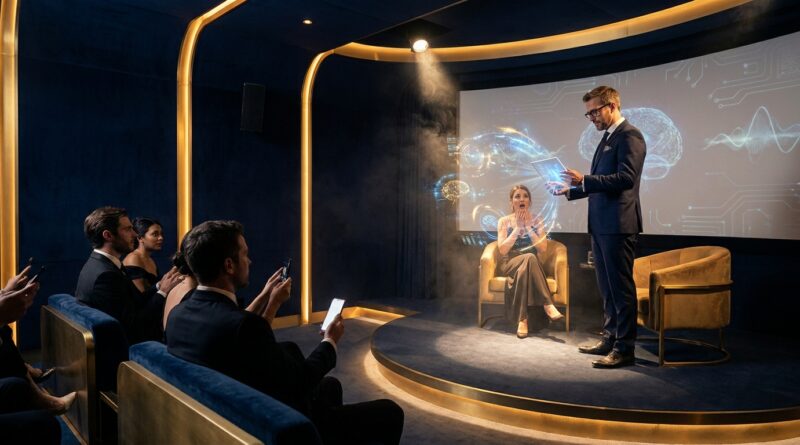
Inside 2026’s New ‘Luxury Mentalist’ Wave: Why 5‑Star VIPs Are Quietly Crowning Tech‑Driven Mind Reading The Next Status Symbol
If you have paid premium prices for a “mind-reading” show and got tired card forcing, obvious audience plants, and a man in a shiny blazer shouting about body language, you are not alone. High-end buyers are getting picky, and fast. In 2026, the gap between a standard magician and a true luxury mentalist is suddenly huge. One feels like a private lounge with quiet confidence. The other feels like waiting at a crowded gate with a delayed boarding pass. That shift is showing up in reviews, especially in searches for luxury mentalist 2026 reviews, where guests now praise atmosphere, design, and realism just as much as the tricks themselves. The new top tier is not just “better at magic.” These performers mix sleek staging, smart pacing, cinematic storytelling, and discreet tech to create moments that seem impossible even when you are standing right there. For elite venues, cruise lines, and private hosts, that difference now matters a lot.
⚡ In a Hurry? Key Takeaways
- The biggest shift in luxury mentalist 2026 reviews is not bigger tricks. It is premium presentation, subtle tech, and a more believable, polished experience.
- If you are booking or buying tickets, look for reviews that mention atmosphere, audience handling, realism, and production quality, not just “he guessed my card.”
- Be careful with overhyped tourist-trap shows. Low-budget staging and recycled routines are being spotted faster, especially by five-star audiences.
Why this trend is hitting now
Luxury audiences have changed. They are harder to impress because they have seen everything. They have Michelin-level dining, immersive theater, private members clubs, first-class travel, and concierge service as their baseline. If a live show wants to compete in that world, it cannot feel cheap, loud, or stuck in 2013.
That is the real story behind the new luxury mentalist wave. These performers are not selling “a few tricks.” They are selling a controlled, premium experience. The best acts now feel designed from the ground up, from the lighting cue to the way the performer walks on stage.
And reviews reflect that. Guests are no longer writing, “He was funny and did some mind reading.” They are writing things like, “I still cannot explain what happened,” or “It felt more like live cinema than a magic act.” That is a different category of praise.
What makes a luxury mentalist feel expensive
1. The show has a point of view
Older-school acts often feel like a grab bag. A prediction here. A card trick there. Maybe a borrowed ring in the middle. The premium 2026 acts are tighter. They have a story, a mood, and a reason for every effect.
Think of it like the difference between a tasting menu and a buffet. Both may contain great ingredients. Only one feels curated.
2. The technology is hidden, not advertised
This is where things get interesting. The new wave often uses technology, but not in a clunky “look at my gadget” way. The best performers use it like a film score. You feel the effect. You do not necessarily notice the tool.
That might mean custom audio, invisible cueing, app-based systems, environmental control, modern display surfaces, or smart integration with the room itself. The audience is not meant to clap for the tech. They are meant to forget tech is involved at all.
That is why the strongest moments get described as “how is this not CGI?” Even when the audience is two feet away, it feels cleaner, smoother, and less mechanical than old-school methods.
3. The performer understands luxury service
This sounds small, but it is not. Premium clients notice timing, tone, wardrobe, and restraint. A luxury mentalist does not usually beg for applause, over-explain, or work the room like a cruise ship comic from twenty years ago.
They know how to read a high-end crowd. They know when to go intimate, when to slow down, and when to let silence do the heavy lifting.
Why traditional acts are stalling
Some classic mentalists are still excellent. This is not about age. It is about adaptation.
The acts that are slipping tend to share a few habits. They reuse stock scripts. They use props that look like they came from a novelty shop. They rely on “mind reading” that feels more like puzzle-solving than a real experience. And they often ignore how much modern audiences care about aesthetics.
That matters because review culture is brutal now. One weak photo, one dated stage setup, one bored audience clip on social media, and the whole brand starts to feel second-tier.
Five-star guests do not always know how a routine works. But they are very good at spotting when something feels mass-produced.
What people are really praising in luxury mentalist 2026 reviews
If you read closely, the best reviews are rarely just about the secret. They usually praise four things.
Believability
The top acts make the impossible feel unnervingly plausible. Not because the audience thinks it is real, exactly, but because the moment lands without obvious seams.
Design
Good lighting. Elegant staging. Sound that feels intentional. Screens or visuals that support the act instead of turning it into a PowerPoint show. The room feels considered.
Emotional control
The best performers know how to build tension. They can make a room go quiet without forcing it. That is rare, and people remember it.
Respect for the audience
Luxury crowds do not want to be mocked, embarrassed, or pushed into fake reactions. Premium acts tend to treat volunteers like collaborators, not props. That earns trust quickly.
A practical checklist before you book or buy
If you are a fan, event planner, venue team, or just someone trying to avoid an overpriced tourist trap, use this checklist.
Check the photos and clips
Do they look current? Is the staging clean? Does the room look premium, or does everything scream banquet package from 2016?
Read the reviews for specific language
Look for comments about atmosphere, sophistication, pacing, and realism. Be cautious if every review sounds generic, or only mentions one simple effect repeated over and over.
Look at the audience fit
Has the performer worked in high-end hotels, top cruise environments, luxury private events, or serious corporate spaces? Not every good mentalist fits every room.
Watch for “too much proof” marketing
If the promo is all shocked faces, loud edits, and bold claims about changing lives, slow down. Truly premium acts usually market with more confidence and less noise.
Ask how the show is structured
A thoughtful answer is a good sign. “We customize the room, flow, and audience journey” says one thing. “I do a bit of everything” says another.
The quiet role of tech in the best shows
Some readers hear “tech-driven” and picture robots, holograms, or a giant LED wall. It is usually much subtler than that.
The smartest luxury mentalists use technology the way a five-star hotel uses automation. You are not meant to admire the plumbing. You are meant to notice that everything just works.
That can mean better precision, cleaner reveals, stronger timing, and a more personal feel. In the wrong hands, tech looks gimmicky. In the right hands, it removes friction and makes the impossible feel frictionless too.
That is the sweet spot for 2026. Not old school for the sake of tradition. Not flashy for the sake of novelty. Just polished enough that the audience experiences wonder without seeing the machinery.
Why elite venues are rewarding this now
Luxury hotels, premium cruise lines, and private hosts are not just buying entertainment. They are protecting a brand promise.
If everything else in the guest experience is smooth, elegant, and carefully designed, a clunky act sticks out immediately. It can drag down the whole evening. But when the performance feels premium too, it lifts the event and gives people something they actually talk about afterward.
That is why the new leaders in this space are collecting strong word-of-mouth. They fit the room. They fit the audience. And they understand that in luxury settings, “good enough” is usually not good enough for long.
What this means for fans of live mind reading
The good news is that this shift helps regular ticket buyers too. Better standards at the top usually raise expectations everywhere else. More audiences are learning to spot lazy scripting, dated props, and generic routines. That pushes the market toward better shows.
It also means “mentalist” is becoming a wider category. In 2026, the strongest acts may borrow from theater, psychology, design, live tech, and immersive storytelling. That mix is exactly why the best performances feel fresh again.
At a Glance: Comparison
| Feature/Aspect | Details | Verdict |
|---|---|---|
| Production quality | Luxury acts use refined lighting, sound, wardrobe, and stage flow. Traditional lower-tier acts often rely on basic setups and dated visuals. | Premium presentation now strongly affects reviews. |
| Use of technology | Top 2026 performers use subtle, mostly invisible tech to improve timing, realism, and personalization. | Best when hidden. Weak when gimmicky. |
| Audience experience | The strongest shows feel curated, immersive, and respectful. Lower-budget acts can feel repetitive or overly broad. | Experience now matters as much as the trick itself. |
Conclusion
The big takeaway is simple. A fast-moving shift is happening, and a lot of fans and bookers still have not clocked it. The rise of the tech-forward, luxury-positioned mentalist is changing what top-tier live mind reading looks like. These performers are collecting five-star praise because they understand something basic but powerful. In 2026, people are not just paying for secrets. They are paying for elegance, control, and the feeling that they have seen something impossible in the real world. If you use the checklist above, you will be far better at spotting the real standouts, skipping the overhyped tourist traps, and understanding where the upper end of the craft is going next.