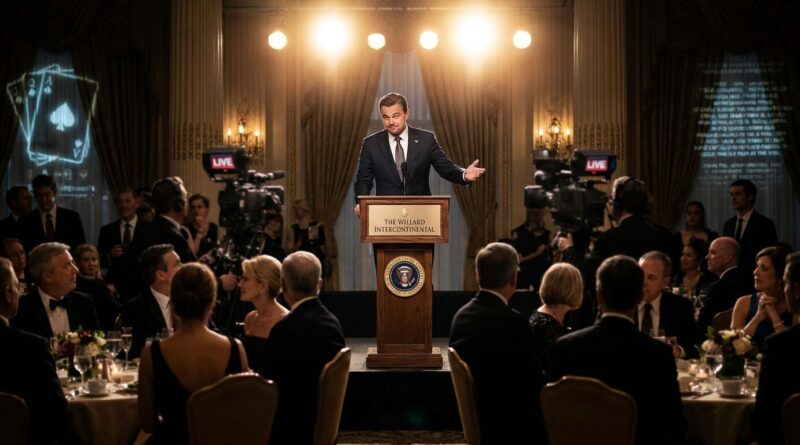
Inside Oz Pearlman’s White House Moment: How A ‘Mentalist, Not A Comedian’ Quietly Became Washington’s Highest‑Stakes Mind Reader
If you have been scrolling through reactions to the Oz Pearlman White House Correspondents Dinner mentalist news, you have probably seen the same tired split. One side treats it like a genius move. The other acts like Washington chickened out by skipping a comic. That gets old fast, because it misses the real point. When the most watched political dinner in America picks a mentalist, it is not just booking entertainment. It is making a statement about risk, tone and control. That matters if you follow mentalism seriously, book talent, or just want to understand why Oz keeps landing rooms that can wreck a career in one bad minute. The bigger story is not “Can he fool people?” It is “Why is this style of performer suddenly the safer and smarter choice for a room full of powerful people, cameras and thin skin?” That is where the story gets interesting.
⚡ In a Hurry? Key Takeaways
- Oz Pearlman being chosen for the White House Correspondents Dinner signals that Washington wanted suspense and crowd control, not roast-style chaos.
- Performers should study his prep model: read the room, lower the threat level, and make the audience feel smart instead of exposed.
- The big lesson is about trust. In high-stakes rooms, a mentalist who feels safe can beat a comedian who feels dangerous.
Why this booking matters more than the usual celebrity headline
The White House Correspondents Dinner is not a normal gig. It is a pressure cooker with tuxedos, cable clips and bruised egos. Every joke gets picked apart. Every awkward beat becomes a segment. That is exactly why Oz Pearlman being booked stands out.
A comedian walks into that room with a built-in threat. Even if the jokes are good, somebody important ends up as the punchline. A mentalist changes the mood. The tension is still there, but it shifts from “Who is getting roasted?” to “How did he do that?”
That is a huge difference.
Washington did not suddenly stop liking funny people. It picked a format that lowers the odds of public bloodshed while still giving viewers something to talk about the next morning.
Why a mentalist can feel safer than a comic
He creates intrigue without direct attack
A strong comic often wins by saying the thing everyone in the room secretly fears. A strong mentalist wins by creating impossible moments that pull people together. That makes the room feel less divided, even when the audience includes rivals, critics and people who would rather not be surprised on camera.
He can be sharp without being cruel
Oz’s style has always leaned polished, fast and socially aware. He is not there to scold the room. He is there to guide it. That matters. Elite event planners are not only hiring for talent. They are hiring for emotional temperature control.
He gives powerful people a way to participate
There is also a status piece here. Political and media elites like experiences that feel exclusive. A mentalist can involve them directly, make them part of the story, and still let them leave looking good. That is catnip for high-end booking.
What critics are already getting wrong
A lot of quick takes frame this as a dodge. As if replacing a comedian with a mentalist means the event is becoming timid. That is too simple.
Booking a mentalist at this level is not less risky. It is a different kind of risk.
If a comic bombs, the room gets icy. If a mentalist bombs, the whole premise collapses. There is nowhere to hide. The audience has to believe, at least for a few minutes, that they are watching someone in total control. If that trust slips, the act can feel flat immediately.
That is why this booking says something important about Oz’s reputation. People with very expensive problems clearly believe he can hold a room, manage nerves and deliver under absurd scrutiny.
That is also why the wider industry keeps circling back to him. We looked at that pressure in Inside Today’s ‘Oz Pearlman Problem’: Why The World’s Most Visible Mentalist Is Quietly Forcing A Rethink Of 5-Star Mind Reading. The short version is that every huge mainstream win from Oz resets the conversation about what top-tier mentalism now looks like.
The real skill on display is not just mind reading
It is what performers call trust management
Good mentalism is not only about methods. It is about permission. The audience has to feel fooled, but not mocked. Impressed, but not threatened. In a room like the Correspondents Dinner, that balancing act becomes everything.
Oz’s strongest mainstream trait may be that he often sells amazement without making the audience feel stupid. That sounds small. It is not. It is one of the hardest things to do in this business.
It is also “meta deception”
There is another layer here. A mentalist in a political room creates a funny kind of mirror. The audience spends its life around spin, optics and persuasion. Then a performer comes in and openly builds an illusion of insight and certainty. People are not just reacting to tricks. They are reacting to a polished version of the very thing that surrounds them every day.
That is why this booking feels bigger than entertainment gossip. It says something about which kind of deception the room finds acceptable, even comforting. A comedian exposes people. A mentalist lets them enjoy being exposed, as long as it is framed as wonder.
What any performer can learn from this moment
1. Read the booking, not just the applause
Do not just watch how loud the reaction is. Ask why the buyer chose this act for this room. In this case, the answer looks like control, prestige and low collateral damage.
2. Build a style that works under scrutiny
High-end clients do not just want mystery. They want reliability. Clean pacing. No messy edges. No sense that the act could drift into awkwardness. If you perform, that is the lesson to steal.
3. Lower the audience’s fear level fast
The first job in a room like this is not fooling people. It is making them comfortable enough to play along. Smile. Keep the stakes light. Make volunteers look good. If you do that, the effects land harder.
4. Protect the participant’s dignity
This is a non-negotiable lesson. In elite rooms, embarrassment spreads faster than amazement. One bad volunteer moment can poison the whole show. The best mentalists know how to win without bruising anyone.
5. Prepare for headlines, not just live reactions
A political dinner is two audiences at once. There is the room itself, and then there is the internet. Every beat has to survive clips, commentary and bad-faith summaries. That means scripting for replay, not only for the moment.
What this says about where elite mentalism is heading
The Oz Pearlman White House Correspondents Dinner mentalist story points to a clear shift. Top-tier buyers are not always looking for the loudest act or the most provocative one. They want performers who can create urgency without creating a mess.
That favors mentalists who are clean, media-friendly and emotionally intelligent. It also raises the bar. If you want these rooms, mystery alone is not enough. You need judgment. Taste. Timing. You need to know how to stand next to power without looking either intimidated or reckless.
Oz has made a career out of looking calm in rooms where calm is expensive. That does not mean everyone has to like his style. It does mean the market is telling us something.
At a Glance: Comparison
| Feature/Aspect | Details | Verdict |
|---|---|---|
| Why Washington chose a mentalist | A mentalist offers suspense, prestige and audience involvement without the direct hostility a roast comic can bring. | Smart choice for a fragile, high-visibility room |
| Risk level for the performer | Mentalism in this setting is less verbally combative, but failure is brutally obvious if trust drops for even a moment. | Different risk, not lower risk |
| Lesson for other performers | Study room reading, participant care, polished pacing and media-safe material that still feels impossible. | Most useful takeaway from the whole story |
Conclusion
Oz Pearlman being tapped to host the 2026 White House Correspondents Dinner is the biggest mainstream mentalism story of the week because it lets us see the industry’s priorities in plain view. This is happening in real time, while fans, clients and fellow performers are still deciding what it means. The easy take is that Washington wanted something softer than stand-up. The better take is that it wanted a performer who could create tension, headlines and prestige without turning the room into a public brawl. That tells us a lot about trust, optics and the growing value of “safe danger” in elite mentalism. If you watch this moment with a clear eye, you get more than gossip. You get a sharper sense of how top bookers evaluate mentalists, a calmer way to talk about Oz’s strengths and limits, and a useful checklist for any performer hoping to survive a room where one great minute can make a reputation, and one bad one can break it.