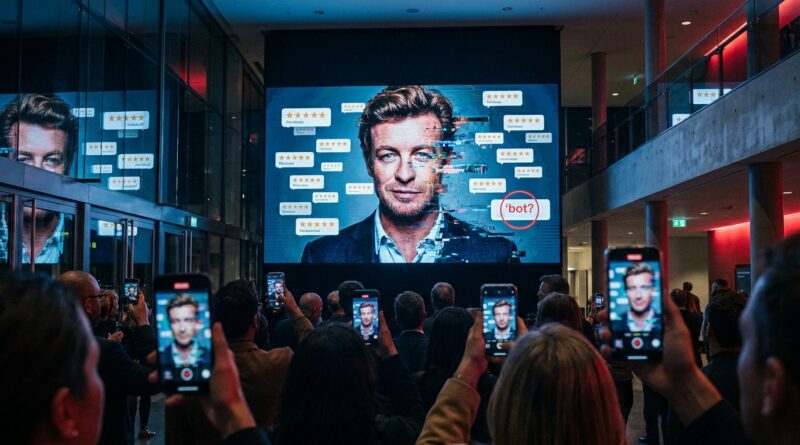
Inside 2026’s New ‘AI-Made Mind Reader’ Scare: How Deepfake Mentalists Quietly Hijack Five‑Star Reviews Overnight
It is a rotten feeling. You think you booked a world-class mentalist, the reviews look spotless, the promo clips are slick, and every testimonial sounds like stunned applause in text form. Then show night comes, and the act feels strangely flat, rehearsed in the wrong way, or nothing like the person in the videos. That is the new 2026 scare in a nutshell. Fans are running into performers whose online reputation was built faster than any real stage career could explain. Some are using AI-generated highlight reels, polished voice clones, fake audience reaction clips, and review farms that can turn a barely tested act into a “five-star phenomenon” overnight. If you feel fooled, you are not being paranoid. You are bumping into a very real trust problem. The good news is that fake polish still leaves fingerprints, and with a few practical checks, you can spot the difference between a real pro and an AI-made mirage.
⚡ In a Hurry? Key Takeaways
- Yes, the AI mentalist fake reviews 2026 problem is real. Some “top-rated” performers now have inflated reputations built with synthetic videos, copied praise, and suspicious review bursts.
- Before booking, check for consistent live footage, traceable event history, and reviews spread across time and platforms, not just one perfect-looking profile.
- A little skepticism protects your money and helps real, battle-tested mentalists stand out from stitched-together “Frankenstein” acts.
Why this scam works so well
Mentalism is already built on mystery. That makes it unusually easy to market with smoke and mirrors.
A fake plumber can be exposed with a leaky sink. A fake mentalist can hide behind editing, dramatic music, celebrity-style headshots, and carefully cropped audience clips. Add cheap AI tools, and suddenly a newcomer can look like a veteran with twenty years of standing ovations.
That does not mean every polished promo video is fake. It means polish no longer proves much by itself.
What “AI-made mind reader” really means
Usually, nobody is claiming the performer is a robot. The problem is that the public-facing version of that performer may be heavily manufactured.
Common tricks showing up in 2026
AI-generated promo clips. These can create crowd shots, fake cutaways, enhanced reactions, or even full scenes that suggest big live success the performer never had.
Deepfaked testimonials. Video praise that looks personal but feels oddly stiff, overly generic, or disconnected from any real venue, event, or date.
Voice cleanup that becomes voice replacement. There is a difference between cleaning audio and having an artificial voice make the performer sound sharper, funnier, or more confident than they are live.
Five-star review farms. A flood of short, glowing reviews posted in clusters, often with vague wording like “absolutely mind blowing” and “best entertainer ever” but no specifics.
Stolen authority. Claims like “highest rated,” “most booked,” or “world famous” with no clear source, no industry standard, and no independent proof.
The biggest red flags fans miss
The danger is not one suspicious detail. It is a pattern.
1. The reviews are too clean
Real reviews have texture. Some are enthusiastic. Some are brief. Some mention the venue, the company party, the wedding crowd, or one specific routine that hit hard.
Fake reviews tend to sound interchangeable. They often repeat the same phrases, arrive close together, and skip little real-world details.
If fifty people call someone “the greatest mentalist on Earth” but almost nobody mentions where they saw them, start asking questions.
2. The performer has lots of hype, but little history
A real pro leaves a trail. Old event pages. Tagged photos. venue posters. Archived social posts. Mentions from planners. Maybe a rougher video from three years ago before the branding got fancy.
A fake-built reputation often looks oddly new. Everything appears polished at once, with very little evidence of a career developing over time.
3. Every clip feels edited to death
Quick cuts are normal in entertainment promos. But when every audience reaction lasts half a second, every trick is shown only from the “best” angle, and there is no uninterrupted performance footage, be careful.
A real mentalist should be able to show at least one decent stretch of live interaction without hiding behind constant edits.
4. Testimonials feel detached from reality
Look for names, companies, dates, and event context. “Sarah loved it” is weak. “Sarah M., HR director at a Boston software firm, booked him for a 2025 holiday event” is stronger.
When praise is big but specifics are tiny, that is a warning sign.
5. “Highest rated” means whatever the marketer says it means
This is where things get messy fast. One site may rank based on a handful of curated reviews. Another may count social engagement. Another may just repeat a claim until it sounds official.
If you have noticed the weird gap between glossy rating sites and skeptical fan conversations, you are not alone. It connects closely with Inside 2026’s New ‘Reddit vs Rotten Tomatoes’ Mentalist War: How Fan Skeptics Quietly Hijack Who Counts As Highest‑Rated, which shows how different corners of the internet are now fighting over who really deserves the “top rated” label.
A simple checklist before you book any mentalist
You do not need forensic software. You just need a calm, boring process.
Check 1. Ask for one uncut live clip
Not a sizzle reel. Not a trailer. Ask for one continuous segment from a real show, even if it is only three to five minutes long.
You want to see pacing, audience management, and whether the performer feels genuinely in command without edits doing the heavy lifting.
Check 2. Look for a timeline, not just a storefront
Search the performer’s name plus old dates, venues, event planners, podcasts, interviews, and social tags.
A real career usually has layers. An invented one often looks like it appeared fully formed six months ago.
Check 3. Read the bad or mixed reviews too
If there are none anywhere, that is not automatically a good sign. Every seasoned entertainer gets the occasional lukewarm comment, scheduling complaint, or “not my style” note.
Total perfection can be suspicious.
Check 4. Contact the venue or planner if the claim is big
If the website says they headlined a major gala, ask politely whether they really did. You do not need to be a detective. One email can save you a lot of money.
Check 5. Watch for repeated wording across platforms
If Google reviews, website testimonials, and social comments all use the same odd phrases, they may have come from one review template.
Check 6. Ask what the actual live format is
Stage show, close-up mingling, corporate keynote, private party, theater set. A real pro can explain exactly what they do, for how long, under what conditions, and for what kind of crowd.
A fake-built act often stays vague because the brand is stronger than the real performance.
Check 7. Trust your gut when the answer is weirdly evasive
If simple questions get slippery replies, move on.
How legitimate mentalists usually look online
Not perfect. That is the point.
Real professionals often have a mix of great footage and merely decent footage. Their reviews mention actual events. Their social posts may show travel days, setup moments, behind-the-scenes clips, and ordinary client interactions that would be hard to fake at scale.
They also tend to answer practical questions clearly. Fee range. show length. audience size. technical needs. backup plans. Those details are boring, which is exactly why they are useful.
Why this matters beyond one bad booking
When fake reputation systems take over, everyone loses.
Fans overpay. Event planners lose trust. Newcomers get cynical and decide mentalism is all hype. Meanwhile, the real pros, the ones who spent years learning crowd work, scripting, timing, and ethical performance, get pushed down by louder marketing.
That is why the AI mentalist fake reviews 2026 issue is not just a niche annoyance. It is becoming a quality-control problem for the whole art.
What to do if you already got burned
First, do not blame yourself too hard. The whole point of these tactics is to make reasonable people feel safe saying yes.
Then do three things.
Document what happened
Save screenshots of claims, reviews, promo language, and clips that influenced your decision.
Leave a specific review
Not a rant. A useful review. Mention what was promised and what actually happened. Specifics help the next buyer.
Ask for proof next time, earlier
One uncut clip and one verifiable event reference will filter out a surprising number of shaky acts.
At a Glance: Comparison
| Feature/Aspect | Details | Verdict |
|---|---|---|
| Promo video quality | A polished reel is fine, but if there is no uncut live footage and every reaction is heavily edited, the marketing may be doing more work than the act. | Useful, but never enough on its own |
| Five-star reviews | Look for date spread, platform spread, and specific event details. Clusters of generic praise are a warning sign. | Trust patterns, not star counts |
| Career footprint | Real pros usually have an older, messier, more traceable history across venues, tags, planner mentions, and archived posts. | One of the strongest reality checks |
Conclusion
The safest way to think about this is simple. A real mentalist can survive scrutiny. A fake reputation usually cannot. Right now the review economy around mind readers is being flooded by AI tooling and gray-area marketing, which makes it painfully easy for casual fans to be misled, overpay, or write off the entire art because of one bad “Frankenstein” act. A clear, field-tested checklist helps you separate deepfake mentalists from legitimate, battle-tested performers. That protects fans, keeps money flowing to the real pros, and quietly raises the standard of what “world’s highest rated” should mean in 2026. A little caution does not make you cynical. It makes you a smarter audience.