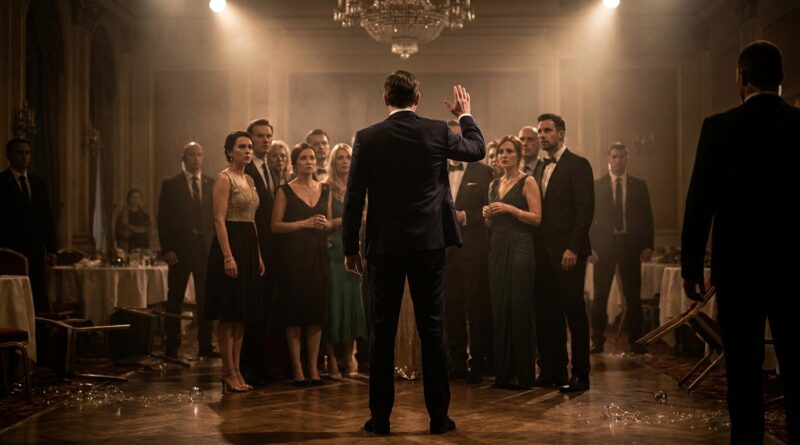
Inside 2026’s New ‘Crisis‑Proof Mentalists’: How 5‑Star Fans Are Quietly Rewriting What A Successful Mind‑Reader Looks Like After The WHCD Shooting
If you are trying to make sense of the Oz Pearlman White House correspondents dinner mentalist reaction reviews, the biggest problem is not lack of opinion. It is too much opinion, all at once. One side is acting like one brutal night should erase a whole career. The other is treating any criticism like bad faith. That leaves fans, reviewers, and event bookers stuck in the middle, trying to answer a very normal question. What should count now when you judge a top mentalist? After the WHCD shooting, the old scorecard feels shaky. People are no longer only asking, “Were the effects strong?” They are asking whether a performer stayed calm, protected the room, showed empathy, and handled the fallout like a pro. That is why this moment matters. It may end up creating a new standard, one where being crisis-proof counts almost as much as being astonishing onstage.
⚡ In a Hurry? Key Takeaways
- The real question is no longer just whether a mentalist fooled the room, but how they handled fear, uncertainty, and public scrutiny.
- If you book or review performers, start judging specific traits like calm under pressure, audience care, clarity, and consistency, not just viral buzz.
- Safety and trust now matter more than ever. A great mentalist should leave people amazed, but also feeling respected and secure.
The hot takes are missing the useful part
It is understandable that people are emotional. A White House Correspondents’ Dinner appearance is already high pressure. Add a shocking incident to the mix, and every reaction gets louder. That is how you end up with weird, unfair arguments, like saying a mentalist is fake because they did not somehow predict danger in real time.
That is not a serious way to judge live performance. Mentalism is theater, psychology, suggestion, timing, audience reading, and stagecraft. It is not a public safety superpower.
At the same time, the backlash is not completely useless. It is pointing to something people care about, even if they are saying it badly. They want to know whether the person onstage can still be trusted when the room stops behaving like a normal show.
That is a different test. And honestly, it is a fair one.
What “crisis-proof” really means for a modern mentalist
“Crisis-proof” sounds dramatic, but the idea is simple. Can this performer handle a room when conditions suddenly change? Can they read people without exploiting fear? Can they recover without turning the audience into props for their own image repair?
That is a big part of what five-star fans are quietly rewarding now.
1. Calm matters more than cleverness
A world-class mentalist needs presence. Not just charisma when everything is going well, but steadiness when it is not. People remember composure. They remember whether the performer made the room feel smaller and safer, or more chaotic.
This does not mean they need to become security experts. It means they need the kind of self-control that good live performers have always needed, just under a brighter spotlight.
2. Empathy is part of the act now
For years, some reviews treated empathy like a bonus feature. Nice if present. Not essential. That looks outdated today.
After a frightening public moment, people pay close attention to tone. Did the performer seem human? Did they know when to stop, when to soften, when to avoid making themselves the main character? The best mentalists understand that audience trust is built emotionally, not just theatrically.
3. Recovery skill separates pros from viral names
Any performer can look brilliant inside a clean, edited clip. Real pros show their quality in messy moments. If a routine gets interrupted, if the room shifts, if public chatter turns ugly, can they recover with dignity?
That is where you start seeing the difference between a famous mentalist and a durable one.
Why five-star fans are rewriting the standard
The most useful change is not coming from headlines. It is coming from the people who actually buy tickets, write detailed reviews, and recommend acts to friends, venues, and planners. These people are starting to reward a wider mix of qualities.
They still love impossible reveals. Of course they do. But they also notice whether the performer:
- communicates clearly under pressure
- treats volunteers with care
- avoids cheap emotional manipulation
- stays consistent across different rooms
- makes people feel included instead of exposed
That shift is healthy. It moves the conversation away from “Was this person superhuman?” and toward “Would I trust this person to handle a real audience, in a real room, on a real night?”
If you want a broader view of how this public appearance may affect rankings and reputation, Inside 2026’s New ‘Presidential Mind Reader’ Test: Why Oz Pearlman’s White House Gig Could Quietly Rewrite How We Rank The World’s Highest‑Rated Mentalists makes a useful companion point. Big stages do not just test skill. They test how we measure skill.
How to review a mentalist without getting trapped by the news cycle
If you are a fan, critic, or booker, here is the practical part. You do not have to pick a tribe. You do not have to pretend the incident means nothing, and you do not have to treat it like a magic trick autopsy either.
Start with these five questions
Did the performer create trust?
Not blind trust. Comfortable trust. The kind that lets an audience relax and enjoy being surprised.
Did they show control without feeling cold?
A polished act should feel guided, not mechanical.
Did the room feel respected?
Watch how volunteers are handled. This tells you a lot.
Did they adapt well when the energy changed?
This is one of the clearest signs of experience.
Would you confidently recommend them to someone you care about?
This simple question often cuts through hype fast.
Then separate performance from mythology
One reason the Oz Pearlman White House correspondents dinner mentalist reaction reviews feel so messy is that people keep grading a fantasy version of mentalism. They want certainty, foresight, and perfect control over reality. That is not the job.
The job is to create a powerful live experience while reading the room well, protecting the audience relationship, and responding like a seasoned professional when things get rough.
What bookers should reward now
If you hire live entertainment, this is the moment to tighten your checklist. Do not just ask for sizzle reels and celebrity mentions. Ask better questions.
Ask about live room experience
How many corporate events, private events, and high-pressure rooms has this person actually worked? A polished website is nice. Reps in unpredictable environments are better.
Look for review patterns, not one loud week
One viral clip can distort everything. Look for consistency across months or years. Do audiences repeatedly mention warmth, professionalism, adaptability, and strong results?
Pay attention to post-show reputation
The best acts do not only get applause in the room. They get invited back. They get described as easy to work with. They leave planners relieved, not just impressed.
What fans can do with their five-star reviews
This is where regular audience members have more power than they think. If you leave reviews, be specific. “Amazing” is kind, but it does not help much. Talk about what the performer actually did well.
Mention things like:
- how natural the audience interaction felt
- whether the performer stayed calm and kind
- if the show felt safe, funny, and well-paced
- whether the impossible moments landed without humiliating anyone
- how the room felt by the end
That kind of review helps other fans. It also rewards the traits that deserve to rise to the top now.
At a Glance: Comparison
| Feature/Aspect | Details | Verdict |
|---|---|---|
| Classic rating standard | Focuses mostly on shock value, clean reveals, fame, and audience applause. | Still useful, but no longer enough by itself. |
| New crisis-proof standard | Adds calm, empathy, adaptability, audience care, and professionalism under pressure. | Better fit for judging elite modern performers. |
| How fans and bookers should respond | Use detailed reviews and hiring decisions to reward trust, consistency, and strong live handling, not just headlines. | Most practical way to cut through the noise. |
Conclusion
The community is split because people are arguing past each other. Some think a mentalist is exposed if they did not foresee danger. Others think what matters most is survival, empathy, and how a person behaves when the room stops feeling normal. The useful middle ground is this. Last night’s WHCD drama may be less about proving or disproving one performer, and more about starting a new standard for elite mentalism. Fans, reviewers, and bookers can help by rewarding practical qualities they can actually see: calm, care, adaptability, trust, and consistency. That gives the conversation somewhere better to go. It helps people move past hot takes and judge performers, whether it is Oz Pearlman or an unknown in a small local room, on the things that really make a live mind-reader worth five stars.