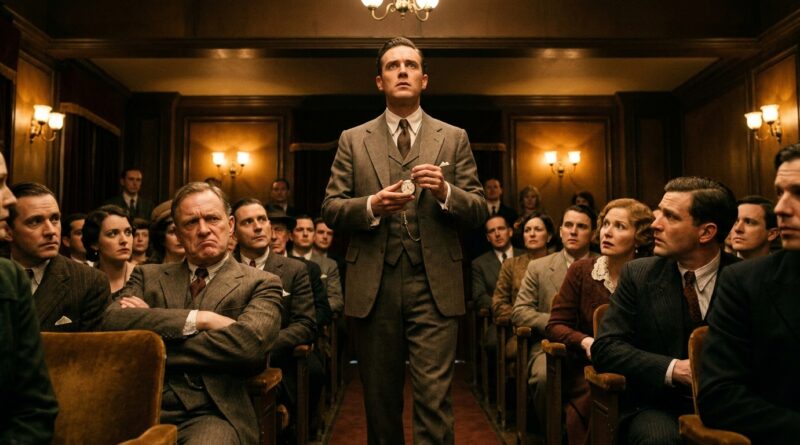
Inside 2026’s New ‘Front-Row Filter’: How One Tiny Venue Trick Quietly Exposes The World’s Real Five‑Star Mentalists
You know the feeling. You watch a mentalist online, the comments call them unreal, and the clips make them look untouchable. Then you buy a front-row ticket to a small live show and something feels off. The tricks land, sort of, but the electricity is missing. No edits. No perfect camera angles. No dramatic music doing half the work. Just a person, a room, and a crowd that can feel when something is truly special. Fans are getting wiser about this, especially in tiny theaters and speakeasy-style parlor shows where the room tells the truth fast. That is where the new “Front-Row Filter” comes in. It is not a secret industry term. It is a simple fan test. If a so-called world-class mentalist can still wreck the room from ten feet away, with nowhere to hide, you are probably looking at the real thing. If not, the front row exposes it quietly and almost immediately.
⚡ In a Hurry? Key Takeaways
- The fastest answer to how to tell if a mentalist is really good live is this: sit close and watch whether the act still feels huge without camera help, planted reactions, or awkward fishing.
- Use the “Front-Row Filter” by tracking three things. Clarity, control, and crowd impact in the first 15 minutes.
- This test saves you from hype-driven ticket buys and helps fans leave sharper, more useful reviews for small live shows.
What the “Front-Row Filter” actually means
The idea is simple. A tiny room is brutal on weak mentalism.
In a big theater, lighting, distance, and staging can smooth over a lot. On social media, editing can do even more. But in a 40-seat bar show or a 70-seat parlor room, the audience can see the pauses, the wording, the nerves, the fishing, and the little misses.
That is why more fans are using the front row as a truth test. Not because they want to catch a performer out, but because they want to know if the experience is genuinely powerful live.
If you have ever wondered how to tell if a mentalist is really good live, this is one of the cleanest ways to do it. A real five-star mentalist does not shrink in a tiny room. They usually get stronger.
The tiny venue trick that exposes the real stars
The “trick” is not something the performer does. It is the venue itself.
Small rooms remove excuses. They strip the act down to timing, confidence, audience handling, and actual live impact. From the front row, you can tell whether the performer is leading the room or negotiating with it.
That difference matters more than any viral clip.
Why tiny rooms are so revealing
In a close room, you can spot things that vanish on a phone screen:
- Whether instructions are crisp or confusing
- Whether audience volunteers look amazed or merely compliant
- Whether the performer keeps fishing until they hit something usable
- Whether misses are handled smoothly or covered with blame and patter
- Whether the whole room is locked in, not just one loud table
A top-tier live mentalist can work under that pressure and still make it feel effortless.
The 3-part Front-Row Filter
If you want a concrete test, use this one during the first 15 minutes.
1. Clarity
Do you understand the effect before the reveal happens?
This sounds basic, but it is huge. Weak performers often hide behind confusion. The audience is not sure what was supposed to happen, so any decent outcome gets applause. Strong performers make the conditions crystal clear. You know what the prediction is. You know what choice was free. You know what would count as impossible.
If the premise stays muddy, be careful.
2. Control
Does the performer control the energy without looking controlling?
Great mentalists guide people naturally. They do not bully, rush, or over-explain. They can handle a shy volunteer, a skeptical guest, or a noisy interruption without the room turning awkward.
This is one reason many fans also pay close attention to body language. If you want a useful companion read, Inside 2026’s New ‘Body Language Backlash’: How Fans Quietly Turn One Awkward Moment Into A 5‑Star Mentalist Test gets into how one uncomfortable beat can tell you a lot.
3. Crowd impact
Is the reaction spreading across the room, or only happening in pockets?
This is the big one. A real live killer does not just fool one participant. They create a shared jolt. People lean forward. They stop whispering. Even the skeptical faces change. You can feel the room tighten and then pop.
That feeling is hard to fake in a tiny venue. And it is exactly what often goes missing when a “viral genius” turns out to be just okay in person.
What weak live mentalism looks like up close
You do not need technical knowledge to spot the warning signs. You just need to trust what the room feels like.
Too much fishing
If the performer keeps throwing out guesses and slowly steering toward anything that works, the act may look impressive in short clips but thin in real time.
Messy rules
If you keep thinking, “Wait, what were they allowed to do again?” that is not your fault. Clear effects hit harder because the audience can track the impossibility.
Strained volunteer moments
If spectators seem pressured into agreeing, laughing, or playing along, the experience starts to feel fragile. Good mentalists make people feel safe, not cornered.
Overbuilt drama for small payoffs
Big pauses. Big music. Big declarations. Then a reveal that gets polite applause. That mismatch is one of the clearest signs that the marketing may be stronger than the live act.
What real five-star mentalists do differently
They make small rooms feel bigger, not smaller.
That does not mean louder. It means more focused. The best performers can stand a few feet away from you, say very little, and still make the room feel electric.
Here is what they usually do well:
- They explain the effect simply
- They create tension without dragging things out
- They respect volunteers and never make them look foolish
- They recover from tiny hiccups without panic
- They get genuine reactions from people who were not expecting to react
Most importantly, they do not seem to need the room to help them pretend something amazing happened. The room knows it happened.
How to use this before you buy tickets
You cannot always sit front row first and decide later, of course. But you can use the filter when reading reviews and watching clips.
Look for reviews that mention behavior, not hype
“Mind blown” is fun, but it is not very useful. Better signs are phrases like:
- “Handled a tough crowd smoothly”
- “Clear instructions, no confusion”
- “Still amazing from two seats away”
- “No dead air, no awkward fishing”
- “The whole room reacted, not just the volunteer”
Be careful with perfect clips
A polished clip is not proof of a weak act. Plenty of great performers also look great online. But if every video is ultra-tight, heavily cut, and focused only on reaction shots, that should not be your only evidence.
Try to find unpolished audience footage, small-room photos, and reviews from intimate venues.
Why this matters more in 2026
Mentalism is moving into smaller spaces fast. Pop-up rooms, boutique theaters, private clubs, hotel lounges, speakeasies. That is exciting because the format can be amazing. It is also risky because the marketing can outrun the truth.
In these scenes, review volume is often low and social proof can be noisy. One viral weekend can create a “world-class” label before enough real audience members have tested the act in person.
The Front-Row Filter gives fans a better standard. It replaces vague praise with something observable.
At a Glance: Comparison
| Feature/Aspect | Details | Verdict |
|---|---|---|
| Clarity of effect | You can easily follow the rules, the choices, and what would count as impossible | Strong sign of a genuinely good live mentalist |
| Volunteer handling | Participants look comfortable, not steered, embarrassed, or nudged into agreement | Usually separates pros from hype acts |
| Whole-room reaction | The energy spreads beyond one table or one person and lands across the room | Best indicator that the act really works live |
Conclusion
The smartest fans are not asking whether a mentalist can look incredible online. They are asking whether the act survives the front row in a tiny room. That is the real filter. And it is useful because anyone can apply it. As mentalism keeps growing in small theaters, speakeasy bars, and pop-up parlor shows, this kind of behavior-based test helps people avoid overhyped nights and spot the performers who are truly world-class when the camera magic is gone. It also gives the community a shared way to write better, sharper reviews on Best Mentalist, the kind that actually help the next person decide where to spend their money before bigger media catches up.