Inside 2026’s New ‘Body Language Backlash’: How Fans Quietly Turn One Awkward Moment Into A 5‑Star Mentalist Test
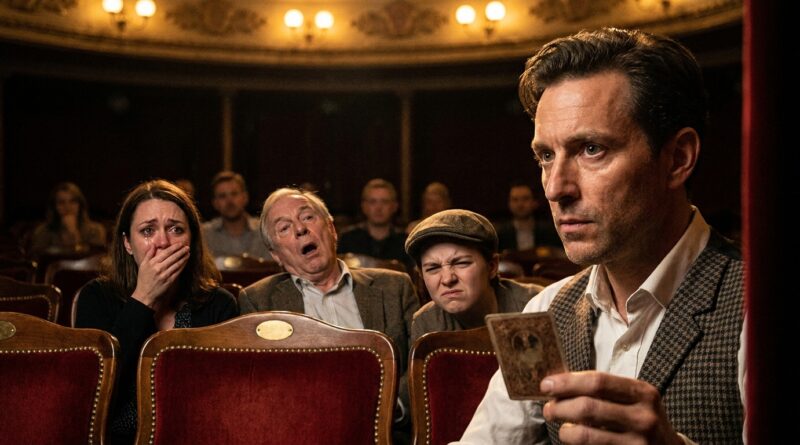
People are tired of clips that look a little too perfect. You have probably seen them. A mind reader says something dramatic, the volunteer gasps on cue, the camera cuts at just the right moment, and somehow every comment says “best mentalist ever.” After a while, it starts to feel less like amazement and more like theater built for the algorithm. That frustration is exactly why the latest backlash matters. In the last 24 hours, the mentalism moments getting the most real discussion were not the flashiest reveals. They were the awkward ones. The half-second pause. The confused blink. The tiny step backward before the laugh kicks in. Those reactions do not look polished, and that is the point. If you want to know how to spot a real mentalist from audience reactions, stop watching for applause lines and start watching for the body doing something the person did not plan.
⚡ In a Hurry? Key Takeaways
- A real mentalist often creates small, involuntary audience reactions that look awkward before they look impressed.
- Watch for delayed laughter, frozen smiles, posture changes, and people checking their own memory before they clap.
- Polished edits and “5-star” blurbs can mislead. Live, unplanned body language is much harder to fake consistently.
Why this backlash started
The old social media formula was simple. Big reveal. Loud music. Fast cuts. A shocked volunteer. Five-star captions everywhere.
But viewers got smarter. Or maybe just more exhausted.
When every clip is trimmed to perfection, the audience starts asking a fair question. If this performer is so incredible, why does every reaction look like an acting exercise? That skepticism has grown fast in 2026, especially around mentalism, where the whole point is that something impossible seems to happen in a real room, to a real person, in real time.
That is why awkwardness suddenly has value. A weird pause can be more convincing than a standing ovation. It suggests the person on stage is actually trying to process what just happened, not just helping complete a polished promo video.
How to spot a real mentalist from audience reactions
If you are trying to judge a performer quickly, ignore the star rating for a minute and study the humans in the frame.
Look for the reaction before the reaction
The most useful moment is often the split second before applause. Genuine surprise usually arrives in stages.
First comes the freeze. The face stops. The eyes narrow or widen. The person may lean back slightly, or glance sideways at a friend as if asking, “Did that just happen?” Then the laugh comes later. Sometimes the laugh is nervous, not clean and theatrical.
That sequence matters because it is messy. Real surprise is rarely smooth.
Watch the feet, not just the face
Faces can be performative. Feet are lazier. They often tell the truth first.
If a volunteer takes a small step back, shifts weight suddenly, or locks their knees for a second, that is often a better sign than a huge open-mouth gasp. The body is reacting before the person has time to package it into a “good audience member” expression.
Notice delayed laughter
This is a big one. When a reveal lands hard, some people do not laugh right away. They look confused for a beat, then laugh once their brain catches up.
That delay can be gold. It suggests the person is processing, not performing.
Check whether the room stays noisy in a natural way
In weaker clips, the room often sounds too clean. Everyone reacts at once. Everyone says the same kind of thing. It feels neat.
In stronger live moments, you hear overlap. One person gasps. Another says, “No.” Someone in the back laughs late. The volunteer may start talking over the performer. It sounds like a room full of humans, not a soundboard.
The small signs that usually feel real
Here are the body language details many fans are using as a fast sanity check:
- Frozen smile that stays in place a beat too long
- Eyes darting to friends or family for confirmation
- A delayed laugh after a blank stare
- An involuntary step back or shoulder pull
- Hands covering the mouth after, not before, the reveal
- People repeating the information to themselves, quietly
- A volunteer interrupting with “Wait” or “How did you know that?”
None of these signs proves anything on its own. That is important. But when several show up together, especially in uncut or lightly cut footage, the performance tends to feel much more trustworthy.
What staged reactions often have in common
The goal here is not to accuse every polished performer of faking. Some great performers are simply well-produced. Still, there are patterns worth noticing.
Everything lands too cleanly
When every reveal gets the same instant gasp, the same camera push-in, and the same clean verbal response, your instincts should kick in. Real audiences are inconsistent.
The volunteer performs for the camera
If the person on stage keeps turning outward, projecting their reaction like a reality show contestant, that can be a clue that the clip is built more for highlights than for truth.
No one seems mentally behind
In real astonishment, somebody is usually still catching up. That lag is normal. If every person is perfectly synced emotionally, it can feel rehearsed, even if it technically is not.
Why reviews feel less useful now
This is really the bigger issue. People are starting to distrust what “5 stars” even means.
Review pages can be gamed. Promo clips can be edited to death. Testimonials can be cherry-picked. None of that is new, but audiences are less willing to play along now.
What they want is a clue that cannot be easily polished away. Body language has become that clue.
That is also why live touring matters more than ever. Regional theater audiences are not there to help a clip go viral. They are there to have a good night out, and they can be brutally honest without saying a word. That idea comes through clearly in Inside 2026’s New ‘Touring Mind Reader’ Test: How One North American Champion Quietly Turned Regional Theater Crowds Into The Harshest Mentalism Critics, which gets at why a real room is still the best filter for hype.
A practical test you can use in 30 seconds
Here is a simple way to judge any mentalism clip or show quickly.
The 30-second body language check
Ask yourself these three questions:
- Did the reaction arrive in an uneven, human way, or like a cue?
- Did the volunteer’s body do anything small and involuntary?
- Would this still feel impressive if the music, edits, and captions disappeared?
If the answer to all three is yes, you may be looking at something genuinely strong.
If not, it might still be entertaining. But that is different from being world-class.
Why awkward moments are actually a quality signal
This is the funny part. The moments performers used to trim out are now the ones fans trust most.
A clumsy pause can mean the effect hit harder than expected. A volunteer forgetting to react “correctly” can make the whole thing more believable. Even a room going briefly silent can be a better review than a hundred generic comments online.
That is the backlash in a nutshell. People are not rejecting skill. They are rejecting overpackaged proof of skill.
They want a little friction. A little uncertainty. Something that looks like a real person trying to make sense of an unreal moment.
At a Glance: Comparison
| Feature/Aspect | Details | Verdict |
|---|---|---|
| Audience body language | Frozen smiles, delayed laughs, glances to friends, subtle step-backs, messy overlap in reactions | Strong sign the moment felt real |
| Editing and presentation | Fast cuts, dramatic music, repeated close-ups, identical “shock” beats in every clip | Good for promotion, weaker as proof |
| Review credibility | Generic five-star praise versus observable live-room reactions from unscripted audiences | Trust the room more than the rating badge |
Conclusion
The useful shift here is simple. You do not need insider knowledge, a magic forum membership, or a critic’s vocabulary to judge mentalism better. You just need to watch people, not marketing. That helps the community right now because audiences are worn out by polished edits and review-site hype, and plenty of them no longer trust what “5 stars” is supposed to mean. If you focus on the frozen smile, the delayed laugh, the involuntary step back, and the messy beat before applause, you get a much better tool for sorting real excellence from highlight-reel polish. It is a fast, practical way to sanity-check the world’s “highest rated” names. Best of all, it uses something tech platforms still struggle to fake at scale. Genuine, in-the-moment human response.