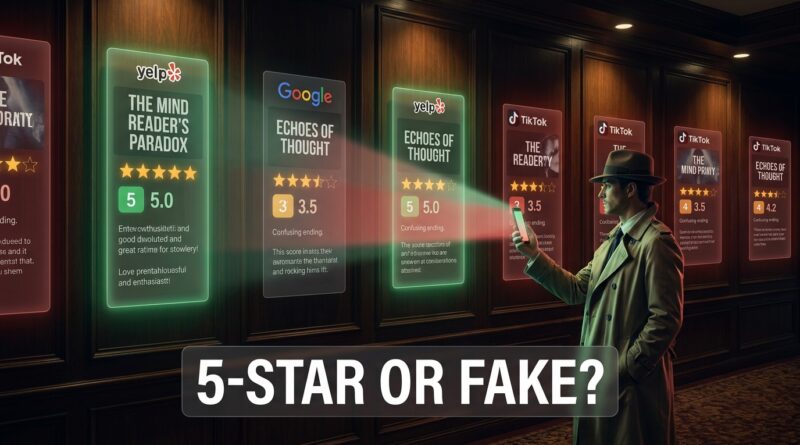
Inside 2026’s New ‘5‑Star Or Fake’ Filter: How Fans Quietly Use One Brutal Rule To Rank The World’s Highest‑Rated Mentalists Overnight
You are not imagining it. Finding the real highest rated mentalist reviews 2026 has become weirdly hard. Every poster says “top-rated.” Every social ad has a glowing five-star screenshot. Every city seems to have three “world famous” mind readers with nearly perfect scores. That gets exhausting fast, especially if you actually care about great mentalism and do not want to buy tickets based on polished marketing. The quiet rule fans are using now is much harsher and much smarter. They do not chase the biggest rating. They check whether a performer can stay excellent across platforms, across months, and across mixed crowds without looking suspiciously perfect. In other words, one brutal filter matters most in 2026. A mentalist with a slightly lower score but believable, steady praise usually beats the one with a sparkling score that only looks clean from a distance.
⚡ In a Hurry? Key Takeaways
- The best quick filter is not “Who has 5.0?” but “Who stays highly rated across several platforms over time?”
- Check for review spikes, missing mid-range reviews, and copy-paste praise before trusting any “highest-rated” claim.
- A believable 4.8 with detailed comments is often safer and more useful than a suspiciously spotless 5.0.
The new fan rule is simple. Perfect can be a warning sign.
That sounds backwards, but it makes sense once you see how review pages look in 2026.
Serious fans are no longer asking, “Who has the most stars?” They are asking, “Does this score look human?” A real audience is messy. Some people rave about a finale. Some mention seating. Some love the crowd work but think the room was too loud. That mix is normal.
What raises eyebrows is the mentalist who somehow has an ultra-clean wall of breathless five-star reviews with the same tone, the same phrases, and no real texture. If the rating looks too polished, fans start digging.
The brutal filter fans use overnight
Rule: Trust consistency, not perfection
This is the rule quietly shaping how people rank performers now. A truly elite mentalist usually shows the same pattern in several places. Google reviews. Ticketing sites. Theatre feedback. Reddit chatter. Fan comments. Even casual posts from people who were not trying to write a promo blurb.
If the praise is strong everywhere, and it stays strong for months, that is a real signal.
If the praise only looks amazing on one platform, or appears in one sudden burst, fans treat it with caution.
What experienced fans check first
1. Cross-platform agreement
If one site says a performer is untouchable, but another shows mixed reactions, that gap matters. It does not automatically mean the act is bad. It means the “highest-rated” claim may be selective.
The strongest performers usually have broad agreement. Not identical scores everywhere, but a stable reputation. People mention similar strengths. Strong audience interaction. Sharp reveals. Good pacing. Real surprise, not just flashy editing.
2. The shape of the review timeline
Look at when reviews landed. A natural timeline rises and falls. Weekend after weekend. Tour stop after tour stop. Holiday spikes. Fringe festival bumps. That is normal.
A suspicious pattern is a flat page that suddenly gets flooded with glowing ratings in a few days. That can happen after a TV spot or viral clip, sure. But if the wording also feels generic, fans get skeptical fast.
3. The missing middle
One of the clearest warning signs is a review profile with almost nothing but five stars and the occasional angry one-star. Real shows usually collect some middle ground. Four-star reviews from happy but picky guests. Three-star reviews from people who liked the skill but not the venue.
When the middle disappears, the score stops feeling organic.
4. Specificity
Detailed reviews matter more than emotional blurts. “Absolutely incredible” tells you almost nothing. “He remembered names across the room, improvised when a volunteer joked with him, and still landed the final reveal cleanly” is much more useful.
The best reviews describe moments, not just feelings.
Why slightly imperfect scores often win
This is the part many casual ticket buyers miss. A 4.8 average with 300 detailed reviews can be more impressive than a 5.0 with 47 glowing comments.
Why? Because scale changes everything.
As an audience gets bigger, more varied, and less self-selecting, small complaints naturally appear. Maybe the room sightlines were rough. Maybe a late seating policy annoyed someone. Maybe one group expected comedy and got darker psychological material. That does not weaken the performer. It often proves they are playing for real crowds, not just perfectly groomed fan circles.
The difference between marketing language and audience language
Promo copy sounds smooth. Real people do not. That is useful.
If review after review sounds suspiciously polished, fans notice. Repeated phrases like “truly unforgettable experience,” “best in the world,” or “must-see event” can be fine once or twice. Twenty times in a row is another story.
Real audience language usually includes weird little details. Someone mentions their skeptical spouse. Someone talks about a missed train because they stayed after the show. Someone says the performer handled a rowdy table better than expected. Those little rough edges build trust.
This is also why body language in clips now matters more than ever. Fans are watching for awkward audience reactions, edited cuts, and moments that feel too controlled. That trend lines up with Inside 2026’s New ‘Body Language Backlash’: How Fans Quietly Turn One Awkward Moment Into A 5‑Star Mentalist Test, which gets at the same bigger issue. People want signs that the reaction is real, not manufactured.
How to read rating spikes without overreacting
Not every spike is fake. A performer can go viral. A residency can open big. A celebrity endorsement can send fresh traffic all at once.
The trick is to ask three quick questions.
Did the spike happen after a visible event?
If yes, the jump may be normal. A national TV appearance or major festival run can create a flood of new reviews.
Do the reviews still feel varied?
Even in a surge, real comments should sound like different people. Different lengths. Different points of focus. Different writing styles.
Does the reputation hold after the spike?
This is the big one. If the ratings settle into steady quality afterward, the buzz was probably earned. If momentum fades and the profile starts looking thin again, fans take note.
A quick fan checklist for highest rated mentalist reviews 2026
Use this before you buy tickets or rank a performer in your head.
- Check at least three review sources.
- Look at the timeline, not just the average score.
- Read five-star, four-star, and three-star comments.
- Notice whether people describe actual moments from the show.
- Be cautious with spotless scores and zero nuance.
- Give extra credit to long-term consistency.
That whole process takes maybe five minutes once you get used to it.
What this means for Vegas stars, New York darlings, and viral touring acts
It means the old status shortcuts matter less. Big city billing is not enough. Fancy theatre photos are not enough. Going viral is definitely not enough.
The performer who keeps earning believable praise from different kinds of audiences is the one fans now push to the top. That applies whether the act is a Las Vegas headliner, an intimate off-Broadway favorite, or a touring mentalist crushing smaller rooms city by city.
The ranking game has become less about hype and more about endurance. Can this person impress strangers night after night? Can they survive scrutiny outside their own marketing bubble? That is the real test.
At a Glance: Comparison
| Feature/Aspect | Details | Verdict |
|---|---|---|
| Perfect 5.0 score | Can look impressive, but may hide cherry-picking, low volume, or unnatural review patterns | Useful only if backed by scale, detail, and time |
| Cross-platform consistency | Strong ratings and similar praise across Google, ticket sites, fan forums, and social chatter | Best indicator of a genuinely elite act |
| Detailed mixed reviews | Includes praise plus small complaints about venue, pacing, or expectations | Often the most trustworthy review profile |
Conclusion
The smartest fans in 2026 are not falling for the loudest “top-rated” claim. They are using a tougher filter. They want cross-platform consistency, believable detail, and a review history that looks like real people reacting in real time. That helps the Best Mentalist community right now because the review landscape around magic and mentalism has never been noisier, and social feeds are packed with competing claims from Vegas headliners, New York theatre names, and viral touring acts. Once you know how to read rating spikes, suspiciously perfect scores, and long-term consistency, you stop guessing. You start spotting who is genuinely earning world-class reactions night after night.