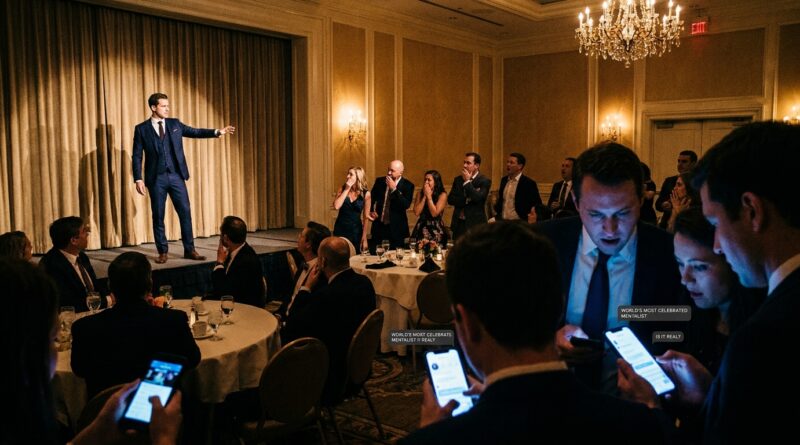
Inside 2026’s New ‘World’s Most Controversial Mentalist’: How Oz Pearlman’s White House Gig Quietly Sparked A Global Ethics War In Mind‑Reading
If you have ever watched a mentalist and thought, “Wait, is this person actually in my head?”, you are not alone. That is exactly why the Oz Pearlman mentalist controversy 2026 has hit such a nerve. Fans want to feel amazed, not fooled. Working performers want to protect the mystery, but they also do not want the whole art form sold like a supernatural promise. After Pearlman’s White House Correspondents’ Dinner appearance, that long-simmering tension burst into the open. Reddit threads, skeptic forums, and magic insiders started arguing over the same question. When does “mind-reading” stop being fun showmanship and start becoming a misleading claim? This is bigger than one performer. It is a fight over what audiences are being told, what they are buying, and whether top-tier mentalism in 2026 still has a clear ethical line. That is why this story matters well beyond one celebrity gig.
⚡ In a Hurry? Key Takeaways
- Oz Pearlman is not facing backlash because people dislike mentalism. He is at the center of a wider argument about whether “mind-reading” marketing goes too far.
- If you book or watch a mentalist, look for clear framing. The best performers create wonder without asking you to believe they have literal psychic powers.
- You can discuss ethics without exposing methods. That protects both audiences and the art.
Why this blew up so fast
The White House Correspondents’ Dinner is not a small room at a hotel conference center. It is one of those stages where image matters as much as performance. When a mentalist appears in that setting, every word around the act gets bigger.
That is what turned a normal debate inside magic circles into a public fight. Oz Pearlman was already a huge name. Once he was tied to a high-profile political and media event, older complaints about hype, copywriting, and audience assumptions suddenly had a much wider audience.
The public version of the argument sounds simple. “Come on, it’s entertainment.” But the private version is more complicated. Many mentalists are not upset that Pearlman is successful. They are upset because they think the language around elite mentalism often encourages regular people to believe impossible things are happening for real.
What the controversy is actually about
Most fans do not spend time on skeptic boards or magician forums. They just know what they feel when they watch. A name is thought of. A drawing is revealed. A personal detail appears to be known. It feels impossible.
That feeling is the product being sold. And to be fair, that is part of the fun.
The problem starts when the marketing and onstage framing get blurry. There is a difference between saying, “This show will feel like real mind-reading,” and nudging people toward, “Maybe this guy can genuinely read thoughts.” One is theater. The other can drift into a claim, even if nobody says the word “psychic” out loud.
Fans hear one message, pros hear another
To a casual viewer, “world’s most celebrated mentalist” sounds like harmless promotion. To working pros, it can be tied to a bigger pattern. Bigger claims. Bigger reactions. Less clarity.
That is why the Oz Pearlman mentalist controversy 2026 is not just about titles or ego. It is about expectation-setting. If the audience walks in thinking they are seeing advanced psychological illusion, that is one kind of contract. If they walk in thinking they may witness literal thought access, that is a different one.
Why ethics matter more in mentalism than standard magic
If a magician pulls a coin from behind your ear, you know the deal. You do not assume the laws of physics have changed. Mentalism is trickier because it borrows from real-world ideas people already care about. Psychology. persuasion. intuition. body language. memory. influence.
That mix makes it easy for viewers to think, “Maybe some of this is real.” For some audiences, that is just harmless fun. For others, especially vulnerable people, it can become a problem.
This is where professionals draw the line. Not at mystery itself, but at letting mystery harden into belief.
What happened after the White House gig
After the Correspondents’ Dinner slot, online discussion got much sharper. Commenters started pulling apart performance clips, interviews, promotional wording, and fan reactions. Some posts were thoughtful. Some were petty. Some crossed into straight-up exposure culture.
That is the ugly side of these debates. Once the internet smells controversy, nuance often disappears. You get two bad extremes.
One side says critics are jealous and should stop whining. The other says every mentalist is a fraud and deserves to be “exposed.” Neither view helps regular people understand the real issue.
The better question is this. Can a performer create a jaw-dropping mind-reading experience without encouraging a false belief they cannot control later?
The part many mainstream stories miss
Mainstream coverage tends to flatten mentalism into one of two stories. Either it is a dazzling celebrity act, or it is a “gotcha” about tricks. That misses the middle ground where most serious performers live.
Many respected mentalists do care about ethics. A lot. They spend real time figuring out how to describe their work honestly while still keeping the sense of wonder alive. They know a great show needs mystery, but it also needs trust.
That trust has become more fragile lately. Audiences are more skeptical, but they are also more primed for hype. Social clips strip away context. Short captions oversell. Fan comments build myths. Before long, the performer is not just “amazing.” They are being talked about like a genuine thought-reader.
That tension also fits with the wider fan frustration we saw in Inside 2026’s ‘Kimmel Backlash’ Shockwave: How Oz Pearlman’s No‑Show Is Quietly Rewriting What 5‑Star Fans Expect From the World’s Top Mentalists. Once a performer reaches that superstar tier, audiences stop treating each appearance like a simple act. They start measuring reliability, honesty, and the full experience around the brand.
So, is Oz Pearlman doing anything uniquely wrong?
That depends on who you ask, and it is important not to oversimplify it.
There is a big difference between saying someone has been controversial and saying they have been proven deceptive in some special, singular way. Mentalism as a field has always lived in this gray area. Pearlman is simply one of the biggest names standing in the brightest spotlight right now.
That is why he became the symbol of the debate.
Critics argue that top stars benefit from audience misunderstanding even when they do not spell out a paranormal claim. Defenders argue that theater has always used dramatic framing, and audiences know they are watching a show.
Both sides have a point. But if both sides have a point, that usually means the framing needs work.
How audiences can watch more clearly
You do not need to become a skeptic forum regular to enjoy a mentalism show. You just need a better filter.
Ask what the show is inviting you to believe
There is nothing wrong with feeling fooled. That is the fun. The question is whether the show wants you to enjoy the illusion or accept a claim.
If a performer talks about psychology, influence, observation, and illusion as part of a theatrical package, that is usually a healthier sign than someone leaning hard on mystery while dodging any clear frame.
Separate amazement from literal belief
A great mentalist can make impossible things feel real. That does not mean they are real. You can be thrilled and still keep both feet on the ground.
Notice how the performer talks offstage
Interviews, website copy, and social media captions matter. Sometimes the clearest sign of a performer’s ethics is not the trick itself. It is how they describe the trick when selling tickets.
How working mentalists can talk about their craft more honestly
This is where the controversy can do some good.
If you are a performer, the lesson is not “tone everything down until it sounds boring.” The lesson is to frame what you do in a way that respects the audience. Mystery does not need false certainty to be powerful.
Better framing does not kill wonder
Some pros worry that if they are too clear, the magic dies. In practice, the opposite is often true. Audiences relax when they trust you. They stop trying to decode whether you are scamming them and start enjoying the impossible ride you built for them.
Clarity can be part of the brand
In 2026, the strongest reputations may belong to performers who make ethics part of the pitch. Not in a preachy way. Just in a clear one. “This is theatrical mind-reading.” “This is a live illusion built from skill, suggestion, and showmanship.” That kind of language can still sound exciting.
Do not let fan mythology write your copy
One of the easiest mistakes is letting comments like “He’s literally psychic” sit at the center of your brand story. Fans will always exaggerate. Your job is not to repeat their exaggeration back to them.
At a Glance: Comparison
| Feature/Aspect | Details | Verdict |
|---|---|---|
| Public hype | High-profile billing and viral clips made Pearlman the face of “real mind-reading” talk for many casual viewers. | Great for buzz, risky for clarity. |
| Ethical concern | Pros worry that suggestive marketing can blur entertainment with implied paranormal ability. | A real issue worth discussing. |
| Best audience response | Enjoy the mystery, but look for performers who frame their work honestly and respectfully. | Best path for trust and fun. |
Conclusion
The biggest mentalism story right now is not a fresh TV format or another sold-out Vegas room. It is this harder question about honesty, framing, and trust. Oz Pearlman did not create that debate, but his White House moment pushed it into public view. That is why the Oz Pearlman mentalist controversy 2026 matters. It gives fans a way to understand why some pros are upset without turning the whole conversation into secret-exposing nonsense. It gives working performers better language for selling wonder without selling false beliefs. And it gives readers a more useful standard for judging “world-class mind-reading” in 2026. The best shows should leave you stunned, laughing, and talking all night. They should not leave you feeling tricked by the marketing after the lights come up. If this debate leads to clearer claims and better audience trust, the art form may come out stronger for it.