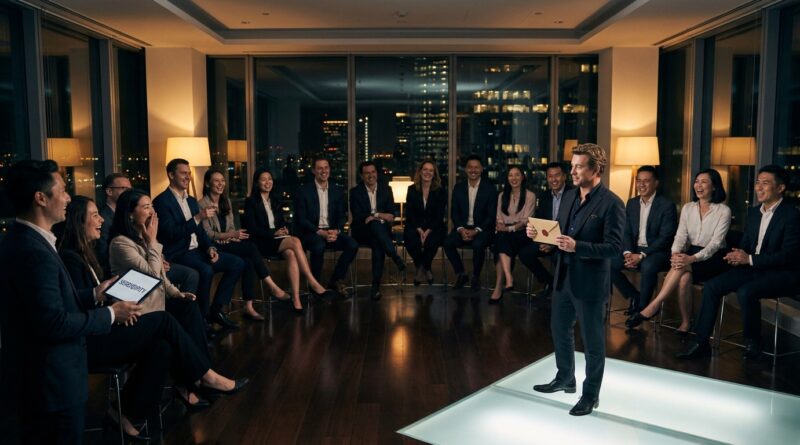
Inside 2026’s New ‘Corporate Mind Reader’ Arms Race: How Little‑Known Mentalists Quietly Became The Highest‑Rated Weapons In Boardroom Events
Nothing stings quite like booking a polished “corporate entertainer,” watching the promo reel sparkle, then feeling the room go cold when the real show starts. Event planners know this pain well. The CEO is in the front row. The sales team is skeptical. The budget was not small. And suddenly that flashy “Las Vegas style” act feels loud, generic, and weirdly out of place in a boardroom full of sharp adults. That is exactly why the search for the highest rated corporate mentalist 2026 has become so intense. Quietly, budgets are moving away from broad magic acts and toward specialist mentalists who can read the room, handle executives, and create moments people actually talk about after the event. The big shift is not about bigger tricks. It is about trust, tone, and ratings. The winners in 2026 are not always the most famous names. They are the performers who consistently earn five-star feedback from real corporate buyers.
⚡ In a Hurry? Key Takeaways
- The highest rated corporate mentalist 2026 is usually not the flashiest performer. It is the one with proven boardroom reviews, executive-friendly pacing, and strong client repeat business.
- Ask for unedited live clips, corporate references, and details on how the act handles skeptical audiences before you book.
- A five-star mentalist can raise energy and make your event memorable, but a bad fit can make smart guests pull back fast. Screening matters.
Why mentalists are suddenly the boardroom favorite
There is a simple reason. Mentalism feels smarter in a business setting.
A standard magic act can still work, of course. But many corporate planners are dealing with audiences that do not want rabbits, glitter, or comedy that tries too hard. Senior leaders want something clean, sharp, interactive, and surprising without feeling childish. A strong mentalist fits that brief much better.
That is why this has started to look like an arms race. Not in a dramatic spy-movie way. In a budget-allocation way. Companies want the performer who can hold a room full of analytical people and still get genuine reactions.
The best ones create that rare mix. They are impressive without being cheesy. Funny without hijacking the event. Interactive without embarrassing the VP of finance.
What separates a real corporate mentalist from a slick promo reel
This is the part that trips people up.
Lots of performers look fantastic in short edits. Moody music. Fast cuts. Big reactions. Luxury venue shots. None of that tells you how they handle a ballroom at 8:15 p.m. after a long awards dinner, or a leadership offsite where half the audience has their guard up.
They know how to work with skeptical adults
Corporate audiences are different from theater audiences. They do not arrive ready to clap. They are often tired, distracted, and quietly judging everything. The highest-rated performers know how to win them over in the first few minutes.
That usually means a calm opening, quick credibility, and audience participation that feels safe. No awkward calling people out. No fake mind-reading that insults the room’s intelligence.
They understand event flow
A boardroom show is not just a show. It is one moving part inside a bigger event.
Good corporate mentalists ask about timing, room layout, AV, executive sensitivities, brand tone, and whether they are opening, closing, or breaking up a dense agenda. Great ones adjust their format to fit.
They get five-star reviews for boring reasons
This is important. The top ratings usually come from things that sound almost dull on paper.
- They showed up early.
- They were easy to brief.
- They adapted when the schedule changed.
- They did not make the client nervous.
- They made the company look good.
That is what corporate buyers remember.
The quiet pattern behind the highest rated corporate mentalist 2026
When you dig into who is getting real five-star corporate feedback this year, a few patterns keep showing up.
Pattern 1: Local or regional specialists often beat TV-famous names
This surprises people, but it should not. A famous name may sell tickets. A specialist sells confidence.
Planners often discover that the best-reviewed corporate mentalists are not household names at all. They are local or regional experts who have built their act around business audiences, not general public crowds. That lines up with what we are also seeing in Inside 2026’s New ‘Five‑Star Phantom’ Phenomenon: How Hidden Local Mentalists Quietly Outscore TV Names On Real‑World Reviews, where lesser-known performers keep beating bigger names on actual buyer satisfaction.
Pattern 2: Close-up and hybrid formats are winning
The old model was simple. Put the entertainer on stage and hope everyone pays attention.
The 2026 model is more flexible. Many top-rated mentalists now offer:
- close-up mingling before dinner
- a short stage set after the keynote
- table-to-table interactions for VIP groups
- custom pieces built around company messaging
That hybrid style works because it meets people where they are. It can warm up a room gently, then build to a stronger featured set later.
Pattern 3: Executive-safe humor matters more than flashy effects
You do not need a performer to blow the roof off. You need them not to make your CFO cringe.
The highest-rated acts tend to use dry wit, smart pacing, and audience management that keeps everyone comfortable. They know the difference between fun tension and social risk.
A simple screening tool for planners
If you are hiring for a company event, use this checklist before signing anything.
1. Ask for full live footage, not just a sizzle reel
You want at least one uncut clip from a real corporate event. Watch how the performer enters, speaks, handles quiet moments, and gets people involved.
If all you see is fast-edited hype, be careful.
2. Ask who the actual audience was
“Corporate” can mean almost anything. A holiday party for 80 people is not the same as a leadership summit for senior executives.
Ask:
- What industries have you worked in?
- Have you performed for senior leadership groups?
- Can you share examples of skeptical or formal audiences you handled well?
3. Read reviews for specifics
Five stars alone are not enough. Look for details.
Strong reviews often mention things like:
- “won over a tough crowd”
- “perfect for our executives”
- “easy to work with”
- “adapted on the fly”
- “people talked about it all night”
Generic praise is nice. Specific praise is useful.
4. Check whether the act can be customized
This does not mean forcing company slogans into every trick. It means the performer can shape tone, length, references, and audience interaction to suit your event.
Even small customization can make the whole thing feel more premium.
5. Ask what they need from AV and staging
A real pro will give you clear technical needs without making you play detective. If their setup feels vague, complicated, or oddly fragile, that is worth noting.
6. Test for business maturity
This sounds obvious, but it matters. Are they responsive? Organized? Calm? Clear in email? Respectful of the event’s bigger goals?
If the booking process feels messy, the event day may feel worse.
What corporate buyers actually reward with top ratings
Here is the funny part. The performers who rise to the top are rarely just “the most talented.” They are the ones who combine skill with client safety.
That means:
- sharp effects that read well in a business room
- clean language and executive-friendly humor
- strong audience control
- fast adaptation when plans change
- no ego, no drama, no weird surprises
In other words, the highest rated corporate mentalist 2026 is usually the person who makes the event planner feel smart for hiring them.
For performers, this is the roadmap
If you are a working magician or mentalist reading this, the market signal is pretty clear.
Clients are rewarding specialists. They want acts built for trust-heavy rooms, not just applause-heavy rooms. If you want to move up in this niche, start with the basics:
- film real corporate performances in full
- collect detailed written reviews
- build flexible formats for receptions, dinners, and leadership sessions
- tighten your business communication
- cut anything that feels too broad or too “cruise ship” for a boardroom
That is not glamorous advice. It is useful advice. And useful is what gets rebooked.
At a Glance: Comparison
| Feature/Aspect | Details | Verdict |
|---|---|---|
| Promo Reel vs Live Corporate Footage | Promo reels show style. Uncut live footage shows pacing, audience control, and whether executives actually engage. | Always trust live footage more. |
| TV Famous Name vs Corporate Specialist | Big names bring recognition. Specialists often bring stronger fit, smoother logistics, and better review consistency. | For boardrooms, specialist usually wins. |
| Stage-Only Act vs Hybrid Format | Stage-only acts can feel distant. Hybrid formats combine mingling, VIP interaction, and a featured set. | Hybrid is often the safest corporate bet. |
Conclusion
The shift toward specialist mentalists is real, and it is happening because planners are tired of buying polish and getting disappointment. A neutral screening approach helps cut through the noise. That matters right now because more high-stakes corporate and tech events are moving money from generic magicians to mentalists who can truly handle executive rooms, yet very few guides explain who is actually earning five-star client ratings and why. By spotting the patterns behind the highest-rated performers and turning those patterns into a practical hiring filter, Best Mentalist can help protect planners from bad bookings, give standout performers the credit they deserve, and offer working pros a clear path into this fast-growing, review-driven niche. Book the person who makes the room feel smarter, not just louder. That is usually the right call.