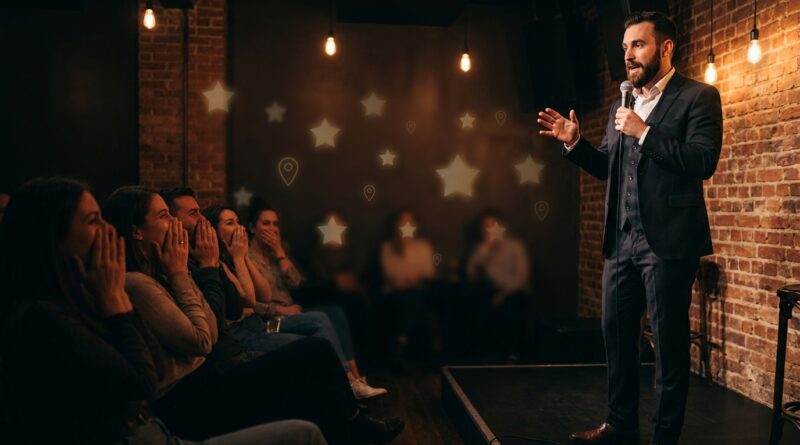
Inside 2026’s New ‘Five‑Star Phantom’ Phenomenon: How Hidden Local Mentalists Quietly Outscore TV Names On Real‑World Reviews
Trying to find the best mentalist right now is oddly annoying. You search for the world’s best, and the internet keeps handing you the same TV-famous names, recycled listicles, and glowing blurbs that could have been written ten years ago. That is not what most people want. They want to know who is actually blowing audiences away this month, in a real room, in front of paying guests who went home and left honest reviews. That gap is what people are starting to call the “Five-Star Phantom” phenomenon in 2026. The biggest live reaction is not always coming from the biggest celebrity. In many cities, it is coming from local or touring mentalists who have smaller profiles but stronger recent ratings, fresher audience feedback, and a better hit rate on real-world shows. If you care about the highest rated mentalist live show reviews 2026, the smart move is to follow the review trail, not the TV credits.
⚡ In a Hurry? Key Takeaways
- The “best” mentalist in 2026 is often not the most famous one. Recent audience reviews are telling a different story.
- Start with fresh review patterns, repeat mentions of specific routines, and signs of active ticket demand instead of old TV clips.
- Be careful with vague testimonials, outdated praise, and websites that sell hype but do not show proof from real attendees.
What the “Five-Star Phantom” phenomenon actually means
It sounds dramatic, but the idea is simple. A performer can be quietly collecting better live reviews than household-name mentalists while staying almost invisible in mainstream search results.
That happens for a few reasons. Search results tend to reward fame, old press, and big media footprints. Review platforms reward what happened last night. Those are not always the same thing.
So you get this strange split. The public sees celebrity names. Real audience data sometimes points somewhere else.
That is the heart of the Five-Star Phantom story. Hidden local stars, residency performers, and sharp touring acts are quietly outscoring TV names where it matters most to ticket buyers. Live satisfaction.
Why fans are getting misled
Most “best mentalist” lists are built from reputation, not current performance quality. They often mix TV appearances, career highlights, and old award mentions into one easy package. That may look impressive, but it does not answer the only question a buyer really has. If I book this show now, will it be great?
That is why review-led searching matters so much in 2026. The audience has become the better filter.
Fame is not the same as consistency
A famous mentalist may still be excellent, of course. But fame does not guarantee the strongest show in a given city, venue, or season. Some performers peak on television. Others are built for live rooms and crush it week after week.
That is also why niche sites and focused write-ups have become more useful. A good example is Inside Colin Cloud’s 5‑Star ‘Mind Hack’: How A Vegas Mentalist Quietly Became 2026’s Highest‑Rated Live Mind‑Reader, which looks at how review momentum can say more than general fame.
The new case study that explains the shift
One of the clearest patterns this year is the rise of the review-driven performer. This is the mentalist who may not dominate talk shows or viral clips, but keeps stacking real five-star reactions across Google, TripAdvisor, Ticketmaster comments, venue pages, and local event listings.
What makes these performers stand out is not just the score. It is the language inside the reviews.
What real audience praise looks like
When a mentalist is genuinely connecting, reviews usually mention specifics. People describe the moment their friend’s thought was revealed. They mention the room going silent. They say they are still talking about one routine the next day. They mention laughter, pacing, surprise, and how personal the show felt.
That kind of detail is hard to fake at scale.
By contrast, suspicious reviews tend to sound generic. “Amazing show.” “So talented.” “Best ever.” That is not useless, but if every review sounds like that, you should slow down and look closer.
How to spot the highest rated mentalist live show reviews 2026
If you want the best odds of finding a great show, use a simple filter. You do not need industry access. You just need to know what to look for.
1. Check how recent the reviews are
A mentalist who was brilliant in 2019 may or may not be the top live act in 2026. Start with the last 90 days if possible. Six months is still useful. Anything older than that should support the picture, not define it.
2. Look for repeated specific details
Strong review clusters often repeat the same strengths. Maybe audiences keep mentioning clean audience interaction, sharp humor, strong crowd work, or a finale that lands hard. Repetition matters. It suggests a performer is delivering consistently, not getting lucky once.
3. Compare across more than one platform
Do not rely on a single review source. Cross-check Google, Yelp where relevant, TripAdvisor for tourist markets, event pages, and venue websites. If all of them paint the same picture, that is a very good sign.
4. Watch for active booking signals
Sold-out dates. Added shows. Return bookings at the same venue. Repeat corporate clients. Those are often stronger signals than polished promo copy. Venues and planners tend to bring back people who actually deliver.
5. Read the low-star reviews too
This is where the useful truth often hides. A one-star review that complains “I got called on stage and hated it” may not be a quality issue. A two-star review that says “the show started late, sound was bad, and half the room could not hear” absolutely is. Learn to separate preference complaints from real execution problems.
Red flags that should make you pause
Not every shiny profile is a safe bet. Here are the warning signs.
Old publicity doing all the heavy lifting
If the website leads with old TV badges, old press logos, and no recent audience feedback, be careful. It may still be a great act, but the proof is stale.
Only testimonials on their own website
On-site testimonials are fine, but they are not enough by themselves. You want third-party reviews where real people can post without approval.
Ratings with no substance
A perfect score looks nice. But if there are very few reviews or all of them are short and vague, that score does not tell you much.
No clear sign they are performing regularly
Live mentalism is a performance craft. Sharp acts usually leave a trail. Listings, schedules, venue photos, recent audience posts, fresh clips, updated event pages. If none of that exists, you may be buying the idea of a show, not a proven current one.
Why local mentalists are suddenly punching above their fame level
This part surprises people. Smaller-profile performers often have an advantage in live settings.
They are closer to the audience. They are not phoning in a brand. They are refining material in real rooms every week. They depend on word of mouth, so they cannot coast on a famous name. The show has to work.
That creates a different kind of pressure, and often a better kind of result.
In practical terms, this means your city may already have a mentalist earning stronger live reactions than a much bigger TV name. You just will not always see that person first in search.
How to make a smart booking or ticket decision
If you are choosing who to see, hire, or recommend, keep it simple.
For ticket buyers
Pick the performer with the freshest pattern of detailed reviews, not the oldest fame story. If recent audiences describe being stunned, laughing hard, and talking about the show afterward, that is what you want.
For private events and corporate bookings
Ask for recent references. Ask where they have performed in the last few months. Ask whether the show is built for your room size and audience type. Good performers answer this stuff clearly.
For fans comparing famous names with rising names
Do not make it a celebrity contest. Make it a current-performance contest. If one act has stronger recent reviews, active demand, and clearer audience proof, that is your answer.
At a Glance: Comparison
| Feature/Aspect | Details | Verdict |
|---|---|---|
| TV fame vs recent reviews | Big names win visibility, but smaller acts often have fresher and more detailed audience feedback. | Recent reviews are the better buying signal. |
| Generic praise vs specific reactions | Specific mentions of routines, crowd response, pacing, and emotional impact usually point to a real strong show. | Specificity beats empty hype. |
| Marketing claims vs booking signals | Sold-out dates, repeat venue bookings, and multi-platform reviews are harder to fake than polished website copy. | Trust the booking trail. |
Conclusion
The big shift in 2026 is not that famous mentalists stopped mattering. It is that audience proof matters more. That is good news for fans, because it gives you a way around stale rankings and empty hype. The “Five-Star Phantom” phenomenon is really a reminder to trust what real people are saying after real shows. This helps the community right now because the mentalism scene is changing fast, and most people have no easy way to tell who is truly delivering a five-star mind-reading experience today. By looking at review patterns, booking signals, and a few simple red flags, you can separate marketing from genuine audience impact and make a much smarter call about who to watch next.