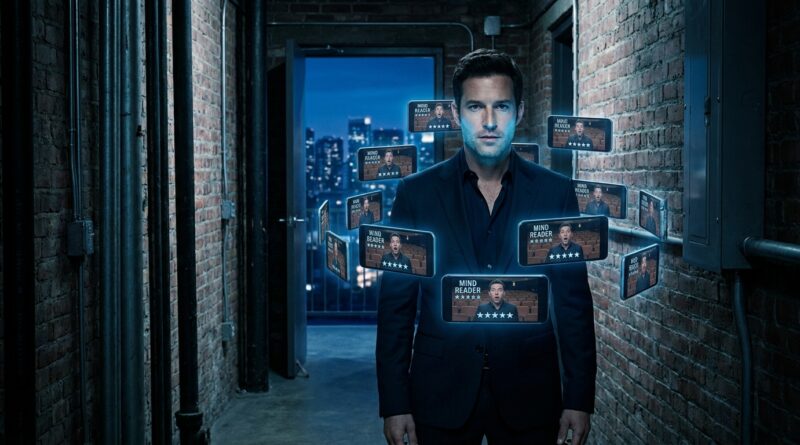
Inside 2026’s New ‘TikTok Mentalist Boom’: How Short Clips Quietly Rewired Who Fans Call The World’s Highest‑Rated Mind Reader
Your feed is not lying to you. It really does feel like every third clip is a “mind reader” guessing a stranger’s thought in 40 seconds flat. That is exciting, but also annoying, because short clips flatten everybody into the same box. A polished edit can make a beginner look legendary, while a seasoned pro with packed theaters and real reviews can look almost too simple for the algorithm. That is why so many fans searching for the tiktok mentalist highest rated end up more confused than informed. The good news is there is a way to sort viral heat from actual reputation. If you know what signals to check, you can tell who is using TikTok as a highlight reel for a real career, and who is mostly building suspense, farming reactions, and leaving no proof that audiences would pay to watch a full show. Views matter. They just should not be the only thing that matters.
⚡ In a Hurry? Key Takeaways
- The highest-rated TikTok mentalist is not simply the one with the most views. It is the performer who can back viral clips with real shows, verified reviews, and repeat bookings.
- Check three things fast: live performance history, off-platform reviews, and whether short clips point to ticket sales, tours, or established event work.
- This protects you from hype fatigue and helps real working mentalists get credit for craft, not just clever edits.
Why the TikTok mentalist boom got so messy so fast
TikTok is perfect for mentalism. It rewards surprise, fast reactions, and big emotional payoffs. Mentalism also happens to look amazing in a one-minute format. A guessed name, a predicted number, a “how did they know that?” ending. It is built for replay.
But the same thing that makes the format fun also makes it slippery. A short clip rarely shows the full routine. It does not tell you how many takes happened, what was cut, whether the audience was planted, or whether the performer can hold a room for 60 minutes instead of 60 seconds.
That is where the confusion starts. Fans are not wrong to be impressed. They just need a better rating system than likes and looped rewatches.
What “highest-rated” should mean in 2026
If you are trying to figure out the tiktok mentalist highest rated, start by changing the question slightly. Do you mean highest viewed, highest liked, most shared, or best reviewed as an actual performer?
Those are not the same thing.
Viral does not equal verified
A creator can go massively viral with three brilliant clips and still have no track record as a live entertainer. That does not make them fake. It just means we should be careful with labels like “best” or “highest-rated.”
Reviews matter more than reaction faces
A five-star review profile across ticketing sites, Google, event platforms, or venue pages tells you a lot more than a comment section full of “OMG HOW.” Real audience feedback usually mentions things clips cannot fake very well. Professionalism. Stage presence. Pacing. Crowd work. Whether the full show was worth the money.
Career signals count
Sold-out dates, repeat bookings, corporate work, theater runs, festival appearances, TV spots, and strong venue relationships are all signs that a performer is not just winning the app. They are winning in the real world too.
The simple test: Can this creator leave TikTok and still fill a room?
This is the easiest filter I know.
If a mentalist vanished from TikTok tomorrow, would people still book them? Would fans still buy tickets? Would event planners still call?
The strongest performers use short clips like movie trailers. The clip is not the whole product. It is a door into a bigger, proven act.
The weaker cases often feel inverted. The clip is everything. There is no visible show calendar. No venue trail. No review footprint. No sign that the work scales beyond a street reaction video.
How to verify a “highest-rated” mentalist in real time
You do not need industry access for this. You just need five minutes and a skeptical eye.
1. Check for an actual show history
Look for upcoming dates, past venues, ticket links, festival pages, event listings, or press mentions. A real worker leaves breadcrumbs all over the internet.
2. Look beyond TikTok comments
TikTok comments are fun, but they are not a rating system. Search for outside reviews. Google reviews, event booking platforms, venue testimonials, and independent press matter more.
3. Watch how they frame the clips
Do they only post impossible-looking moments with hard cuts and no setup? Or do they also share stage clips, longer routines, audience follow-through, and context around the performance?
4. See whether they get hired for different rooms
Great mentalists usually work in more than one setting. Private events. Corporate gigs. Theater shows. Colleges. Cruises. Sports tie-ins. If you want proof that the craft travels, this matters. It is one reason stories like Inside 2026’s New ‘Sportsbook Mentalist’ Craze: How Mind Readers Quietly Became The Highest‑Rated Halftime Bet You Never See Coming are worth paying attention to. They show how some performers are moving from social buzz into serious live demand.
5. Ask the boring question: can strangers buy a ticket?
This sounds obvious, but it cuts through the fog quickly. If there is no clear path to buy a ticket, attend a public show, or see independent audience feedback, you may be looking at a creator first and a proven live mentalist second.
Why TikTok changed who fans notice first
Before short-form video took over, many top mentalists built their names through TV, live touring, word of mouth, and event work. Discovery was slower. Reputation had time to form.
Now the funnel is flipped. Fans often meet the performer through a clip first. Then, maybe, they look for the career behind it.
That changes everything.
It means younger audiences may rate confidence, camera timing, and reaction value before they ever learn whether the performer has a deep act. It also means some under-the-radar professionals are finally getting the audience they always deserved, because one good clip can expose years of polished craft to millions.
The two types of TikTok mentalists you keep seeing
Type 1: The clip-native creator
These performers understand the platform perfectly. Tight edits. strong hooks. great camera presence. Sometimes they are excellent entertainers. Sometimes they are still early in their development as live acts.
There is nothing wrong with this category. Just do not confuse “best on TikTok” with “highest-rated overall.”
Type 2: The working pro using TikTok as a storefront
These are often the most interesting cases. Their clips may look less frantic, because they are not only optimizing for the algorithm. They are using TikTok to show a slice of a career that already exists. When you click through, you find reviews, testimonials, public appearances, ticketed events, and a stronger body of work.
If you are trying to identify elite talent, this second category usually deserves the harder look.
Red flags that should make you pause
Not every flashy clip is suspicious. But a few patterns should slow you down.
No off-platform footprint
If a performer seems huge on TikTok but nearly invisible everywhere else, that does not prove anything by itself. Still, it should make you cautious about calling them highest-rated.
Only reaction edits, never sustained performance
If every post ends right at the reveal and never shows how the routine breathes, lands, or connects with a wider audience, you are missing a big part of the picture.
Grand claims, little evidence
Words like “number one,” “best in the world,” or “highest-rated” should come with receipts. Reviews. Awards. venue history. client lists. ticket sales. Something concrete.
What fans should reward instead
If you want the mentalism space to stay healthy, reward proof of craft.
Follow creators who can point you to full performances. Share performers with real audience reviews. Buy tickets when a strong act comes to town. Leave thoughtful feedback after live shows. That is how “highest-rated” starts to mean something real again.
This also helps newer fans build better taste. The more you watch beyond the reveal, the easier it becomes to spot who has structure, control, humor, adaptability, and a real relationship with an audience.
At a Glance: Comparison
| Feature/Aspect | Details | Verdict |
|---|---|---|
| TikTok views | Great for measuring reach and curiosity, but easy to inflate through format, editing, and trends | Useful, not enough on its own |
| Verified reviews and show history | Shows whether audiences consistently enjoyed the full experience, not just one reveal | Best test of “highest-rated” |
| Cross-platform career proof | Venues, ticket links, press, repeat bookings, and public events reveal staying power | Strong sign of a real working pro |
Conclusion
The short version is simple. The tiktok mentalist highest rated should be the performer who can turn quick attention into real trust. Not just millions of views, but strong reviews, repeat bookings, paying crowds, and a body of work that holds up off the app. That matters now more than ever, because mentalism is being discovered in bite-sized clips by a global audience that often has no map for who is truly elite. If we get better at checking live history, independent reviews, and real career proof, we protect newcomers from hype fatigue, give deserving professionals the credit they have earned, and keep the conversation focused on skill instead of pure reach. That is better for fans, better for performers, and better for the art itself.