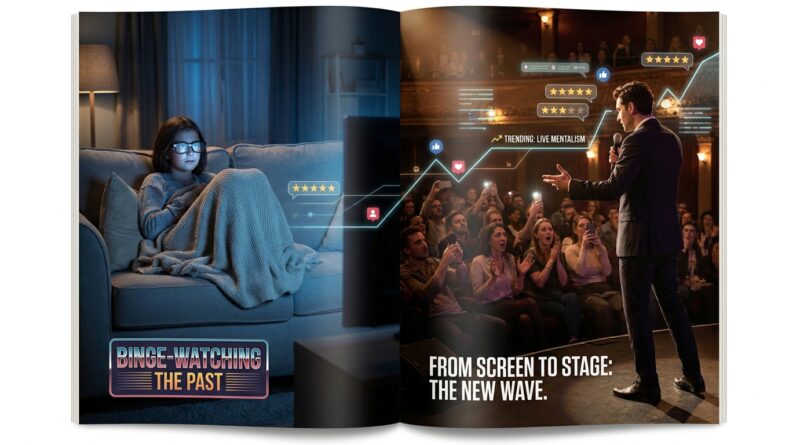
Inside 2026’s New ‘Netflix Nostalgia’ Effect: How A 15‑Year‑Old TV Mentalist Just Crashed The Real‑World Ratings Party
You can feel the irritation if you work in this space. A 15-year-old TV drama comes roaring back on Netflix, viewers binge all weekend, then they hit Google looking for “real mentalists,” “Patrick Jane in real life,” or “can mentalists really read minds.” Meanwhile, actual performers watch the attention land in all the wrong places. Reviews get buried. Search results get messy. And a fictional character starts stealing oxygen from people who actually do this for a living. That is the Netflix nostalgia effect in a nutshell. It is not just fan chatter. It changes search behavior, booking language, and even what clients think they want. The good news is this wave is not random. It follows a pattern, especially in the first 72 hours after a streaming spike. If you are a mentalist, an agent, or even a curious fan, there is a smart way to ride it instead of getting flattened by it.
⚡ In a Hurry? Key Takeaways
- The Mentalist Netflix effect on real mentalists is real. Streaming spikes can quickly change search traffic, audience expectations, and booking language.
- If you perform, update your site and profiles fast. Add plain-English wording that explains what you do, how it differs from TV fiction, and why that makes the live experience better.
- Do not promise supernatural powers. Clear positioning protects trust, improves reviews, and helps turn curious TV fans into happy real-world clients.
What the “Netflix Nostalgia” effect actually is
Every few years, an older show gets rediscovered by a younger audience. Streaming makes that happen fast. One strong weekend recommendation cycle, a few clips on TikTok or Reddit, and suddenly a whole new crowd thinks they discovered a hidden gem.
With The Mentalist, the effect is stronger than usual because the core hook is sticky. Patrick Jane is charming, sharp, funny, and always one step ahead. He is not presented as a wizard. He is presented as someone who reads people so well that it feels supernatural. That idea is catnip to viewers.
Then comes the real-world jump. People leave the episode page and start searching. They want to know if this kind of performer exists. They want a version for a party, a corporate event, or just a late-night rabbit hole.
That is where the problem starts. The fictional brand is stronger than many real ones.
The first 72 hours after a streaming spike
If you want to understand The Mentalist Netflix effect on real mentalists, watch what happens in three stages.
Hours 0 to 24: Curiosity searches
This is the “is this real?” phase. Search terms tend to sound like:
- real mentalist like Patrick Jane
- can mentalists read minds
- how do mentalists guess secrets
- Patrick Jane real person
- book a mentalist near me
These searches are not polished. They are emotional and messy. But they matter because Google picks up the language people are using right now, not the language performers wish they used.
Hours 24 to 48: Comparison mode
Now viewers start comparing fiction to reality. They click performer websites, YouTube clips, Reddit threads, and review platforms. This is where many working pros lose momentum. Their copy is often too generic, too theatrical, or too insider-heavy.
If your website says “mind-blowing psychological illusionist” but never explains what the audience actually experiences, a TV fan may bounce in ten seconds.
Hours 48 to 72: Buying intent
This is when some of that curiosity turns practical. Office event planners, birthday organizers, conference teams, and wedding clients start thinking, “Could this work for us?”
That audience does not need a lecture on methodology. They need fast reassurance.
- Is this fun?
- Is this classy or cheesy?
- Is it like the show, but real?
- Will guests talk about it after?
- Can I trust this person?
Why working mentalists feel like their ratings are being hijacked
The frustration is not imaginary. A streaming bump can throw attention toward keywords, phrases, and comparisons that have very little to do with how live performers have built their reputations.
Someone may have spent years earning five-star reviews for corporate work, private parties, or theater shows. Then a fresh wave of viewers arrives and starts filtering everything through one fictional lens. Suddenly, the public conversation is not about originality, reliability, or audience fit. It is about whether the act “feels like Patrick Jane.”
That is a strange standard to compete with. He never misses. He has scriptwriters.
This is also why public rankings can feel off. Quiet, steady professionals often lose attention to louder, more searchable hooks. If you want a useful look at that gap, Inside 2026’s New ‘Corporate Mind‑Reader’ Playbook: How Quiet Boardroom Shows Are Secretly Creating The World’s Highest‑Rated Mentalists makes the point well. The live market often rewards trust and fit more than internet noise does.
What fans are really looking for when they search
Most new fans are not actually asking for “mind reading.” Not in a literal sense.
They are looking for a mix of things:
- sharp observation
- social intelligence
- cool confidence
- playful mystery
- a feeling that the performer understands people
That is important because it changes how real performers should present themselves. If your branding leans too hard into spooky claims, you may miss people who came in through The Mentalist. Those viewers often like the idea of psychological skill more than the idea of paranormal power.
How to adjust your show description without sounding fake
If you perform, this is the easiest win. Your show description should meet TV fans where they are, but still sound like you.
What to add
- A plain sentence explaining the experience. Example: “A live interactive show of mind reading, influence, prediction, and impossible audience moments.”
- A grounding sentence. Example: “Inspired by real-world observation, psychology, suggestion, and showmanship, not supernatural claims.”
- A quick audience benefit. Example: “Perfect for guests who want something smart, funny, and unforgettable.”
What to avoid
- Overblown claims about actual psychic powers
- Dense magician jargon
- Trying to copy Patrick Jane word for word
You do not need to pretend you are the character. You just need to answer the question viewers are silently asking. “If I liked that show, why would I like you?”
How to position yourself against the “Patrick Jane effect”
The smartest move is not imitation. It is translation.
Take the appeal of the character and convert it into live-show language.
If your style is corporate and polished
Use phrases like “intelligent interactive entertainment,” “psychological mind reading,” or “sharp audience reading with humor.” This helps event planners picture something sophisticated instead of gimmicky.
If your style is theatrical
Lean into mystery and drama, but explain the payoff. People want atmosphere, yes, but they also want to know guests will have fun rather than sit in awkward silence.
If your style is casual and modern
Talk like a human. “Think less crystal ball, more impossible reads and impossible predictions.” That kind of line can work because it resets expectations fast.
Reviews matter more than usual during this wave
When nostalgia traffic hits, many people skip straight to reviews. They are trying to sort TV fantasy from real-world quality.
That means your review profile should do more than say “amazing show.” It should answer practical questions.
What strong reviews tend to mention
- how the audience felt
- whether the performer was professional and easy to work with
- what kind of event it was
- whether skeptical guests were won over
- what made the performance feel different from standard magic
If you can, gently prompt past clients for specific language. Not scripted. Just specific.
For example: “If you leave a review, it helps if you mention the event type and what guests kept talking about afterward.”
That gives future visitors something concrete to trust.
What agents and booking platforms should change this week
Agents often miss this window because they assume the trend is just entertainment chatter. It is not. It affects how clients search and what category pages convert.
Three quick fixes
- Update category copy to include “mind reader,” “mentalist,” and “psychological entertainer” in natural language.
- Add a short FAQ. “Is this like the TV show The Mentalist?” Answer it clearly and warmly.
- Refresh performer bios so they explain style, tone, and audience fit in one glance.
Done right, this does not cheapen the act. It helps normal people understand what they are booking.
Why fan forums and Reddit threads can quietly shape bookings
This part gets overlooked. Fans do not just search Google. They compare notes in comment threads, subreddits, and recommendation posts. One good thread can send a surprising amount of qualified traffic to a performer site.
The trick is not to spam those spaces. It is to be useful.
If you are part of the industry, share context. Explain how real mentalism differs from TV fiction. Recommend good live examples. Talk about audience experience instead of secrets. People remember the expert who helped them understand the subject without talking down to them.
For fans: yes, there are real performers worth seeing
If you are coming to this from Netflix, the short answer is yes. Real mentalists exist, and the good ones can be astonishing. But they are not carbon copies of a detective drama character.
Live performance has different strengths. It is interactive. It is messier in a good way. And when it is done well, it can feel more personal than TV because you or your friends are part of the moment.
The best approach is to look for performers whose reviews mention intelligence, warmth, humor, and strong audience reactions. Those clues usually tell you more than flashy headlines do.
At a Glance: Comparison
| Feature/Aspect | Details | Verdict |
|---|---|---|
| Search spike timing | Interest usually jumps in the first 72 hours after a streaming buzz cycle, starting with curiosity and moving toward booking intent. | Act fast. Early updates to copy and profiles matter. |
| TV character vs real performer | Fans are often chasing the feeling of sharp observation and mystery, not a literal copy of Patrick Jane. | Translate the appeal. Do not imitate the fiction. |
| Reviews and booking pages | Clear, specific reviews and simple bios help curious viewers become confident buyers. | Trust beats hype in the live market. |
Conclusion
The Mentalist Netflix effect on real mentalists is not some quirky side story. It is a real shift in attention, language, and buyer expectations. Today the worldwide binge of The Mentalist on streaming is surging again, pulling a whole new generation of viewers into the idea of mind-reading and pseudo-psychic skills, but almost no one is mapping that hype to what is happening in the live market. That is the opening. If you understand how search trends, fan forums, and booking platforms react in the first 72 hours, you can make smart changes while the wave is still building. Tweak your show description. Explain your style clearly. Ask for better reviews. Help fans understand what real mentalism actually offers. Done right, nostalgic TV traffic does not have to end with a fictional detective owning the whole conversation. It can become real curiosity, real bookings, and real five-star trust for performers who are actually in the room.