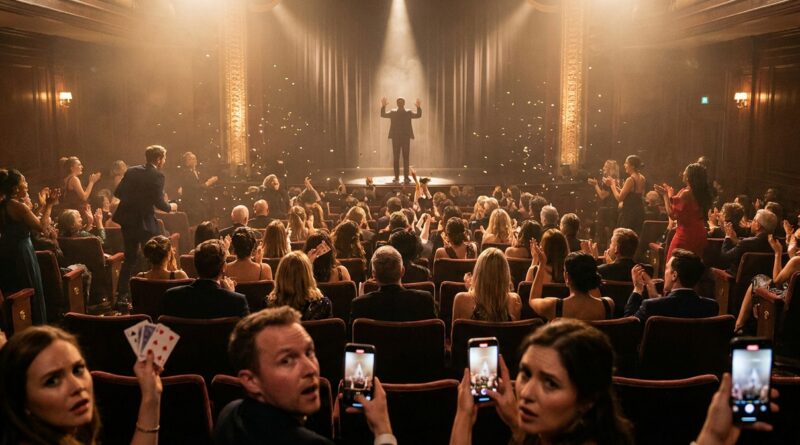
Inside 2026’s New ‘Standing Ovation Test’: How Sold‑Out Theater Crowds Quietly Re‑Rank The World’s Highest‑Rated Mentalists
Picking a mentalist used to be simple. Then review sites filled up with suspicious five-star bursts, TV talent shows got polished within an inch of their life, and social media turned every clever 20-second clip into “proof” that someone is the best on earth. If you are trying to find the best live mentalist shows 2026 reviews, that gets expensive fast. Tickets are not cheap, and nobody wants to spend real money on a night that feels better in promo videos than it does in the room.
That is why a lot of regular theatergoers are leaning on something much harder to fake, what some fans are calling the “Standing Ovation Test.” It is not a formal award. It is a simple pattern. Does a performer consistently get full-room reactions, repeat bookings, and sold-out returns from venues that know exactly how ticket buyers responded last time? If the answer is yes, you are usually looking at the real thing.
⚡ In a Hurry? Key Takeaways
- The best clue in 2026 is not star ratings. It is repeat sold-out runs and strong in-room audience response.
- Before buying tickets, check if the same venue keeps bringing the mentalist back and whether bigger rooms are replacing smaller ones.
- A viral clip can be fun, but a packed theater standing up night after night is a much safer sign of value.
Why the old “best mentalist” lists feel less useful now
You are not imagining it. A lot of rankings feel off.
Review platforms can be gamed. TV competition shows are edited for drama. Fan pages often act like campaign teams. Even honest reviews can be skewed because people rate the idea of a performer, not the actual live show they saw.
That is the gap the Standing Ovation Test tries to fill. Instead of asking, “Who has the loudest online fan base?” it asks, “Who keeps winning over paying crowds in real theaters?”
What the Standing Ovation Test actually means
It is less about one dramatic moment and more about a pattern you can spot.
1. Strong audience response in the room
A standing ovation matters because it costs people something. They have to get out of their seat, commit publicly, and do it in front of everyone else. Not every standing ovation is equal, of course. Some are polite. Some are instant and loud. The useful signal is consistency.
If audience footage, venue comments, and local reviews all point to the same thing, that is worth your attention.
2. Repeat bookings from the same venue
This is the part many ticket buyers miss. Venues are not sentimental. They program what works.
If a theater invites the same mentalist back again and again, that is a quiet vote of confidence. It means the performer likely sold tickets, kept the crowd happy, and did not leave the venue dealing with refunds, complaints, or weak word of mouth.
3. Room size that grows over time
A performer moving from a small room to a larger theater is often a stronger signal than a flashy online following. Bigger rooms cost venues more money and carry more risk. If that upgrade happens, somebody behind the scenes believes the demand is real.
How to use this before you buy a ticket
You do not need industry contacts. You just need to know where to look.
Check the venue history
Go to the theater’s website and search past event listings. Has the mentalist appeared there before? Are they returning this year? Are there multiple dates?
One date can be a tryout. Three dates can mean confidence. An annual return is even better.
Read reviews on the venue page, not just fan pages
Venue audiences tend to be more mixed. That helps. You get comments from couples on date night, tourists, theater regulars, and people who are not already superfans.
Look for phrases like “better live than expected,” “the whole room was into it,” or “we saw him again.” Those are strong signals.
Watch for sold-out repeats, not just one sold-out show
One sold-out night can come from aggressive promotion. A string of sold-out returns is much harder to manufacture.
This is where the real re-ranking happens. A performer with less online hype but stronger repeat attendance may be more reliable than a bigger social name.
Why social media still matters, just not in the way you think
Online clips are not useless. They are just incomplete.
A short video can show charisma, pacing, and audience handling. What it cannot fully show is whether that energy lasts for 75 minutes in front of a paying crowd. That is why viral fame and live-show quality sometimes split apart.
If you want to see how fast online buzz can shuffle public opinion, this piece on Inside 2026’s New ‘TikTok Gold Test’: How Viral Clips Quietly Re-Rank The World’s Most Watched Mentalists Overnight is a useful companion. It shows how a creator can explode online almost overnight. The Standing Ovation Test is the reality check after that spike.
The difference between a good clip and a great night out
This is where many buyers get tripped up.
A good clip is optimized for surprise. A great live show has to do more. It needs structure, pacing, warmth, crowd control, and a finish that leaves people buzzing on the way home.
That is why some performers look huge online but get mixed reactions in theaters. Others barely dominate your feed, yet quietly keep filling rooms because the actual show delivers.
Green flags that often point to a world-class live mentalist
When you are sorting through the best live mentalist shows 2026 reviews, these signs usually help.
Fast local word of mouth
If people start saying “go see this while you can,” that matters more than polished ad copy.
Return engagements in respected venues
A comeback booking is one of the cleanest trust signals in live entertainment.
Balanced reviews
Oddly, a page with only perfect praise can be less believable than one with mostly strong reviews plus a few normal complaints. Real audiences sound like real people.
Audience reactions that look unscripted
Look for candid clips where the crowd response builds naturally. That often tells you more than an edited trailer.
Red flags to watch for
There are a few warning signs that should make you pause.
Huge online numbers, thin live track record
If you can find endless clips but very little evidence of repeat theater success, be careful.
Only promotional testimonials
If every quote sounds polished and vague, you may not be getting a clear picture.
Frequent venue hopping with no returns
Sometimes that is normal touring. Sometimes it means a show made noise once but did not build lasting demand.
Why this matters more in 2026
The live entertainment market is crowded. Prices are up. Attention spans are shorter. That means your ticket choice matters more.
The performers who keep rising this year are often not the ones shouting the loudest online. They are the ones theaters quietly trust with another Saturday night, another bigger room, another return run.
That is the real re-ranking. Not a website badge. Not a TV edit. A venue deciding, “Yes, bring this person back.”
At a Glance: Comparison
| Feature/Aspect | Details | Verdict |
|---|---|---|
| Online star ratings | Easy to scan, but can be inflated, selective, or shaped by superfans and promo pushes. | Useful as a starting point, not a final answer. |
| Viral clips and TV exposure | Great for spotting personality and buzz, but edited formats can hide whether the full live show works. | Good for discovery, weak for judging overall live value. |
| Standing Ovation Test | Looks at repeat bookings, sold-out returns, growing room sizes, and consistent audience response. | Best real-world signal of reliable live-show excellence. |
Conclusion
If you are tired of guessing, this is the simplest filter to start using. Ignore some of the noise and watch what real audiences and real venues do over time. That cuts through manipulated star ratings, TV edit bias and social media fan wars by focusing on the one thing that cannot be faked for long, in-the-room audience response and how often venues are willing to bet their calendar on the same mind-reader again. Once you know how to spot those standing ovation signals, you can separate Instagram illusion from dependable live-show quality and spend your money on mentalists who are actually giving people a night worth talking about.