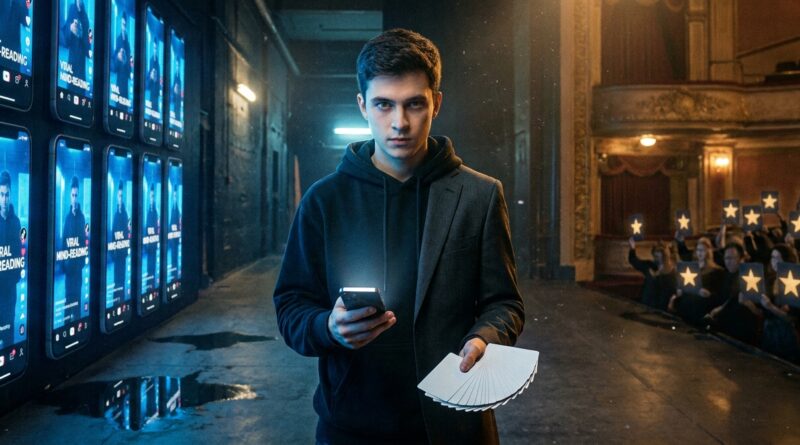
Inside 2026’s New ‘TikTok Mind Reader’ Shock: How Short‑Form Illusion Stars Quietly Hijacked The World’s Mentalist Ratings Overnight
You search for the world’s best mentalist, and instead of theater dates, reviews, or TV specials, you get a wall of TikTok clips. That’s frustrating for fans and unfair to live performers. A creator can look unstoppable in 15 seconds, rack up millions of views, and suddenly be treated like the top-rated mind reader on earth. But views are not the same thing as live skill. They are not even the same thing as trust. The real shock in 2026 is not that short-form illusion stars got popular. It is that platform numbers now shape public “mentalist ratings” faster than critics, ticket buyers, or even other magicians do. If you care about tiktok mentalist ratings, the big question is simple. Are people rating a performer, or are they rating a very polished clip? Once you know how these numbers are built, it gets much easier to tell the difference between a real worker and a ring-light mirage.
⚡ In a Hurry? Key Takeaways
- Short-form platforms now heavily influence who gets called the “highest rated” mentalist, even when those creators have little proven live experience.
- Before trusting viral fame, check for uncut audience footage, repeat bookings, independent reviews, and full-length live performances.
- A flashy clip can hide editing, stooges, selective takes, or camera framing, so fans should treat viral ratings as a starting point, not proof.
Why this suddenly matters so much
For years, mentalist reputations were built the old-fashioned way. Ticket sales. TV appearances. Word of mouth. Industry respect. People argued, of course, but the argument was usually about performers who had actually stood in front of real audiences for years.
Now the path is different. A creator posts a fast, clean prediction video. The algorithm loves it. A second clip hits. Then a reaction compilation. Then a repost account in three countries. By the end of the month, that performer can look “bigger” than someone who has spent a decade filling theaters.
That is the heart of the tiktok mentalist ratings problem. Popularity data is replacing performance data.
How short-form illusion stars quietly took over the ratings game
Algorithms reward certainty, not depth
Mentalism works beautifully in short clips because the ending is so strong. A correct thought reveal. A perfect prediction. A stranger screaming into the camera. It lands fast. That makes it ideal for TikTok and YouTube Shorts.
What the algorithm rewards is watch time, rewatches, comments, and shares. It does not reward fairness. It does not reward context. It does not ask whether the trick would work in a theater, for a corporate crowd, or under proper live conditions.
Viewers often confuse “most seen” with “best”
This is not because viewers are foolish. It is because platforms train us to think ranking equals quality. If a mentalist keeps appearing in your feed, your brain starts filing that person under “important” or “top tier.”
That is how viral creators quietly hijack public ratings. Not by winning a formal contest, but by being the most visible answer when people search.
Short-form creators understand packaging better than old-school acts
Many live mentalists are excellent performers and terrible content marketers. They post blurry clips, slow intros, and awkward sound. Meanwhile, a younger creator may understand hooks, cuts, subtitles, pacing, camera placement, and thumbnail psychology almost perfectly.
So the better marketer can look like the better mentalist, even when that is not true live.
What a viral “mind reader” clip can hide
Editing and selective success
This is the biggest issue. A live mentalist has one shot in front of the crowd. A short-form creator may have ten takes, or twenty. You only see the cleanest version.
That does not automatically mean fraud. It does mean the clip is not a fair test of consistency.
Camera control
The camera tells you where to look and what not to look at. Tight framing can hide helpers, props, peeks, switches, or verbal setup that would matter a lot in person.
Audience management
Some creators are brilliant at picking the right volunteer, asking guided questions, and steering reactions. Again, that is a real skill. But it can also make a weak effect look impossible.
Comment-section inflation
Comments like “best mentalist alive” often come from excitement, not comparison. Most viewers have not seen ten live mentalists in the past year. They are reacting to one clip at one moment.
That is why tiktok mentalist ratings can swell overnight. The emotional reaction is real. The ranking logic is often flimsy.
To be fair, some of these creators are genuinely very good
It is important not to swing too far the other way. Not every short-form mentalist is a camera trick merchant. Some are outstanding. They use social media as a stage, not a hiding place.
The best of them do three things well. They perform strong methods. They present them clearly. And they can carry that same confidence into live rooms.
In fact, the smartest fans now treat short-form as a trailer, not the movie. A great clip can be your first clue that a performer is worth deeper attention. It just should not be the final verdict.
How to tell whether a viral mentalist is actually good live
Look for full-length performance footage
Not a montage. Not a reaction edit. Look for several uninterrupted minutes with one audience, one routine, and natural pacing. If a performer is truly strong, they usually have at least some long-form proof somewhere.
Check for real-world bookings
Corporate events, cruise work, theater runs, college shows, festival appearances, and repeat private clients matter. They show that someone can hold a room, not just a screen.
Read independent reviews, not just fan comments
Comments under a creator’s own posts are the least reliable rating system imaginable. Search outside the platform. Look for venue reviews, ticket buyer feedback, and mentions from event planners.
Watch how they handle misses or messy moments
Live mentalism is not only about hitting the effect. It is about recovering smoothly, staying likable, and keeping the audience with you. That is where the seasoned performers separate themselves.
See if other respected performers take them seriously
You do not need insider approval for talent to be real. Still, when peers consistently praise someone’s live work, it is a useful signal.
Why “highest rated” means something different now
Older fans may hear “highest rated mentalist” and think of ticket demand, television legacy, or critical respect. Newer fans may think of likes, shares, saves, and follower growth. Both groups are using the word “rated,” but they mean different things.
That mismatch is causing a lot of confusion in the Best Mentalist world. It also explains why certain older names suddenly reappear in the conversation when streaming revives them. We saw that dynamic clearly in Inside 2026’s New ‘Netflix Nostalgia’ Effect: How A 15‑Year‑Old TV Mentalist Just Crashed The Real‑World Ratings Party. Streaming memory can boost a reputation just as fast as social media hype can. Neither one automatically reflects who is strongest on a stage tonight.
A better way to think about tiktok mentalist ratings
Split ratings into three buckets
If you want a clearer picture, stop using one giant catch-all ranking. Break it into three parts.
Clip rating. How strong, surprising, and well-made are the short videos?
Live rating. Can the performer entertain and fool a real crowd without edits?
Career rating. Do they have staying power, range, and repeat audience trust?
A creator may score very high in one bucket and average in another. That is normal. The trouble starts when people assume one bucket proves all three.
Red flags fans should watch for
If you are deciding whether to buy a ticket, book a show, or share someone as the next great mind reader, slow down when you see these signs:
- No full live footage anywhere.
- Only street clips with extreme cuts.
- Big follower counts but almost no real venue history.
- Testimonials that are vague or impossible to verify.
- Claims like “world’s number one mentalist” with no clear basis.
- Every trick relies on the camera being in exactly one spot.
One red flag does not prove anything by itself. A stack of them should make you careful.
Good news for fans and for overlooked live performers
The social-media shift has created noise, yes. But it has also opened doors. Some excellent live mentalists are finally getting discovered because one short clip gave them reach they never had before.
That means fans can find hidden talent faster than ever. It also means lesser-known pros who are fantastic in person may still be buried under louder creators with cleaner edits. If you do a little homework, you can often spot those under-the-radar performers before the crowd does.
That is where readers gain the advantage. You do not have to reject viral creators. You just need a better filter.
At a Glance: Comparison
| Feature/Aspect | Details | Verdict |
|---|---|---|
| Viral clip performance | Fast pacing, strong reveals, tight editing, high replay value | Great for discovery, weak as stand-alone proof of live ability |
| Live stage or close-up show | Requires consistency, audience control, recovery skills, and long-form entertainment value | Still the best test of whether a mentalist can truly deliver |
| Public ratings and reputation | Now shaped by platform visibility, nostalgia, comments, and search results as much as traditional reviews | Useful only when you separate hype, history, and actual performance evidence |
Conclusion
The big change is not just that TikTok made a few mentalists famous. It is that algorithm-driven clips now quietly influence who the public thinks is the highest rated in the world. That can help real talent rise faster, but it also makes it easier for over-hyped acts to look better than they are. If fans learn to read tiktok mentalist ratings with a cooler head, everyone wins. You can separate camera tricks from legitimate mind reading, spot live performers hiding behind smaller numbers, and avoid spending money on acts that only work inside a 15-second frame. Short-form is now the front door for most new mentalism fans. It just should not be the judge, jury, and final scorecard.