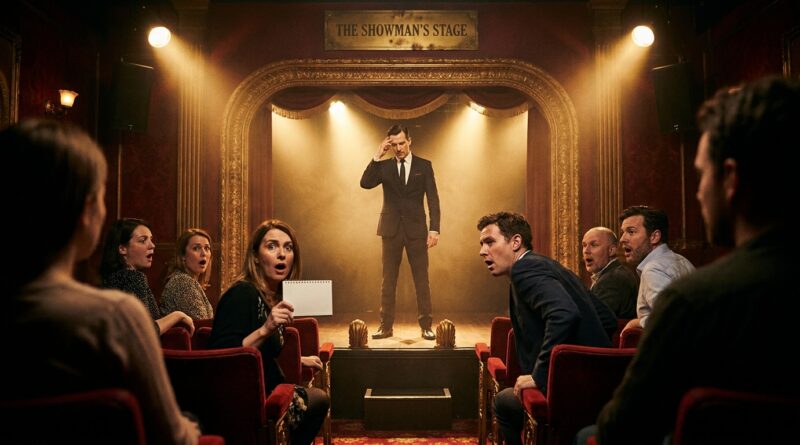
Inside 2026’s New ‘Showman Effect’: How One London Mind Reader Just Quietly Reset The Bar For Live Mentalism Reviews
It is frustrating to watch one mentalist get called “unmissable” overnight while others with bigger followings barely move the needle. That gap can feel random from the outside. It usually is not. The latest James Phelan Showman mentalist review buzz out of London points to a much clearer pattern. Reviewers are not rewarding scale, TV credits or social numbers first. They are rewarding a very specific feeling in the room. People want to leave thinking they witnessed real thought reading, not a polished variety set with a few clever tricks dropped in. That is the real story behind the new “Showman Effect.” A performer wins when audience members feel personally seen, slightly unsettled and unsure where the performance ended and their own choices began. Phelan’s recent London response matters because it shows, in plain sight, how that feeling is built on stage and why critics reacted so quickly.
⚡ In a Hurry? Key Takeaways
- The strongest live mentalism reviews now come from shows that feel personal, spontaneous and emotionally precise, not just flashy.
- If you perform, build your set so volunteers create the big moments. Let memory, choice and callback do more work than props.
- This matters because a review spike can come fast, but only if the room leaves describing mind reading, not “a fun magic night.”
What the “Showman Effect” really means
The phrase sounds dramatic, but the idea is simple. A modern showman mentalist does not just fool people. He controls how they describe the experience afterward.
That sounds small. It is not. Reviews live or die on language. If people say, “great stage presence, slick tricks,” that is decent. If they say, “I still cannot work out how he knew that,” you have crossed into stronger territory.
The recent James Phelan Showman mentalist review chatter suggests that this line is where the bar has moved in 2026. The best-reviewed acts are shaping not only the performance, but also the memory of the performance.
Why small rooms are suddenly beating big platforms
TV can make a name. Social media can make a clip go wide. Neither automatically creates the kind of reaction that lifts a live review average.
Small and mid-sized rooms do something different. They remove distance. The audience can watch the volunteer’s face. They can hear the hesitation before an answer. They can feel the timing. That intimacy makes even a simple reveal land harder.
When a room is close enough to see genuine reactions, people stop talking about production value and start talking about impossibility. That is usually where premium review language comes from.
What likely clicked in London
The exact mechanics matter less than the structure. Based on the review pattern and what audiences tend to respond to in this style of show, a few ingredients likely did the heavy lifting.
1. Audience participation felt central, not decorative
Many stage mentalists ask for a volunteer, do the bit, get applause, then move on. The stronger acts make the volunteer feel like the event itself. The person on stage is not a helper. They are the proof.
That shift changes everything. Reviewers remember the tension in the interaction, not just the outcome.
2. Apparent spontaneity was protected
People forgive polish. They do not forgive feeling herded. When a mentalism set looks too tidy, audiences mentally move it into the “stage trick” box.
The “Showman Effect” depends on carefully controlled looseness. A joke that seems off-the-cuff. A choice that appears to interrupt the planned flow. A callback that makes an earlier moment suddenly matter more. These things help the audience believe the show is happening with them, not at them.
3. Memory stunts were framed as human, not mechanical
A memory feat can die on stage if it feels like a talent demo. It can soar if it feels intimate. Names, personal details, patterns and recalled choices all hit harder when the audience reads them as attention rather than calculation.
That is one of the smartest moves any mentalist can borrow. Do not present memory as speed. Present it as connection.
Why critics respond so fast to this format
Critics and audience reviewers are often looking for the same thing, even if they use different words. They want a show that gives them a clean sentence to write.
“Technically impressive” is faint praise. “He knew things he should not have known” is a much stronger review line.
That is why a show like this can spike within 24 hours. Strong live mentalism produces instant retellable moments. People can explain them to friends on the train home. If the story survives retelling, the review usually does too.
The real playbook performers can take from it
This is the useful part. If you perform on cruise ships, at corporate events or in intimate theatres, you do not need to copy another act beat for beat. You need to copy the structure that creates the same kind of reaction.
Start with a personal stake early
Give the audience a reason to care before the biggest reveal. A choice, a name, a memory, a hidden decision. The reveal lands harder when the room understands what is emotionally at risk.
Use fewer “look what I can do” moments
This is where a lot of acts lose altitude. Technical skill is important. Showing off too early can flatten the mystery. Save obvious skill displays for moments that support the story of mind reading rather than replace it.
Build callbacks into the show
One of the easiest ways to make a performance feel deeper is to bring back a detail from 15 or 30 minutes earlier. It creates the sense that nothing in the room was accidental. Reviewers love that because it makes the show feel intelligently designed without feeling stiff.
Let silence do some work
Not every beat needs music, chatter or a punchline. A short pause before a reveal can create more tension than another paragraph of patter. In mentalism, that pause tells the room, “This matters.”
How this applies to different venues
Cruise ships
Cruise audiences are mixed. Energy helps, but clarity matters more. Focus on broad, easy-to-follow premises with one or two deeply personal moments that break through the “variety show” expectation.
Corporate events
Corporate crowds often start guarded. Use clean audience management and avoid making volunteers feel trapped or silly. The best reviews in that setting come when guests feel smart, included and amazed.
Intimate theatres
This is where the current review bar is being reset. Use the room. Eye contact matters. Volunteer selection matters. The closer the audience is, the less you need visual clutter and the more you need emotional precision.
What audiences mean when they say “it felt real”
They usually do not mean they literally believed in psychic powers. They mean the experience bypassed their normal “it’s just a trick” filter.
That happens when three things line up. First, the choices seem fair. Second, the participant reactions feel genuine. Third, the reveals connect to identity, memory or private thought rather than random objects.
Once those three are in place, the language around the show changes. That is the review shift performers should pay attention to.
The quiet lesson from the James Phelan Showman mentalist review trend
The lesson is not “be bigger.” It is “be more unforgettable in the room.”
That may sound obvious, but it cuts against how many performers market themselves. A poster can sell scale. A great review usually sells a feeling. The acts climbing fastest right now seem to understand that better than the acts still chasing prestige signals alone.
For anyone tracking the James Phelan Showman mentalist review wave, that is the useful takeaway. The standout response is less about fame and more about construction. A well-built live experience can suddenly reset expectations for everyone else on the bill.
At a Glance: Comparison
| Feature/Aspect | Details | Verdict |
|---|---|---|
| Audience participation | Volunteers feel essential to the outcome, not just there to fill stage time. | Major driver of stronger reviews. |
| Apparent spontaneity | The show appears flexible and alive, even if tightly planned underneath. | Helps audiences describe it as mind reading, not routine magic. |
| Memory and callback structure | Earlier details return later with personal meaning, making the whole set feel connected. | One of the clearest ways to create “how did he know that?” reactions. |
Conclusion
The value in this moment is not just that one London show got people talking. It is that the reaction gives performers and fans a usable map. The fresh review spike shows how a modern showman mentalist can shape audience participation, apparent spontaneity and memory work so the night gets described as mind reading rather than just another magic act. That is useful whether you are building a theatre run, tightening a corporate set or trying to make a cruise audience lean in. The big lesson is simple. Strong live mentalism is now being judged less by profile and more by aftertaste. If people leave genuinely rattled, curious and eager to retell one impossible moment, the reviews take care of themselves.