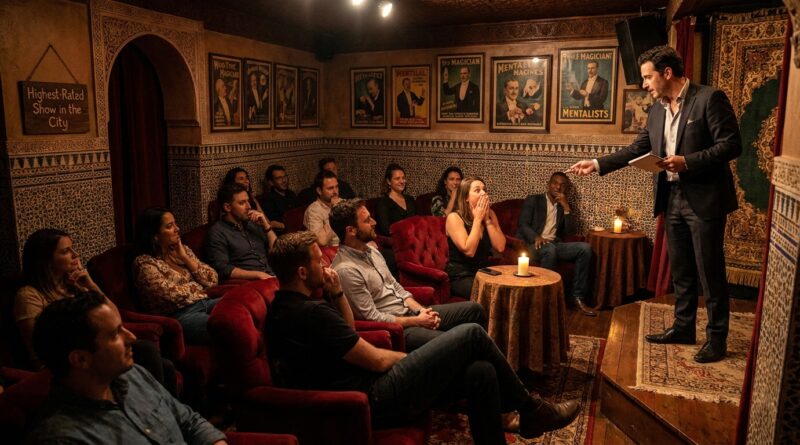
Inside San Francisco’s ‘Highest‑Rated’ Mind‑Reading Speakeasy: Why Jay Alexander’s 5‑Star Show Is Quietly Schooling Vegas
Trying to find a great mentalist show should be easy. It usually is not. You search for the highest rated mentalist show San Francisco reviews, and what do you get? Slick ads, dramatic trailers, and a pile of comments that all sound a little too polished. Then you buy a ticket and sit through 70 minutes of fake suspense, broad comedy, and “mind reading” that feels like a card trick wearing a blazer. That is why this tiny San Francisco speakeasy keeps standing out. Jay Alexander’s 45-seat show is pulling the kind of 5-star praise bigger productions spend a fortune chasing, and it is doing it quietly. No giant casino budget. No arena-style smoke machine. Just a small room, careful structure, and a performer who seems to understand something many Vegas acts forgot. People do not rate live mind reading by scale alone. They rate it by intimacy, trust, surprise, and whether the story they tell afterward feels impossible.
⚡ In a Hurry? Key Takeaways
- San Francisco’s highest-rated mentalist buzz is not coming from the biggest show. It is coming from a 45-seat speakeasy where intimacy makes the mind reading hit harder.
- If you are choosing a show, look for review patterns about audience involvement, consistency, and post-show word of mouth, not just flashy marketing.
- For performers, the lesson is simple. Ethical framing, strong pacing, and a smart review prompt can beat a big budget without overselling what the audience saw.
Why this show keeps beating the hype machine
Big magic marketing tends to sell size. Giant posters. Celebrity quotes. Fast-cut video. It works, up to a point. But mentalism is different from stage illusion. A levitation can impress from row 30. A thought-reading effect lives or dies on credibility.
That is where a small room changes everything.
In a 45-seat speakeasy, people can see faces, hear breathing, catch hesitation, and notice whether a reveal feels clean or padded. There is less room for theatrical fog. More room for tension. If the performer is good, the whole thing feels personal. If the performer is weak, the room exposes it fast.
Jay Alexander appears to be using that pressure as an advantage. Instead of trying to look bigger than Vegas, the show looks closer than Vegas. That is a smarter play.
The real reason the reviews sound different
When fans write glowing reviews for ordinary shows, they usually say things like “fun night,” “great date,” or “worth seeing once.” When they rave about elite mentalism, the language changes. They start describing moments. They mention exact beats. They argue about what they saw in the car ride home.
That matters.
High-value reviews are usually built on replay in the mind. People keep turning over one impossible moment, and that turns into a longer, more excited review. It also turns into referrals.
If you read enough posts around the Inside San Francisco’s Highest‑Rated Mentalist Show: Why Jay Alexander’s ‘Mind Tricks Live’ Is Quietly Beating Big‑Budget Magic discussion, the pattern becomes clear. This is not just “nice venue, good drinks, fun host.” The praise keeps circling back to how impossible the experience felt at close range.
What this speakeasy gets right that many big shows miss
1. It frames the experience before the first trick starts
Good mentalism starts before the first reveal. The room, the intro, the host language, the seating, even the wait at the door all tell the audience what kind of night they are about to have.
A speakeasy setting helps because it lowers the “theme park” feeling. People enter expecting something secretive, clever, and a little adult. That is useful framing. It nudges them away from “show me rabbits and lasers” and toward “pay attention.”
That shift sounds small. It is not. It changes how people process every effect that follows.
2. It uses intimacy as proof
In a giant room, the audience often fills in the blanks for the performer. In a tiny room, they do the opposite. They inspect. They compare notes. They watch hands, eyes, timing, and audience reactions.
So when a small-room effect lands, it lands harder. The audience feels like they had a fair chance to catch something and still failed. That sense of fairness is one of the main engines behind 5-star reviews.
3. It keeps the energy personal, not generic
A lot of touring acts use a script broad enough to work in any city on any weekend. That helps with scale, but it can flatten the experience. The best small-room mentalism feels custom, even if the structure is tightly built.
People remember the illusion of spontaneity. They remember feeling seen. They remember that the performer responded to them, not just at them.
4. It respects the audience’s intelligence
This might be the quietest edge of all. Audiences hate feeling talked down to. They also hate feeling conned by exaggerated claims. The strongest mentalists know how to create mystery without insulting people’s common sense.
Call it ethical sleight of mind. You suggest. You guide attention. You create dramatic meaning. But you do not bully the audience into pretending weak material is genius.
That kind of respect builds trust. Trust builds amazement. Amazement builds reviews.
The 5-platform review machine hiding in plain sight
One reason fans keep searching “highest rated mentalist show san francisco reviews” is that ratings are now scattered everywhere. Google. Yelp. TripAdvisor. Ticketing platforms. Social clips and comments. A show does not win anymore by being good in one place. It wins by creating a consistent story across all of them.
This is where a lot of performers slip. They think reviews are a marketing department problem. They are not. Reviews are a show design problem.
If this San Francisco speakeasy is outperforming larger acts, it is likely because the whole night is built to create review-worthy moments, not just applause-worthy ones.
What that looks like in practice
Before the show: The audience gets clear expectations. They feel like they discovered something special, not something pushed at them.
During the show: There are at least two or three moments people can easily describe to a friend without needing the full context.
After the show: The performer or venue makes it easy to leave feedback while the emotional high is still fresh.
That last part matters more than people think. A warm, honest review prompt works better than a hard sell. Something as simple as, “If you had a great time, reviews really help small live shows like this,” can move the needle. It feels human. It also catches the audience at the exact moment they are most eager to talk.
Why Vegas can lose to a 45-seat room
Vegas is built for spectacle. That is its strength. It can also be its problem. Mentalism, at its best, is not really about spectacle. It is about controlled intimacy. The audience needs to feel that what happened involved them, not just the stage machinery.
That is why a smaller room can quietly school a Strip-style production.
Vegas often optimizes for volume. More seats. More turnover. Broader jokes. Bigger beats. The San Francisco model optimizes for intensity. Fewer seats. Tighter attention. More direct audience contact. Stronger memory per person.
If your product is astonishment, intensity often beats scale.
How fans can spot the real thing before buying tickets
If you are tired of overhyped mentalist ads, use a simple filter before booking.
Read for specifics, not stars alone
Five stars can mean almost anything. What you want is detail. Do people mention exact moments? Do they talk about being involved? Do multiple reviews describe the same strengths in different words? That is usually a good sign.
Watch for consistency across platforms
If Google loves it but Yelp sounds flat, or if social comments feel wildly different from ticket-site reviews, pause. Great live experiences tend to leave a similar fingerprint everywhere.
Check room size and format
For mentalism, smaller can be better. Not always, but often. Close-up mind reading usually hits harder than distant stage banter.
Be careful with reviews that praise everything except the mentalism
If the top comments are mostly about cocktails, decor, or date-night vibes, the show itself may be fine, not great. Nice surroundings help. They are not the main event.
What working mentalists and agents can steal from this model tonight
This is where the case study gets useful.
Tighten the pre-show frame
Start shaping expectations before the lights go down. Your ticket page, confirmation email, door greeting, and opening lines should all point to the same feeling. Mystery. Intelligence. Participation. Not cheesy “prepare to have your mind blown” copy.
Build memorable verbal moments
Not every strong beat is visual. A line that sharpens tension, a prediction with a clean reveal, or a callback that ties the room together can become the part people quote in reviews.
Design for retellability
If a guest cannot explain one amazing moment to a friend in under 20 seconds, your strongest material may be too muddy. Great review engines are often simple to describe and impossible to explain.
Use ethical review prompts
Do not bribe. Do not pressure. Do not script fake enthusiasm. Just ask at the right moment, after a strong close, and make the path easy. QR code. Short link. Friendly reminder. That is enough.
Protect the room’s trust
Nothing kills long-term ratings faster than overselling. If your audience leaves impressed but not fooled in a bad way, they come back with friends. If they leave feeling manipulated by the marketing, they may still clap, but they will not become advocates.
At a Glance: Comparison
| Feature/Aspect | Details | Verdict |
|---|---|---|
| Room size | About 45 seats, which makes reactions visible and the mind-reading feel immediate | Major advantage for mentalism |
| Review quality | Fans tend to describe specific moments, not just a generally fun night out | Stronger sign of a truly memorable show |
| Vegas-style spectacle vs. speakeasy intimacy | Big shows win on scale, but the speakeasy format wins on trust, tension, and personal connection | Small room quietly beats big budget here |
Conclusion
If you have been burned by flashy ads and underwhelming “mind readers,” this San Francisco case is a useful reset. It shows why one tiny speakeasy can end up owning the conversation around the highest rated mentalist show San Francisco reviews while bigger productions chase attention with louder tools. The lesson is not that every small show is better. It is that great mentalism is built on trust, closeness, clean framing, and moments people cannot stop replaying. For fans, that gives you a better way to spot the real gold. For performers, agents, and venue owners, it offers a practical blueprint you can use tonight, from pre-show expectation setting to ethical review prompts after the final reveal. That is the part big entertainment blogs often miss. This is not just another list of famous names. It is a working field guide to why one live mind-reading show became a five-platform 5-star machine, and what the rest of the industry can learn from it.