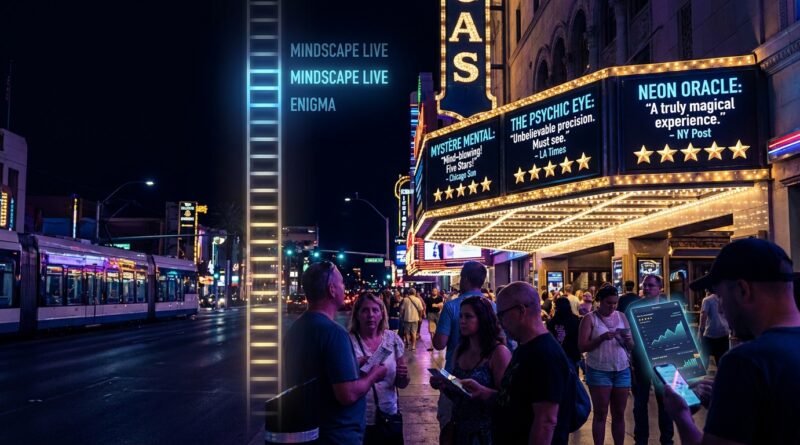
Inside 2026’s New ‘Vegas Mentalist Ladder’: How Real Fans Quietly Rank Strip Mind-Readers By One Overlooked Review Metric
You are not crazy if every Vegas mentalism show page is starting to look the same. Five stars. “Best in Vegas.” A shiny badge. A quote pulled from who knows when. Then you open another listing and it says almost the exact same thing. That is the problem fans keep running into with the best mentalist in vegas reviews 2026 search. The usual star rating is too blunt. It tells you people liked something at some point, but not whether audiences are still walking out stunned right now. That is why real fans have started using a quieter ranking system, what some are calling the Vegas Mentalist Ladder. It is built around one overlooked review metric. Not the average score, but how often recent reviewers mention being personally pulled into the experience. In mentalism, that matters more than almost anything else. A mind-reading show can be polished and still feel cold. Fans want the one people cannot stop talking about the next morning.
⚡ In a Hurry? Key Takeaways
- The smartest way to sort the best mentalist in vegas reviews 2026 is to check how many recent reviews mention strong audience interaction, not just the star average.
- Read the newest 20 to 30 reviews and count phrases like “I was chosen,” “my friend was involved,” or “the whole room felt included.”
- A show with older glowing reviews but weak recent interaction comments can be a risky use of your limited Vegas night.
Why star ratings are failing mentalism fans
A 4.8 and a 4.9 look almost identical when you are scrolling on your phone in a hotel lobby.
But mentalism is not like booking a coffee shop or airport shuttle. The difference between a decent show and a great one is often emotional. Did the crowd feel seen? Did the performer connect? Did the audience leave buzzing, or just politely satisfied?
That is why the plain star average keeps letting people down. It flattens everything. A show that was amazing in 2023 but now feels tired can still coast on old praise. A newer act can be catching fire and not yet have the same giant pile of reviews.
The result is confusion. Real fans end up doing detective work.
What the “Vegas Mentalist Ladder” actually measures
The Ladder is not an official award. It is a fan habit. People quietly rank shows by a more useful signal inside the reviews themselves.
That signal is this: recent audience-involvement mentions.
In plain English, fans are looking for how often fresh reviews say things like:
- “He brought my wife on stage.”
- “She read my thought and I still cannot explain it.”
- “Half the room ended up part of the act.”
- “It felt personal, not canned.”
- “Even people not picked were engaged the whole time.”
Why this matters is simple. Mentalism lives or dies on connection. If recent reviewers keep bringing up participation without being prompted, that usually means the performer is doing more than reciting a polished script. They are creating moments people feel happened to them, not just in front of them.
The overlooked metric: participation density
If you want the shorthand name, call it participation density.
That means the percentage of recent reviews that mention direct involvement, personal impact, or room-wide engagement.
Not every good show needs volunteers every two minutes. This is not about chaos. It is about whether audiences feel close to the action. In mentalism, that is often the line between “pretty good” and “I am texting everyone about this.”
How to use the Ladder in 10 minutes
You do not need a spreadsheet. You just need a little discipline.
Step 1: Ignore the top-line badge for a minute
Travellers’ Choice badges, “favorite” labels, and press quotes are not useless. They are just not enough. Treat them like packaging.
Step 2: Sort by newest reviews
This is the big one. You want the last 30 to 90 days if possible. If a show’s best comments are old, that tells you less about what is happening on stage now.
Step 3: Skim the newest 20 to 30 reviews
Do not read every word at first. Scan for repeat phrases. You are looking for:
- Audience participation
- Specific moments people remember
- Words like “personal,” “interactive,” “included,” and “unbelievable” tied to an actual event
Step 4: Count the specifics, not the hype
“Amazing show” is nice, but it is weak evidence. “He guessed my birthday and involved three tables near us” is much more useful.
Specific memories are harder to fake and more likely to reflect a real, current experience.
Step 5: Watch for stale-review warning signs
Be careful if you see:
- Many generic five-star reviews with no details
- A sharp drop in review volume lately
- Newer comments that praise the performer but not the actual experience
- People saying the room felt rushed, distant, or overly scripted
Why this metric works better for Vegas than most cities
Vegas is weird in the best and worst way.
It is packed with tourists who may only see one show all trip. That means lots of first-timer reviews, lots of emotional reactions, and lots of flashy marketing. It also means reputation can lag reality. A show can live off old momentum for a long time.
That is why a living review ladder matters more here. The mini boom in mind-reading shows, from long-running names on the Strip to newer hybrid acts mixing mentalism and magic, has made the choice harder, not easier.
If you like this kind of fan-driven sorting, the broader version is worth a look too in Inside 2026’s New ‘Local Legend Mentalist’ Map: How Fans Quietly Turn 5‑Star Reviews Into A City‑By‑City Mind‑Reader Hunt. It shows how people are using the same review-reading habit beyond Vegas.
What real fans rank higher on the Ladder
The Ladder tends to push certain kinds of shows upward.
Shows with recent, story-rich reviews
If people keep sharing little stories, that is gold. “He nailed my friend’s thought.” “She had the whole section laughing before the reveal.” Those are strong signs.
Shows that feel current, not museum-like
Some long-running acts are still excellent. Others can start to feel preserved behind glass. The reviews will tell you which is which. New comments with energy beat old comments with prestige.
Shows that involve the full room
This is subtle but important. A review saying “only the front row really got the action” is not as strong as “even from the back, we felt part of it.”
The best mentalists know how to make one volunteer moment ripple across the room.
Common mistakes people make when choosing a Vegas mentalist show
Picking the highest star score without checking dates
A fantastic average can hide a fading present.
Trusting promo clips too much
Of course the trailer is slick. Vegas runs on slick. Trailers show what the act wants to look like. Reviews show what it felt like to pay for it.
Confusing fame with fit
The most famous name is not always the best choice for your group. If you want intimate, interactive mind reading, a massive room with lots of distance may not deliver what you are hoping for.
Ignoring complaints that repeat
One grumpy review means very little. Ten recent reviews all hinting that the crowd interaction feels limited means something.
How to build your own simple Vegas Mentalist Ladder
If you are comparing three or four shows, score each one in these areas from 1 to 5:
- Recent review freshness
- Number of detailed interaction mentions
- Consistency of praise across the latest reviews
- Value comments, meaning whether people say it was worth the ticket price
- Room feel, intimate versus detached
You are not trying to be scientific down to the decimal point. You are trying to avoid wasting a night on stale hype.
A show with slightly fewer total reviews but stronger recent interaction comments often deserves the higher spot.
At a Glance: Comparison
| Feature/Aspect | Details | Verdict |
|---|---|---|
| Star average | Useful for a quick filter, but often too close across competing Vegas mentalism shows. | Good starting point, weak final decision tool. |
| Recent interaction mentions | Shows how often fresh reviewers describe personal involvement or full-room engagement. | Best overlooked metric for ranking current quality. |
| Badge and promo language | Can highlight popularity, but often repeats old marketing claims and broad praise. | Helpful context, but never enough on its own. |
Conclusion
If you are trying to sort the best mentalist in vegas reviews 2026, the trick is not finding the flashiest badge. It is finding the freshest proof that people are still having those jaw-drop moments right now. Vegas is in a mini mentalism boom, which is exciting, but it also means more noise. Long-running Strip names sit beside newer mind-reading and magic hybrids, and all of them can look equally great from a distance. That is why this review-driven Ladder helps. It gives fans a living snapshot of who is truly connecting with audiences this month, not just coasting on praise from years back. Use recent interaction-heavy reviews as your filter, trade notes with other fans, and you will be much less likely to burn a precious Vegas night on recycled ad copy disguised as consensus.