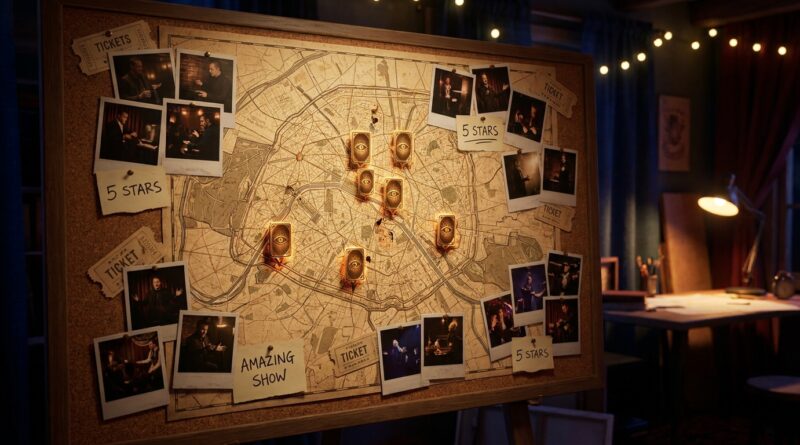
Inside 2026’s New ‘Local Legend Mentalist’ Map: How Fans Quietly Turn 5‑Star Reviews Into A City‑By‑City Mind‑Reader Hunt
You know the feeling. You search for the best mentalist near me 2026, and the internet hands you the same famous TV names, the same old promo photos, and a pile of ratings that do not really tell you what the room felt like. Meanwhile, someone in your own city is quietly packing out a theatre every Saturday night and barely making a dent in national headlines. That gap is exactly why the new “Local Legend Mentalist” map matters. Fans have started doing the boring work most of us never have time for. They compare Ticketmaster stars, Google reviews, TripAdvisor scores, venue repeat bookings, and real audience comments to spot performers who are not just good at marketing, but great in actual rooms, right now. The result is a city-by-city hunt for real five-star mind readers. Less hype. More proof. And a much better shot at spending your money on a show that actually leaves you talking all the way home.
⚡ In a Hurry? Key Takeaways
- The best way to find a real standout mentalist in 2026 is to check patterns across reviews, repeat bookings, and local audience feedback, not just TV fame.
- Start with your city, then compare venue size, review wording, and whether fans describe mind-reading moments instead of generic “great magic.”
- A true five-star mentalist usually has specific praise, strong return crowds, and a clear style. That helps you avoid overpriced shows using the label loosely.
Why this map is suddenly such a big deal
Live mentalism is having a real moment again. Not just in Las Vegas. Not just on cruise ships. It is popping up in boutique theatres, casino lounges, comedy rooms, arts venues, and private event spaces all over the place.
That should make finding a great show easier. Weirdly, it often does the opposite.
Most fans are trying to piece together clues from five different places. Ticket pages show star averages. Google has broad reviews. TripAdvisor may focus more on the venue than the act. Social clips look polished, but do not tell you whether the performer can hold a room for 90 minutes.
The Local Legend Mentalist map is an answer to that mess. It is less about celebrity and more about consistency. Who keeps getting great reactions in front of paying audiences, week after week, city after city?
What fans are actually tracking
This is not just a list of whoever has the flashiest website. The smarter fan communities are looking for repeat signs that a performer is the real thing.
1. Review quality, not just review quantity
A hundred five-star reviews sound impressive. But what do they say?
If reviewers keep using vague lines like “fun night” or “great magician,” that tells you less than comments such as “he named my childhood friend,” “the audience choices felt free,” or “the whole room went silent during the final reveal.” Specific reactions matter.
2. Venue loyalty
If a theatre, casino, or hotel keeps bringing the same mentalist back, pay attention. Venues are not sentimental. They care about ticket sales, audience satisfaction, and whether people leave happy enough to come back.
3. City-by-city strength
Some acts are huge in one market and average everywhere else. Others quietly travel well. That second type is often more interesting. If strong reviews show up in Chicago, Manchester, Sydney, and smaller regional stops too, that says a lot about the act itself.
4. Audience language
Words matter here. A real mentalist usually gets described with phrases like “thought reading,” “psychological illusion,” “predictions,” “impossible reveals,” or “he knew things he should not know.” If every review sounds like a standard card-and-coins magic act, that is useful information too.
How to use the “best mentalist near me 2026” search without getting fooled
Search engines are helpful, but they also love old popularity. That means you may keep seeing household names even when the hottest ticket in your town is someone else entirely.
Try this instead.
Start local, then go one layer deeper
Search for your city name plus “mentalist,” “mind reader,” or “theatre show.” Then check:
- The venue’s own event listings
- Google review snippets
- Ticketing pages with verified buyers
- Recent social posts from audience members
- Whether the act has upcoming return dates
If a performer is selling out quietly, you will often see signs before you see headlines.
Look for recent proof
A glowing write-up from 2022 is nice. It is not enough.
The whole point of the Local Legend Mentalist map is to answer a very current question. Who is world-class in real rooms right now? If reviews are old, sparse, or copied from the same press kit language, be careful.
Check whether the room fits the act
Some mentalists are amazing in intimate spaces and less effective in giant theatres. Others are built for big stage drama. Neither is wrong. You just want a match between the performer and the venue.
A 70-seat candlelit room can be incredible for close audience interaction. A 1,200-seat theatre needs stronger pacing, bigger reveals, and cleaner staging.
The quiet rise of the “local legend” over the TV star
TV fame still helps. Of course it does. But fans are getting savvier.
More people now understand that being famous and being the best live mentalist on a given weekend are not always the same thing. A TV slot can create buzz. It does not guarantee the sharpest live experience in your city.
That is why some fans have gone even further, buying two different shows close together and comparing them head-to-head. If that idea sounds familiar, it lines up with Inside 2026’s New ‘Two‑Show Showdown’: How Fans Quietly Use Back‑to‑Back Tickets To Find The World’s Real Five‑Star Mentalists. It is a simple idea. Watch two highly rated acts. Notice which one still has you replaying moments the next morning.
What separates a real five-star mentalist from a generic act
This is where many buyers get tripped up. “Mentalist” has become a loose label. Some performers use it accurately. Some use it because it sounds cooler than “magic show.”
A real five-star mentalist usually has:
- A clear point of view or personality
- Strong audience interaction that feels personal, not forced
- Routines built around thought, choice, memory, prediction, or influence
- Reviews mentioning emotional reactions, not just tricks
- A structure that builds tension instead of just stacking random effects
A weaker “mentalism” show often has:
- Lots of generic magic with a few mind-reading words sprinkled in
- Over-scripted volunteer moments that feel awkward
- Big claims but thin audience proof
- Promotional copy that sounds exciting, while reviews stay vague
If you are paying premium ticket prices, that difference matters.
How a city-by-city map helps regular fans this week
This is the practical part. A good map saves time.
Instead of scrolling for an hour, you can quickly see:
- Which cities currently have standout mentalists
- Whether the show leans theatrical, funny, dark, interactive, or family-friendly
- What venue size the act plays best in
- How recent the strongest reviews are
- Whether there is enough evidence to call the act elite
That turns a vague search into a useful plan. Date night. Weekend trip. Casino stop. Last-minute theatre booking. Much easier.
Why crowd intel matters more than polished marketing
Marketing is supposed to look good. That is its job.
But crowd intel tells you what happened after people spent real money and sat in real seats. Did they feel amazed? Confused? Bored? Rushed? Did the show feel fresh?
The best maps and fan guides are built from those details. Not from ad copy that says every performer is “world-renowned,” “unforgettable,” and “like nothing you’ve ever seen.” That language is everywhere. It stops meaning much.
Fresh reviews are more useful. So are comments about pacing, audience connection, seat sightlines, and whether the show feels intimate or broad.
How to contribute without turning the map into noise
If fans want this kind of guide to stay reliable, the reviews have to stay grounded.
Useful review notes include:
- Date and city of the performance
- Venue type and rough crowd size
- What kind of mentalism the act focused on
- Whether the audience reactions felt genuine
- If the show matched its marketing
- Whether you would recommend it at that ticket price
Less useful review notes:
- “Amazing!!!” with no detail
- Repeating the performer’s own website copy
- Judging the show without attending
- Reviewing the parking situation more than the act
The goal is not snobbery. It is clarity.
At a Glance: Comparison
| Feature/Aspect | Details | Verdict |
|---|---|---|
| Review Signals | Specific audience comments across Google, Ticketmaster, and venue pages beat vague five-star scores alone. | Most reliable way to spot a true standout. |
| TV Fame vs Local Momentum | Big names draw clicks, but local repeat sellouts often point to the better live experience right now. | Local momentum is often the smarter bet. |
| “Mentalist” Label Accuracy | Some shows are true mind-reading performances. Others are standard magic acts with a few psychological lines added. | Read reviews closely before buying. |
Conclusion
The real value of the Local Legend Mentalist map is simple. It saves fans from guesswork. Live mentalism is booming again in theatres, casinos, and smaller venues, but most people are still stuck sorting through scattered reviews and recycled promo language. A focused city-by-city guide gives you something you can use right away. Where to go this week. What kind of show to expect. And how to spot a real five-star mind reader instead of a generic act borrowing the title. Better yet, it gives the community a job to do. Submit fresh reviews. Share crowd intel. Note the rooms that keep filling up. If that keeps happening, Best Mentalist can become the place where serious fans quietly maintain the most dependable, up-to-date map of elite performers anywhere.