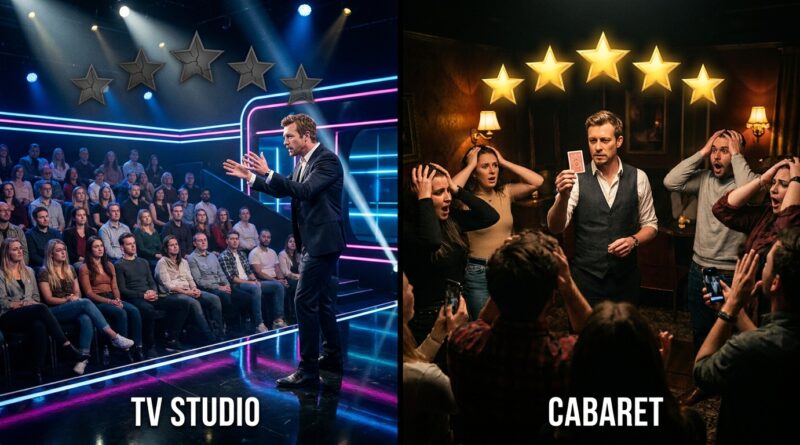
Inside 2026’s New ‘AGT Backlash Test’: How One Predictable TV Act Quietly Rewired What Fans Now Expect From World‑Class Mentalists
If you watched a recent TV mentalism act and felt strangely underwhelmed, you are not alone. A lot of fans are saying the same thing right now. The trick may have landed. The music may have swelled. The judges may have acted stunned. But online, the reaction has been blunt. Predictable. Slow. Too packaged. Not even close to what people see from the best live mentalists or the sharper performers blowing up on TikTok. That frustration matters because it has created a new kind of filter. Call it the 2026 AGT backlash test. Viewers are no longer asking, “Did the trick work?” They are asking, “Did it feel impossible, fresh, and human?” That shift is quietly raising the bar for everyone, from TV bookers to corporate planners. It also helps explain why some hyped acts get roasted in Reddit threads while others get talked about like rare, once-in-a-generation talents.
⚡ In a Hurry? Key Takeaways
- TV mentalists often feel predictable because the format rewards fast setup, obvious suspense beats, and judge reactions over deeper audience connection.
- If you are booking a mentalist, judge the act by pacing, volunteer handling, and whether the reveal feels earned, not just by the promo clip.
- A polished TV package can hide a thin routine. Live-show quality usually shows up in repeatable structure, clean resets, and strong audience framing.
Why are TV mentalists so predictable compared to live shows?
The short answer is format pressure.
TV talent shows want a clean story in just a few minutes. That pushes performers toward familiar structures. Pick a judge. Build fake doubt. Isolate a choice. Drag out the reveal. Hit a big line. Cue applause. It is efficient television, but it can also feel like paint-by-numbers mentalism.
Live shows work differently. A great live mentalist has room to let tension breathe, to misdirect with personality, and to make the audience feel involved instead of merely used as witnesses. The result is often less flashy on paper, but far stronger in the room.
That is the center of the backlash. Fans are not simply getting harder to please. They are getting better at spotting formula.
The new “AGT backlash test” fans are applying
Even if viewers do not use this exact phrase, they are already doing the test in comment sections.
1. Can you guess the shape of the trick too early?
If the moment a sealed envelope appears you already know the ending is headed toward a written prediction, the act starts losing steam. The same goes for number guesses, obvious force choices, and “think of someone important to you” setups that telegraph the emotional reveal from a mile away.
When the path is visible too soon, suspense turns into waiting.
2. Is the volunteer really part of it, or just a prop?
Weak TV mentalism often treats the helper like furniture. They stand there, follow instructions, and react on cue. Strong live performers make the volunteer feel central. Their personality matters. Their choices feel messy, real, and a little risky.
That difference is huge. Real unpredictability often comes less from method and more from how alive the interaction feels.
3. Does the act rely on editing-style energy without actual depth?
On TV, dramatic music, cutaways, and judge close-ups can create the feeling of a bigger miracle than what actually happened. Online viewers have become very good at separating presentation from impact.
That is why a routine can get a standing ovation in-studio and still get torn apart later by fans who replay it and notice how little actually occurred.
What the recent backlash is really about
The loudest criticism is not usually “this person is untalented.” It is more specific than that.
Fans are saying the act felt overproduced and underpowered.
That means a lot of surface polish wrapped around a routine that did not grow, surprise, or deepen as it went. The first beat looked like the last beat. The reveal confirmed exactly what viewers expected. There was no second gear.
Top-tier mentalists do something different. They stack impossibility. They change rhythm. They use one reveal to make the next reveal stronger. Most important, they understand that astonishment is not just about information. It is about timing, tension, and meaning.
How top live mentalists avoid the “predictable” label
Pacing that changes, instead of staying flat
The best performers do not play everything at one volume. They know when to rush, when to pause, and when to let a small moment sit. Television acts often make the mistake of pushing every beat as if it is equally shocking.
That creates fatigue. If everything is dramatic, nothing is.
Reset beats that clear the audience’s mental clutter
This part gets overlooked by non-performers, but it matters a lot. Great acts build in little reset moments. A laugh. A story turn. A change of participant. A short callback. These moments stop the audience from getting stuck on one possible explanation too long.
Without those resets, viewers start solving instead of feeling.
Audience framing that makes the reveal matter
Strong mentalism is not just “I knew your word.” It is “here is why this choice matters, why this person matters, and why this moment matters.” That framing gives the reveal emotional weight.
When TV routines skip that and race straight to the climax, they often feel mechanical.
The TV trap: clean structure, weak surprise
Producers love routines that are easy to explain in a teaser. That makes sense. The problem is that the easiest acts to market are often the easiest acts to predict.
“He will read the judge’s mind.” Simple hook. Also simple structure.
Compare that with a great live show where the premise may begin small and then grow into something stranger and more personal. That kind of layering is harder to sell in a 15-second promo, but much better for real astonishment.
So when people ask why are tv mentalists so predictable compared to live shows, this is a big part of the answer. TV likes clarity. Mentalism thrives on controlled uncertainty.
A practical checklist for agents, planners, and serious fans
If you are hiring or evaluating a mentalist this week, use this quick filter instead of relying on hype.
Watch for these green flags
Does the act create more than one kind of surprise? Does the volunteer interaction feel natural? Are there quiet beats between reveals? Do you feel more curious as the routine goes on, not less?
Watch for these red flags
Can you call the ending in the first 30 seconds? Does the performer keep repeating that what you are seeing is impossible instead of proving it? Are the judges doing most of the selling? Does the act depend on a huge reaction shot after a fairly basic reveal?
If the answer to those questions is yes, you may be looking at a TV-friendly act, not a world-class one.
Why TikTok and live clips have raised the standard
Fans now see far more mentalism than they did a decade ago. They can compare a network TV spot with raw live footage, theater clips, and short-form performances posted directly by working pros.
That comparison has changed expectations.
A viewer who has seen a sharp, intimate, five-minute live clip where every beat feels real is much less likely to be impressed by a broad TV routine built around obvious suspense. That is one reason backlash happens faster now. Audiences have better reference points.
What separates “pretty good” from “once-in-a-decade”
The gap is not always method. Often it is judgment.
Rare performers know what to leave out. They do not overexplain. They do not stretch weak moments. They do not confuse seriousness with mystery. And they know that the audience wants more than proof of a trick. They want the feeling that something impossible just happened in front of a real person, not inside a producer’s template.
That is why one act gets dismissed as flat while another becomes legend. The second one understands that amazement is an experience, not just an outcome.
At a Glance: Comparison
| Feature/Aspect | Details | Verdict |
|---|---|---|
| Pacing | TV acts often move in one straight line toward a single obvious reveal. Strong live acts vary speed, tension, and tone. | Live format usually feels richer and less predictable. |
| Volunteer Handling | Weaker TV routines use judges or guests as reaction tools. Better performers make them feel like real collaborators. | Natural interaction is a strong sign of higher-quality mentalism. |
| Reveal Structure | Predictable acts show the destination early. Top acts layer reveals so each one changes what the audience thinks is happening. | Layered structure is usually what separates hype from greatness. |
Conclusion
The current backlash is useful, even if it sounds harsh. It is showing us that fans are no longer satisfied with glossy mind-reading that looks big on TV but feels thin on replay. They are asking sharper questions about pacing, reset beats, audience framing, and whether the surprise feels earned. That is exactly why some heavily promoted TV mentalists get shredded online while others are treated like once-in-a-decade geniuses. If you are an agent, a corporate planner, or just a fan trying to tell the difference, this gives you a practical TV-versus-real-world checklist you can use right now. Look past the music, the camera cuts, and the judge reactions. Focus on structure, human connection, and whether the act keeps surprising you after the first premise is clear. Do that, and you will have a much better shot at spotting the real thing before you waste money, time, or hype on an act that only works in a trailer.