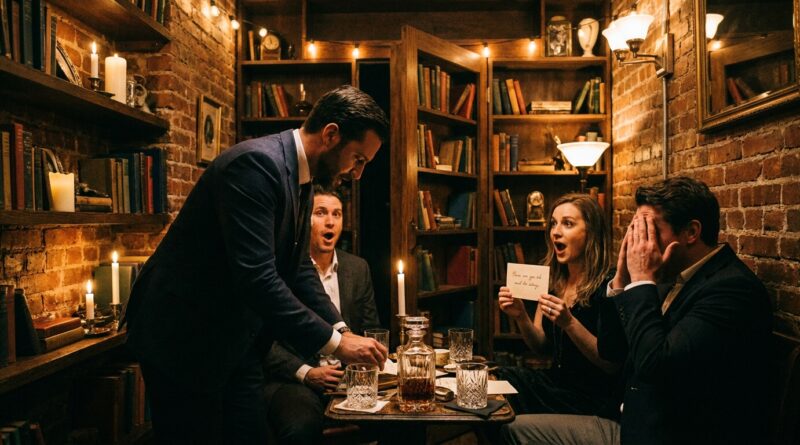
Inside 2026’s New ‘Speakeasy Mind Reader’ Boom: How Hidden Rooms Quietly Host The World’s Highest‑Rated Mentalists Tonight
You are not being picky if vague “secret show” listings make you nervous. A hidden-room mentalism night can be amazing, or it can be an overpriced cocktail bar with a few card tricks and a dress code. That is the problem right now. The best speakeasy mentalism show reviews 2026 are scattered across Google Maps, Instagram stories, Reddit threads, and short comments that tell you everything and nothing at the same time. One person says “life changing.” Another says “intimate.” But was it actual mind reading, or just a charming magician working the room? The good news is there are clear patterns in this week’s strongest five star feedback. Once you know what to look for, the risky mystery starts to feel a lot more like an informed night out. And yes, some of these hidden venues really are where top-rated mentalists are testing their sharpest material before bigger audiences ever see it.
⚡ In a Hurry? Key Takeaways
- The strongest 2026 speakeasy mentalism reviews consistently point to small rooms, high audience interaction, and clear mind-reading effects, not just bar magic.
- Before booking, check whether reviews mention names, participation, seating size, and specific moments instead of generic words like “amazing” or “mystical.”
- If a venue hides all details but pushes expensive minimums, treat it cautiously. The best shows are secretive about location, not evasive about the experience.
Why these “secret” shows are suddenly everywhere
There is a reason you keep seeing them.
Top mentalists are moving into smaller rooms because those spaces are better for building tension, reading the audience, and trying new ideas. In a 25-seat back room, every pause matters. Every reveal lands harder. That trend is part of a much bigger shift covered in Inside 2026’s New ‘Hidden’ Mentalist Labs: Why Top‑Rated Mind Readers Are Quietly Moving Into Speakeasies And Secret Rooms.
For viewers, though, this creates a trust problem. Small venues often market mystery instead of clarity. That sounds fun until tickets cost real money.
What the best speakeasy mentalism show reviews 2026 are actually saying
After looking at the most consistent five star patterns across recent hidden-room reviews, a few signals keep showing up.
1. The room is small enough that nobody feels “safe in the back”
Good reviews often mention audience size without being asked. You will see phrases like “only 20 people,” “everyone felt involved,” or “there wasn’t a bad seat.”
That matters because mentalism works best when the room feels personal. If a listing says “intimate” but never gives a rough capacity, that is a yellow flag. Intimate can mean 18 seats. It can also mean 80 with low lighting.
2. Reviewers describe specific mind-reading moments
This is the biggest clue.
Strong reviews mention things like a thought-of word, a personal detail, a prediction, a drawing duplication, or a choice that felt impossible to track. Weak reviews usually stay broad. “Great vibe.” “Fun date night.” “Cool cocktails.” Nice, but not enough.
If reviewers are talking more about the bartender than the performer, you are probably booking a bar experience with magic added on.
3. The performer is interactive, but not chaotic
The best hidden-room mentalists pull people in without turning the night into forced crowd work. Recent top reviews often praise how volunteers felt comfortable, respected, and stunned.
That is a very different thing from a loud magician bouncing from table to table doing quick tricks between drink orders.
4. People mention atmosphere, but not as the only selling point
Yes, the bookshelf entrance and candlelit hallway are part of the fun. But the highest-rated experiences get praised for both setting and substance.
When every review focuses on secrecy, decor, and “the vibe,” but nobody explains what the performer actually did, be careful.
How to tell whether a “secret show” is worth your money
Here is the simple filter I would use before buying a ticket.
Look for review language that sounds like a real memory
Real guests remember moments. They write things like:
“He named the city my friend was thinking of.”
“She revealed a private detail without touching my phone.”
“I was two feet away and still could not work it out.”
That kind of detail is much harder to fake than “10/10 must see.”
Check if the venue explains the format
You do not need spoilers. You do need basics.
Good listings usually tell you:
Whether it is a seated show or roaming performance.
Rough running time.
Whether drinks are included or separate.
Whether the focus is mentalism, close-up magic, or a mix.
If all you get is “an unforgettable secret experience,” keep your wallet in your pocket for a minute.
Pay attention to ticket language
Some hidden-room shows sell out because they are excellent. Others create fake scarcity.
A good sign is clear pricing and a straightforward reservation process. A bad sign is pressure-heavy wording, unclear fees, or a venue that seems more interested in VIP upgrades than the performer.
What people mean by “mentalism” versus “magic” in these reviews
This trips up a lot of newcomers.
Mentalism usually means thought reading, predictions, influence, memory feats, psychological framing, and personal reveals. Magic can include that, but often leans more into visual tricks, sleight of hand, or object-based effects.
Neither is bad. But if you are specifically hunting for a mind reader, you want reviews that talk about impossible decisions, thoughts, names, drawings, or locked-in predictions.
If every comment is about cards, coins, or quick hands, you may still have fun. You just may not be getting the mentalism-heavy night you expected.
Venues like Speakeasy Magick: what consistent five star patterns suggest
Across hidden-room venues in this space, including names that keep coming up in fan chatter such as Speakeasy Magick, the strongest review patterns usually come down to three things.
First, the audience feels close enough to rule out obvious gimmicks.
Second, the performer has command of the room, not just technical skill.
Third, guests leave describing one or two impossible moments in detail.
That last part is key. Great shows create stories people can retell the next day.
Red flags that should make you pause
Not every hidden show is a hidden gem.
Too much secrecy
Keeping the entrance private is fun. Refusing to explain anything about the format is not.
Reviews that all sound the same
If every five star review feels copy-pasted, trust your gut. Real audience reactions are usually messy, specific, and personal.
More talk about the lounge than the act
A beautiful room cannot carry a weak performance for long.
No mention of audience interaction
Most elite speakeasy mentalism works because people are part of it. If nobody says they participated, or watched others participate up close, the show may be more passive than you want.
Who these shows are best for
If you love theater-scale illusion, a back-room mentalism show may feel quieter than expected. That is not a flaw. It is just a different kind of thrill.
These shows are best for date nights, small groups, and anyone who wants the “how is that possible?” feeling from six feet away instead of row M.
They are also great for serious fans who want to see where top performers test ideas before those ideas get polished for bigger stages.
How to book smarter tonight
If you are choosing between a few secret-room listings right now, use this quick checklist:
Pick the venue with reviews that mention specific mental feats.
Choose the show that states audience size or clearly signals a small room.
Favor listings that explain whether the night is seated, interactive, and mentalism-focused.
Do not overpay for mystery alone.
If two options look equal, the better show is usually the one guests describe in concrete detail, not the one with the flashier branding.
At a Glance: Comparison
| Feature/Aspect | Details | Verdict |
|---|---|---|
| Audience Size | Best-reviewed shows usually mention a genuinely small room, often 20 to 40 guests, with close sightlines. | Strong sign of quality |
| Review Specificity | Look for detailed comments about thought reading, predictions, drawings, names, or impossible choices. | Most useful booking filter |
| Venue Secrecy vs Clarity | A good show hides the entrance or room, but still explains runtime, format, and pricing. | Secretive is fine. Vague is not. |
Conclusion
You should not have to gamble on a mystery ticket just to see world-class mentalism. That is why tracking the most consistent review patterns matters right now. Speakeasy-style magic and mentalism is where many of the world’s highest-rated mind readers are quietly working out new material, yet most fans are still stuck piecing together Google Maps comments, half-finished TripAdvisor posts, and whisper-network Instagram stories. When you focus on the details that keep showing up across last night’s and this week’s five star reviews, especially around room size, interaction level, and whether the act includes real mind-reading content, the picture gets a lot clearer. That gives curious newcomers and serious fans a safer way into this invite-only corner of live entertainment. And it helps Best Mentalist become the place where mystery stays on stage, not in the booking process.