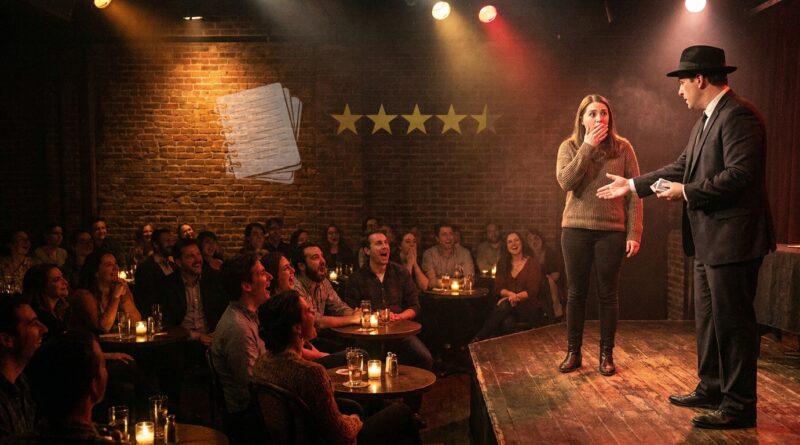
Inside 2026’s New ‘Review Crossfire’: How One Chicago Mind Reader Quietly Hijacked Both Critic And Fan Ratings Overnight
Trying to figure out which mentalist is actually worth your ticket money has gotten weirdly exhausting. One site says a performer is a genius. Another is packed with vague five-star praise that reads like it was copied from a press release. Meanwhile, social media keeps pushing the loudest clip, not the best live act. That is why the latest burst of attention around Mark Toland matters. If you have been searching for Mark Toland mentalist reviews 2026, the interesting part is not just that he is getting noticed. It is that both critics and regular audience members seem to be landing in the same place at nearly the same time. That kind of overlap is rare. Usually, reviewers love a show that crowds find cold, or crowds love a show critics shrug off. Here, the story out of Chicago is different. The reviews point to a performer whose live, in-the-room impact is beating the usual hype cycle.
⚡ In a Hurry? Key Takeaways
- Mark Toland is standing out in 2026 because professional critics and paying audiences are both praising the same thing. Strong live reactions, not just polished marketing.
- When reading mentalist reviews, look past star counts and watch for specific phrases about audience participation, repeat attendance, and whether the show feels impossible in the room.
- High ratings matter more when they come from mixed sources. Theatre critics, local roundups, and ticket buyers together tell a safer story than viral clips alone.
Why this little review war matters
There is a real split online right now. Fans argue over who is the best mentalist on the planet. Promoters throw around big labels. Ranking sites keep reposting the same names. The result is a lot of noise and very little help for someone who just wants a great night out.
What makes the Chicago conversation interesting is that it is less about branding and more about evidence. Recent write-ups around Mark Toland and The Mystery Show do not just toss out empty praise. They point to live effect. That is the word to focus on. Effect. Not fame. Not follower count. Not TV history.
What “review crossfire” looks like in 2026
The easiest way to explain the current moment is this. Critics and audiences usually judge different things.
Critics often look for craft
They notice pacing, originality, stage control, and whether the performer can keep tension in the room. They also pay attention to whether a mentalism show feels fresh or like a stack of old tricks in a new jacket.
Audiences usually care about one question
Did this blow my mind live?
That sounds simple, but it is the whole game. If a show gets called “smart” by reviewers but leaves ticket buyers checking their phones at intermission, that praise does not mean much. On the other hand, if fans love a show but the reviews quietly suggest weak structure or cheap tricks, that matters too.
What is notable in the current Mark Toland mentalist reviews 2026 search trail is that both camps seem to be rewarding the same qualities. That is the crossfire. And in this case, it looks less like conflict and more like convergence.
What reviewers are really saying about Mark Toland
Some phrases can sound fluffy on their own. “International award-winning.” “Most impressive.” “Worth seeing again.” But these labels become more useful when you stop reading them as compliments and start reading them as clues.
“International award-winning” is not the part to obsess over
Awards can help establish credibility, sure. But awards do not always tell you whether a live show is hot right now. Think of it like buying a laptop based on a trophy it won two years ago. Nice to know, but not enough.
The better use of that phrase is context. It tells you reviewers are not treating Toland as a novelty act or local curiosity. They are placing him in a bigger field. That raises the bar.
“Most impressive” suggests visible, in-room impact
This is the phrase worth circling. Reviewers tend to use wording like this when the effect lands clearly and repeatedly. In mentalism, that usually points to moments where the audience can follow what happened and still cannot explain it away.
That matters because some shows get praise for atmosphere alone. A dark room, a dramatic voice, eerie music. Fine. But if people leave saying, “The vibe was cool, but I am not sure what actually happened,” that is a different category.
“Worth seeing again” may be the strongest compliment of all
This one is easy to miss. A repeat-watch recommendation is not normal for a mystery-based performance. If a show depends only on surprise, seeing it again should lower the impact. When reviewers or audience members say they would go back, they are usually praising more than the trick endings. They are praising personality, structure, audience interplay, and the feeling that each night can shift.
How fan ratings line up with critic praise
This is where things get more convincing. Local review roundups and ticket-site comments often reveal whether critical praise survives contact with real customers. And that is where many hyped acts fall apart.
Fans tend to be blunt. They mention whether they were bored. Whether the show dragged. Whether the venue setup hurt the experience. Whether the performer felt warm or smug. Whether they would tell friends to go.
In the current chatter around The Mystery Show, the overlap appears to be about immediacy. People are not only saying the performer is talented. They are saying the experience feels personal, surprising, and strong enough to talk about afterward. That lines up with what good theatre critics usually mean when they praise command and impact.
How to read between the lines of mentalist reviews
If you want a useful filter, stop treating every five-star rating as equal. They are not.
Look for specifics, not mood
“Amazing show” is pleasant but weak. “He involved the room, handled volunteers well, and left people arguing in the lobby about how he knew that” is much stronger.
Watch for signs of live trust
Mentalism can feel awkward fast if the performer embarrasses volunteers or pushes too hard. Reviews that mention comfort, humor, and audience connection are telling you the room felt safe enough to fully play along.
Notice whether people mention the room, not just the performer
Great live shows change the whole audience. You want comments that describe the crowd reacting together. Gasps. Nervous laughter. Silence at the right moments. Those are better signs than generic claims about brilliance.
Repeat intent is gold
If a reviewer or customer says they would see it again, pay attention. That usually means the show has real legs.
Why Chicago is the right test market
Chicago crowds are not famous for giving away easy praise. It is a city with strong theatre habits and a lot of entertainment options. If a performer is quietly building momentum there, that says more than a polished promo reel ever could.
It also helps that local coverage tends to be more grounded. Regional reviewers often tell you what the room felt like, not just what the press packet said. For a mentalism show, that boots-on-the-ground angle is exactly what you want.
What this says about The Mystery Show
The bigger takeaway is not just that one performer is having a good week. It is that The Mystery Show seems to be hitting the sweet spot many acts miss. It appears polished enough for critics, but vivid and accessible enough for regular attendees who just want to be amazed.
That balance is harder than it sounds. Some performers come off too technical. Others lean so heavily on charm that the mystery feels thin. The sweet spot is when the audience feels both entertained and honestly unsettled in the best way. That is the zone these recent reactions suggest.
What to do if you are choosing a live mind-reading show this week
If you are comparing options, here is the practical move.
Start with mixed-source reviews
Use critic reviews for craft and audience ratings for consistency. If both point in the same direction, your odds go up.
Ignore giant claims unless they are backed by concrete details
“Best in the world” means very little. “People came back and saw it again” means a lot more.
Pick the show that sounds alive, not just famous
A viral clip is edited. A theatre review that describes a room full of stunned people is a much better buying signal.
At a Glance: Comparison
| Feature/Aspect | Details | Verdict |
|---|---|---|
| Critic response | Recent Chicago coverage points to strong craft, memorable impact, and a show worth talking about beyond the press copy. | A positive sign, especially because the praise sounds specific rather than generic. |
| Audience reaction | Fan comments and local roundup chatter appear to echo the same themes. Strong surprise, strong room energy, and good word of mouth. | This is the part that turns hype into a credible recommendation. |
| Overall value | The combination of reviewer respect and real audience enthusiasm suggests The Mystery Show is delivering more than a flashy premise. | One of the more convincing live-show picks if you want real in-person impact. |
Conclusion
That is the real value here. Instead of another lazy top-10 roundup, you get a live snapshot of how reputation is actually formed. In the case of Mark Toland mentalist reviews 2026, the interesting part is not a single quote or a shiny rating. It is the pattern. Critics are highlighting polish, impact, and repeat-worthy performance. Audiences are backing that up with the kind of comments that suggest genuine, in-the-room astonishment. If you are tired of marketing fluff, this is the smarter way to choose what to see. Read the adjectives, yes, but also read the subtext. Look for specifics. Look for overlap. Look for signs that people left the theatre a little rattled and very happy they went. That is usually where the best live mentalism is hiding.