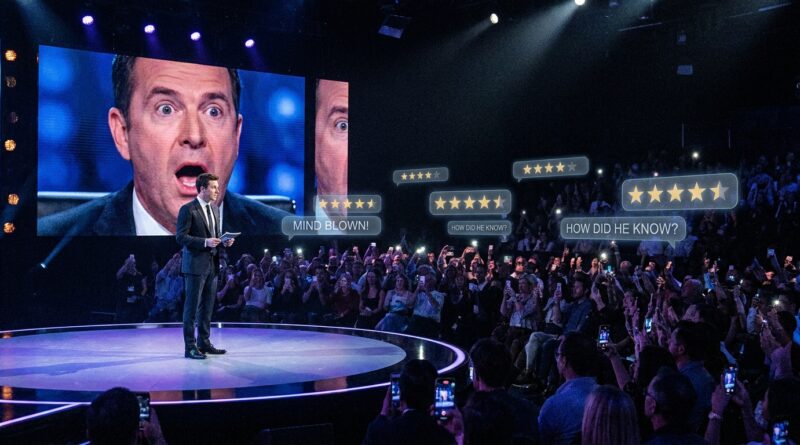
Inside 2026’s New ‘AGT Aftershock’: How One Viral Mind‑Reading Clip Quietly Rewrote Who Fans Call The World’s Top Mentalist
You are not imagining it. One huge AGT mind-reading clip hits social media, the judges lose their minds, and suddenly half the internet is asking two questions at once. Was that real? And is this person now the world’s best mentalist? That jump is exactly where casual fans get stuck. TV creates a feeling of certainty, but a viral edit is not the same thing as long-term proof. A single performance can show real talent, strong showmanship, and smart production all at once. It can also hide weak spots that would show up fast in a full live theater set. If you are trying to figure out the agt mentalist highest rated 2026 debate without getting swept up in hype, the trick is simple. Don’t judge only by the clip. Judge by what survives outside the clip, in live reviews, repeat performances, touring history, and what audiences say after the cameras are gone.
⚡ In a Hurry? Key Takeaways
- A viral AGT act can make someone look like the top mentalist in the world overnight, but that does not automatically make it true.
- Check three things before buying the hype: unedited live performance feedback, touring record, and whether the act holds up across many shows.
- This matters because TV reaction shots and editing can inflate status fast, while genuine elite mentalists usually prove it over years, not one night.
Why this one AGT clip changed the conversation so fast
America’s Got Talent has always done more than showcase performers. It changes public rankings in real time. One strong appearance can turn a lesser-known act into the name everybody repeats at work, in group chats, and in comment sections by morning.
That is what makes the current buzz so powerful. A single “mind-reading” clip can feel like evidence. The crowd gasps. The judges stand up. The music swells. Online, that gets translated into a very different claim. Not “that was a great TV moment,” but “this is now the best mentalist alive.”
Those are not the same thing.
If you have followed this space for a while, you have probably seen this pattern before. In fact, the shift is so common that it has its own shape now. Inside 2026’s New ‘AGT Bump’ Effect: How One TV Clip Can Quietly Rewire Who Fans Call The World’s Highest‑Rated Mentalist breaks down how one television moment can raise a performer’s public standing almost overnight, even before the wider live-performance world catches up.
First, the uncomfortable answer. Is it “real”?
For most mentalism on TV, “real” is the wrong question.
Mentalism is a performance art. It uses psychology, suggestion, memory systems, forcing techniques, misdirection, dual reality, pre-show work, and sometimes methods audiences will never spot. That does not mean the performer is untalented. Quite the opposite. The skill is in creating an experience that feels impossible while staying entertaining, controlled, and convincing.
So when viewers ask if the AGT act is real, they usually mean one of three things.
1. Did the performer use actual supernatural powers?
Almost certainly not. That is not how serious reviewers tend to judge the field.
2. Was the audience reaction genuine?
Often yes, at least in the room. People can be honestly stunned even when a method exists.
3. Was the TV version the full story?
That is where caution matters. TV edits can compress time, remove misses, shape the pacing, and highlight only the strongest reactions. None of that automatically means the act was fake. It means the clip was produced for maximum impact.
Why viral does not equal highest rated
The phrase “highest rated” sounds objective, but online it often just means “most visible this week.” That is a big problem in 2026. Search spikes, TikTok clips, reaction videos, and AGT recaps now move faster than critical reviews or long-term audience consensus.
In plain English, the internet often confuses popularity with rank.
A top-tier mentalist usually earns that status through consistency. They can do it in theaters, on tour, in corporate rooms, on bad nights, in front of skeptical crowds, and without the safety net of a heavily polished TV package.
That is why one AGT appearance should be treated as a data point, not a final verdict.
How to judge whether this AGT mentalist really belongs at the top
If you want a fair way to think about the agt mentalist highest rated 2026 debate, use a simple checklist.
Look for repeatability
Can the performer create strong reactions across many different routines, or is the buzz tied to one killer trick? Elite mentalists do not live on one viral moment alone. They stack memorable moments over time.
Check live, non-TV reviews
This is one of the best filters. Search for theater reviews, fan comments from live shows, Reddit discussions from actual ticket buyers, and venue feedback. People who saw the full set will tell you things television cannot. Did the performer hold the room for 90 minutes? Did the material feel fresh? Were there lulls? Was the audience still talking afterward?
Study the touring history
A real top name usually has a record. National or international touring matters. Repeat bookings matter. Returning to the same markets matters. If venues keep bringing someone back, that says a lot.
Separate performance skill from TV packaging
Some acts are excellent on camera but less powerful live. Others are far better in person than on television. AGT rewards clean, dramatic, short-form impact. Full-stage mentalism requires pacing, connection, variety, and stamina.
Watch for peer respect
You do not need insider gossip. Just notice whether other magicians, mentalists, producers, and experienced reviewers speak about the act with lasting respect, or only temporary excitement.
What TV editing can hide
This is the part most viewers never get told.
A talent-show performance is not the same as being in the room from start to finish. Producers can choose camera angles, reaction shots, pauses, music cues, and cut points that make an effect feel cleaner and bigger than it may have felt raw.
That does not mean the performer did not fool people. It means the clip is not neutral evidence.
Here are a few things a broadcast can smooth over:
- Dead time while information is gathered
- Instructions that were longer than shown
- Misses or near-misses
- Audience management that felt awkward in real time
- The difference between what the volunteer knew and what viewers assumed
For fans, this is actually good news. Once you know that, you can watch smarter instead of just louder.
So did this clip “quietly rewrite” the rankings?
Yes, at least in the public imagination.
That is the real story here. The biggest effect of a viral AGT mind-reading clip is not just the performance itself. It is the ranking update that happens in people’s heads afterward. Casual viewers who had no previous favorite suddenly adopt one. Search trends move. Fan pages change language. Comment sections start calling someone “the greatest in the world” after seeing maybe three televised minutes.
That is a rewrite, even if it is unofficial.
The smart move is to treat that rewrite as provisional. It may hold up. Some AGT breakouts really are world-class and go on to prove it. Others peak as a TV moment and never build the same reputation in the broader live-performance world.
What genuine elite status usually looks like
If you are trying to decide whether this performer truly belongs near the top, compare the hype to the habits of long-term elite mentalists.
Depth of material
Top acts have range. They do more than one reveal style. They can shift tone, pace, and scale without losing the audience.
Consistency under pressure
One amazing TV spot is impressive. Dozens of strong performances across different venues are more impressive.
Audience trust and word of mouth
Not just applause. Repeat attendance. Strong recommendations. Positive discussion that lasts after the viral window closes.
Career durability
Plenty of performers have a hot season. Fewer build a career that keeps growing after the cameras move on.
How fans can avoid getting tricked by the ranking game
You do not need to become a magic expert to make a better call. Just slow the process down.
- Watch the clip once for fun.
- Watch it again and notice what the edit is doing.
- Search for live audience reactions from full shows.
- Check whether the performer has a serious touring record.
- Compare the hype to names with years of proven work.
If the act still looks exceptional after that, great. You may have found someone who really deserves the rise.
If not, you have saved yourself from mistaking a polished TV event for a settled global ranking.
At a Glance: Comparison
| Feature/Aspect | Details | Verdict |
|---|---|---|
| Viral AGT clip | High visibility, strong reactions, polished editing, short-form impact | Great evidence of buzz, weak evidence of long-term rank by itself |
| Live audience reviews | Feedback from full-length shows, less shaped by producers, more useful for consistency | One of the best ways to judge real standing |
| Touring and career history | Repeat bookings, broader reach, years of strong performance across venues | Best test for whether “highest rated” is earned, not borrowed from hype |
Conclusion
The viral AGT aftershock is real, even if the ranking it creates may not be. A single mind-reading clip can absolutely change who casual viewers call the world’s top mentalist in 2026. But if you want to judge fairly, do not stop at applause, judge reactions, or a dramatic edit. Read between the cuts. Cross-check the moment against live reviews, touring history, and broader audience discussion. That helps fans avoid overhyped claims, find truly world-class performers faster, and set a better standard for what “highest rated” should mean. And honestly, that is better for everyone. It rewards talent that lasts, not just talent that trends.