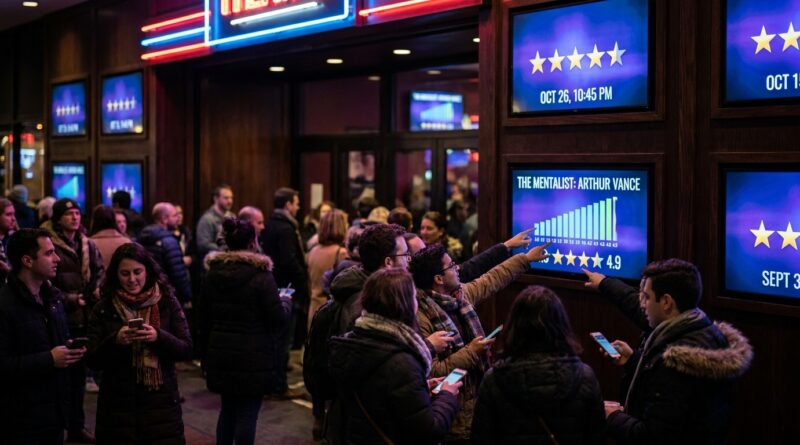
Inside 2026’s New ‘Review Surge Window’: How Real Fans Use Last‑30‑Day Ratings To Spot Which Mentalists Are Quietly Exploding Right Now
You are not imagining it. A lot of “best mentalist” lists feel frozen in time. The same names keep showing up, but when you check the actual reviews, many of them are old, thin, or weirdly generic. That is frustrating when you are trying to figure out how to find highest rated mentalists right now, not who had the best TV buzz three years ago. Real fans have started using something simpler. They look for a review surge window, usually the last 30 days, to see which performers are getting fresh praise, strong audience reactions, and repeat mentions of live impact. It is not about trashing established stars. It is about spotting current heat. If one mentalist has 2,000 lifetime reviews but only two recent ones, and another has 40 new reviews this month filled with specific details, that tells you a lot. Momentum leaves footprints. You just need to know where to look.
⚡ In a Hurry? Key Takeaways
- To find the highest rated mentalists right now, check the last 30 days of reviews first, not lifetime totals.
- Look for a surge in fresh, specific audience comments across more than one review platform.
- Be careful with polished praise that has no dates, no details, or a sudden pile of same-sounding reviews.
What the new “review surge window” really means
Think of it like checking a restaurant at dinner time instead of reading a magazine award from 2022.
A review surge window is a quick filter. You focus on the last 30 days and ask one simple question. Is this performer getting fresh, believable praise right now?
That matters because live entertainment changes fast. A mentalist can sharpen a show, add stronger material, hit a great run of corporate events, or suddenly connect with audiences in a bigger way. The opposite can happen too. A famous name can coast for a while on old clips and old reputation.
The 30-day window helps you catch what is happening now.
Why old five-star averages can fool you
A lifetime rating can hide a lot.
Say Performer A has a 4.9 average from 600 reviews, but almost nothing new has been posted in months. Performer B has a 4.8 average from 120 reviews, with 28 posted in the last month and most of them mention stunned crowds, strong audience interaction, and people buying tickets again.
If you want current energy, Performer B may be the smarter bet.
This is the same reason smart fans now use date-based review checks before they trust rankings. If you want a fast companion method, see Inside 2026’s New ‘Review Time-Stamp Test’: How Real Fans Now Spot Which Mentalists Are Peaking Right Now In Under 30 Seconds. It pairs nicely with the surge-window approach.
The 30-day checklist real fans are using
1. Start with the most recent reviews, not the homepage pitch
Skip the glossy intro at first. Go straight to Google reviews, ticketing platforms, venue pages, Facebook event comments, and trusted review sites if they show dates clearly.
Your first job is simple. Count recent activity.
If a mentalist has a burst of fresh reviews in the last 30 days, that is your first green flag.
2. Look for specifics, not empty compliments
The best recent reviews usually sound like real people remembering a real night.
Good signs include comments like:
- “He remembered details from three audience members and tied it all together at the end.”
- “The crowd reaction was louder than I expected for a corporate room.”
- “I have seen two other mentalists this year and this was the strongest closer.”
Weak signs include:
- “Amazing performance”
- “Best ever”
- “Highly recommend” repeated over and over with no detail
Specific beats generic every time.
3. Check more than one platform
This is where a lot of people stop too early.
One site can be misleading. Maybe it has old reviews. Maybe it has a promo push. Maybe it filters comments oddly. A real surge usually leaves tracks in more than one place.
Try to confirm recent momentum across at least two of these:
- Google reviews
- Ticketing or event platforms
- Venue pages
- Social posts with audience comments
- Local entertainment listings
If the same recent praise shows up in several places, that is stronger evidence.
4. Watch for repeated live-performance phrases
Fans often use similar language when a performer is truly connecting.
Look for patterns such as:
- “packed room”
- “standing ovation”
- “best part of the night”
- “everyone was talking about it after”
- “way more interactive than expected”
One review saying this is nice. Ten recent reviews saying versions of this is a signal.
5. Compare recent volume against total reputation
This is the heart of the review surge window.
You are not only asking, “Are they rated well?” You are asking, “Are they accelerating?”
A performer with modest lifetime numbers but a big recent spike may be quietly exploding. That is often where you find the most exciting ticket buys before the big list sites catch up.
How to spot fake or low-value momentum
Not every surge is meaningful. Some are padded. Some are just noise.
Red flag 1. Same-sounding reviews posted close together
If five or ten reviews use nearly identical wording, be skeptical.
Red flag 2. No mention of the actual show
Real audience members usually mention something concrete. The room. The reaction. The kind of event. A memorable moment.
Red flag 3. Strange timing with no supporting chatter
If a performer gets a sudden review burst but there are no event photos, venue mentions, audience tags, or public signs they have been busy, pause and dig a little more.
Red flag 4. Reviews come from profiles with almost no activity
This is not proof of anything by itself, but if many reviewer accounts look thin or brand new, it is worth noting.
A simple scoring method you can use in two minutes
If you want a quick system, try this:
- Recent volume score: How many reviews landed in the last 30 days?
- Specificity score: Do those reviews describe real audience reactions?
- Cross-platform score: Can you confirm momentum on at least two sites?
- Consistency score: Are people praising the same strengths again and again?
You do not need a spreadsheet. Just give each area a rough pass or fail.
If a mentalist passes three or four of those checks, they are probably worth serious attention.
Why this works better than “top mentalist” lists alone
Big lists often reward name recognition. That is not always the same as current performance quality.
A review surge window rewards freshness. It tells you who is making audiences happy this month. That is much closer to what most ticket buyers actually care about.
This method also helps you find rising names early. Before the major blogs update. Before the awards chatter starts. Before the easy consensus forms.
That is useful if you care about discovering talent, not just following it.
Best use cases for the review surge window
Booking a night out
If you are buying tickets this week, recent audience heat matters more than legacy fame.
Planning a private or corporate event
You want someone who is sharp right now, not someone living off old clips and old testimonials.
Finding underrated performers
This is probably the biggest benefit. Quiet momentum is often where the gems are.
At a Glance: Comparison
| Feature/Aspect | Details | Verdict |
|---|---|---|
| Lifetime rating | Useful for general reputation, but can hide stale momentum and old praise. | Good background check, not your main filter. |
| Last-30-day review surge | Shows fresh audience response, current activity, and whether excitement is rising now. | Best way to spot current heat. |
| Specific review details | Comments about crowd reaction, memorable moments, and event type are harder to fake. | Strong trust signal when repeated across platforms. |
Conclusion
If you are tired of stale rankings and recycled hype, this is the reset. Review sites are crowded with noise now, including AI-written blurbs and copy-paste praise, so it is harder to tell who is truly peaking. A clear last-30-day review surge checklist gives you a practical way to separate momentum from nostalgia. You can discover rising mentalists before mainstream lists catch up, avoid paying for reputation alone, and make sure your next ticket goes to a performer whose live reactions are trending up, not down. Start with fresh dates. Look for specific audience detail. Confirm it in more than one place. That small habit can save you from a disappointing pick and help you find the acts people will be talking about next.