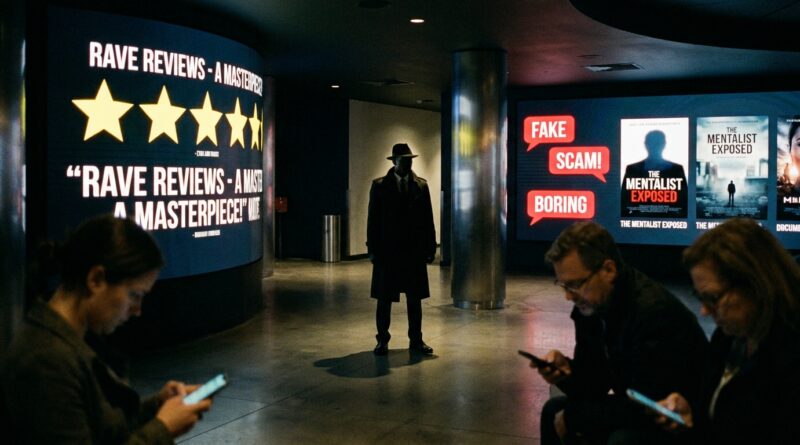
Inside 2026’s New ‘Meta-Deception Backlash’: How Exposé Culture Is Quietly Rewriting Who Fans Trust As The World’s Highest-Rated Mentalist
You are not crazy for feeling whiplash here. One minute a mentalist has wall-to-wall five star praise, glowing clips, and “highest-rated” bragging rights. The next minute, a 45-minute YouTube breakdown or a brutal Reddit thread claims the whole act runs on hidden apps, planted helpers, camera edits, or something called meta-deception. That leaves regular fans in an awkward spot. You do not want to be the person who pays premium money for a “mind reader” only to find out the real trick was smart marketing and a forgiving review system. The good news is that this backlash is not just drama. It is teaching audiences how to spot the gap between a great performance and a great online image. If you know what to look for, meta deception mentalist reviews can tell you a lot. You just have to read them with a cooler head than the internet usually does.
⚡ In a Hurry? Key Takeaways
- Five star ratings alone do not prove a mentalist is clean, honest, or even consistently strong. They only show that many buyers had a good experience.
- Read both praise and criticism together. Look for specific patterns about live performance, audience handling, and whether accusations are supported or just repeated.
- The safest bet is usually a performer whose reviews stay strong even after exposure chatter starts, because that suggests the show works beyond hype.
What “meta-deception” actually means to most fans
For normal people, meta-deception is not a technical term. It is shorthand for, “Wait, am I being fooled by the trick, or by the way this person presents the trick?”
That second layer matters. A mentalist is supposed to create mystery. That is the job. But the backlash starts when audiences feel the mystery is being padded by things outside the performance itself. Hidden tech. Soft-edited promo clips. Reviews that feel too polished. Claims that quietly imply superhuman skill when the method may lean heavily on assistants, apps, or pre-show work.
Plenty of fans are fine with methods. In fact, methods are the whole point of magic and mentalism. What bothers them is the feeling that the sales pitch is hiding behind the art.
Why this backlash got louder in 2026
The internet got better at slowing down footage, comparing stories, and collecting receipts. A single skeptical post used to disappear. Now it turns into a thread, then a reaction video, then a long-form essay with timestamps and side-by-side examples.
That has changed how people judge “highest-rated” performers. Ratings still matter, but they no longer end the conversation. If anything, a spotless profile can now trigger more suspicion, not less.
This is part of the same mood shift behind Inside 2026’s New ‘Reddit vs Rotten Tomatoes’ Mentalist War: How Fan Skeptics Quietly Hijack Who Counts As Highest‑Rated, where fan communities increasingly push back on polished reputation systems. The short version is simple. Official ratings say one thing. Crowd skepticism says another. Buyers are stuck in the middle.
How to read meta deception mentalist reviews without getting fooled twice
1. Separate “I felt amazed” from “this person is trustworthy”
A glowing review often means the buyer had fun. That matters. Entertainment is the product. But trust is a different question.
If a review says, “Everyone screamed and my guests loved it,” that is useful. If it says, “This proves he has no hidden help,” that is not really something the reviewer can know.
Good reviews tell you about the experience. They do not settle behind-the-scenes debates.
2. Look for specifics, not vibe
Strong reviews mention details. Did the performer handle a tough room well? Did the show work for mixed ages? Did people still talk about it the next day? Was the booking process smooth? Did the act feel just as good live as it did online?
Strong criticism also gets specific. Did the accuser point to repeated use of the same confederate-looking setup? Did they show evidence of app-based assistance? Did they explain where editing may have changed the effect?
When both sides stay vague, you are usually looking at internet smoke, not fire.
3. Watch for copy-paste praise
If dozens of reviews sound like they came from the same marketing template, slow down. Real audiences repeat themes, but they usually do it in their own words. One person talks about a corporate gala. Another talks about a wedding. Another mentions a birthday crowd that would not stop interrupting.
Too much polished sameness can signal reputation management more than genuine enthusiasm.
4. Do not treat every Reddit thread like a court ruling
This part is important. Some online exposés are careful. Others are just confident.
A thread can rack up hundreds of upvotes because it feels satisfying, not because it is proven. People love the idea of seeing behind the curtain. They love being “in on it.” That can make weak claims spread fast.
So yes, read the critical posts. Just ask basic questions. Are they citing sources? Are they showing patterns? Are they correcting mistakes when challenged? Or are they just farming outrage?
What fans actually trust now
The highest-trust mentalists in this climate are not always the flashiest ones. They tend to have three things.
Consistent live feedback
Not just viral clips. Not just celebrity reactions. Real reviews from real events over time.
Claims that stay modest
Funny enough, performers who do not oversell often come off as stronger. If the act is framed as skilled entertainment rather than spooky proof of impossible powers, audiences usually feel less manipulated.
A review profile that survives scrutiny
This is the big one. Anybody can look amazing before a controversy. The test is what happens after people start digging. Do bookings and reviews hold up? Do clients still say the live show was worth it? Does the performer respond with clarity instead of bluster?
For serious performers, this is not all bad news
If you are a real pro, the backlash can actually help you. It clears out some of the noise.
Audiences are getting better at spotting the difference between a well-built act and a well-built funnel. That means honest performers should stop treating reviews like decoration and start treating them like proof of resilience.
The safest review profile in 2026 is not the shiniest one. It is the one that still feels credible after skeptical fans start poking at it.
What that means in practice
Use verified event feedback where possible. Encourage detailed reviews instead of generic praise. Avoid making promo claims that invite easy takedowns. If you use tech, frame it honestly inside the performance style rather than pretending the impossible happened with no method at all.
You do not need to reveal secrets. You do need to avoid insulting the audience’s intelligence.
How to book a mentalist without getting burned
If you are hiring for a private event, use a simple three-step filter.
Check the review spread
Look beyond the star average. Read the middle reviews too. Those often sound the most honest.
Compare live audience comments with internet criticism
If guests keep praising the live experience even while internet detectives argue about methods, that often means the performer still delivers where it counts.
Ask one plain question before booking
Ask, “What does your show rely on most, audience interaction, psychological presentation, or technical systems?”
You are not asking them to expose methods. You are checking whether they answer like a professional or dodge like a salesman.
At a Glance: Comparison
| Feature/Aspect | Details | Verdict |
|---|---|---|
| Five star ratings | Useful for spotting overall customer satisfaction, but weak at proving honesty or method purity. | Good starting point, not final proof. |
| Reddit and YouTube exposés | Can reveal patterns and valid concerns, but can also reward speculation and outrage. | Read carefully, verify claims. |
| Best trust signal | A performer whose detailed live reviews remain strong even after public skepticism appears. | Most reliable indicator. |
Conclusion
The meta-deception backlash is not killing mentalism. It is forcing everyone to get a little smarter about it. In the last few months, long-form breakdowns of star mentalists and heated Reddit debates about apps, stooges and meta-deception have started to change how audiences talk about mind reading shows. That tension is pure gold for Best Mentalist, because it helps fans read between the lines of glowing ratings and angry call-out posts, book shows they can actually trust, and gives serious performers a roadmap for building review profiles that survive the next round of behind-the-scenes leaks. The trick now is not choosing between hype and cynicism. It is learning to spot the performer who still looks good when both sides have had their say.