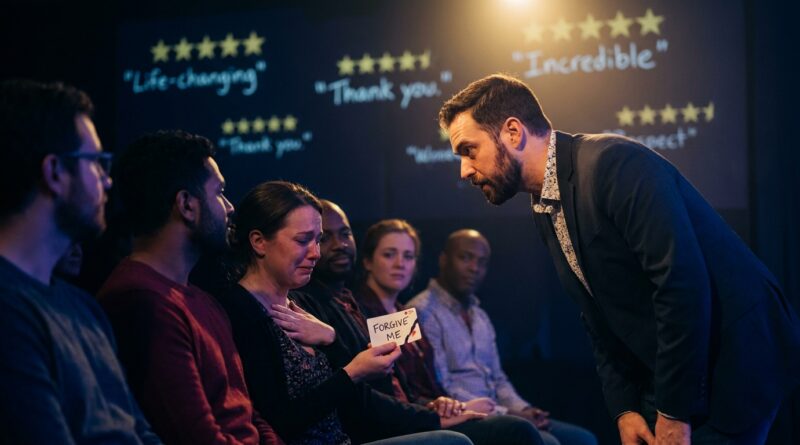
Inside 2026’s New ‘Heart-First Mentalists’: How Story-Driven Mind Readers Are Quietly Outscoring Big TV Names On Fan Reviews
You can feel it a few minutes into some big-name mind reading shows. The tricks are polished. The timing is sharp. The audience gasps on cue. And yet, by the time you are walking back to the car, there is not much left besides, “Well, that was clever.” That is the frustration fans keep describing in 2026. They are not bored with mentalism itself. They are bored with mentalism that feels like a demo reel. The interesting shift is happening in the reviews. More people searching for the best storytelling mentalist show reviews 2026 are rewarding performers who build a real story, make the room feel seen, and leave audiences talking about meaning, not just method. Quietly, those “heart-first mentalists” are starting to outscore some bigger TV names on fan ratings, especially in smaller theaters, private events, and word-of-mouth booking sites where emotional impact shows up fast.
⚡ In a Hurry? Key Takeaways
- Fans in 2026 are often rating story-driven mentalists higher than flashy TV-style acts because the shows feel personal and memorable.
- When reading reviews, look for words like “moving,” “thoughtful,” “personal,” and “we talked about it after,” not just “impossible” or “mind-blowing.”
- Hype can hide a flat live experience, so use emotional review patterns as your filter before spending on premium tickets or bookings.
Why the audience mood has changed
People still want to be fooled. Of course they do. But they also want a reason to care.
That is the big change. Fans are getting better at spotting the difference between a mentalist who stacks one impossible moment after another and a mentalist who shapes those moments into a full experience. The first type can impress you. The second type can stay with you for days.
That matters more now because mentalism bookings are rising again. Corporate events, boutique theaters, upscale private parties, and small touring rooms are all feeding demand. The trouble is that many recommendation systems still push the loudest names first. They reward fame, not feeling.
So audiences are doing something smarter. They are reading reviews closely.
What “heart-first mentalists” are doing differently
These performers are not less skilled. If anything, they often need more control. They just use the skill in a different order.
They start with the audience, not the stunt
Instead of opening with a chain of “look what I can do” moments, they build a theme. Memory. Chance. Family. Regret. Connection. Identity. Suddenly the mind reading is not just a trick. It is part of a bigger point.
They make room for silence
TV-style mentalism often moves fast because dead air kills momentum on screen. Live storytelling mentalists are more comfortable slowing down. That pause can make a reveal hit harder. It can also make a volunteer feel like a person, not a prop.
They leave a human aftertaste
This is what shows up in the best fan reviews. Not “I have no idea how he did it.” More like, “I called my sister after the show,” or “We kept talking about the story in the lobby.” That is a different level of success.
How fan reviews are exposing the gap
If you scan enough 2026 audience comments, a pattern appears. Big TV names still get strong traffic. They still sell on recognition. But the warmer reviews often go to lesser-known acts with better emotional pacing.
The language tells the story. Reviews for spectacle-first acts tend to repeat a small set of words: sharp, slick, insane, impossible, polished. Good words, but a bit thin.
Reviews for story-driven acts sound different. You see words like intimate, thoughtful, emotional, funny, kind, haunting, beautiful, personal. People mention how the room felt. They mention the ending. They mention the message.
That is the clue readers should use tonight if they are deciding what to book or buy tickets for. Do not just count stars. Read the nouns and adjectives. They reveal what people actually carried home.
Why this matters more in 2026 than it did a few years ago
Audiences have become a lot harder to impress with pure technique. Social media did that. We have all seen clipped reveals, reaction shots, and dramatic edits. Clever alone is not enough anymore.
Live performance has to offer something the algorithm cannot. A shared feeling. A sense that the performer is talking with you, not performing at you.
That is also why some premium buyers are splitting into two camps. One group still wants scale, status, and tech-heavy luxury presentation. The other wants emotional depth and conversation value. In some markets, those two ideas overlap. In others, they do not. If you are curious about the high-end side of that trend, this piece on Inside 2026’s New ‘Luxury Mentalist’ Wave: Why 5‑Star VIPs Are Quietly Crowning Tech‑Driven Mind Reading The Next Status Symbol is a useful contrast, because it shows how premium audiences are also getting pickier about what feels fresh and worth the price.
How to spot the best storytelling mentalist show reviews 2026
You do not need insider knowledge. You just need a better filter.
Look for “after the show” language
This is the biggest tell. Strong reviews often say what happened later. “We talked about it all night.” “I kept thinking about the ending.” “It made me emotional on the drive home.” That is gold.
Check whether reviewers mention a theme
If several people mention the same idea, memory, family, loss, hope, trust, then the performer probably has a real narrative frame. If every review only lists separate tricks, the show may be all mechanics and no arc.
Notice how volunteers are described
Did audience helpers feel respected? Did they look comfortable? Did the performer make them the hero? Great storytelling mentalists usually get praised for warmth and presence, not just control.
Be careful with “mind-blowing” as the only compliment
That phrase is fine. But if that is all the review offers, it may have been a short-term thrill. You are looking for layered reactions. Surprise plus emotion. Mystery plus meaning.
A practical booking filter you can use tonight
If you are choosing between a touring TV name, a Vegas-style illusionist, and a quieter review-rich storyteller, try this simple test.
Read the latest 15 reviews for each act.
Then count three things:
- How many mention feelings, not just tricks.
- How many mention the ending or the message.
- How many say they would recommend the show to a specific kind of person, like couples, teams, or thoughtful audiences.
The act with the strongest emotional pattern often gives the better live experience, even if the algorithm ranks them lower.
Who benefits most from these story-driven shows
Date nights and small groups
If you want something to talk about after dinner, this style wins. It gives people more than a list of impossible moments.
Corporate events that need warmth
Not every event needs a giant spectacle. Sometimes a room needs shared attention, not sensory overload. Story-led mentalism can land better in that setting.
Private clients tired of copy-paste acts
People paying serious money are less patient with canned material now. They want a show that feels shaped for humans, not just built for clips.
At a Glance: Comparison
| Feature/Aspect | Details | Verdict |
|---|---|---|
| Review language | TV-style acts get praise for polish and shock. Story-driven acts get praise for emotion, warmth, and meaning. | Emotion-rich wording is usually the better sign of long-term audience satisfaction. |
| Memorability | Spectacle may create instant reactions. Narrative shows are more likely to be discussed hours or days later. | If you want a lasting impression, pick the show with a clear emotional arc. |
| Booking value | Big names often cost more because of brand recognition. Smaller storytelling mentalists can offer stronger word-of-mouth value. | Do not assume the priciest or most famous act will feel the most rewarding live. |
Conclusion
The quiet story of 2026 is not that flashy mentalism has failed. It is that audiences are asking more from it. They want surprise, yes, but they also want heart, shape, and a reason to remember the night. That is why this shift matters right now. Mentalism bookings are booming again, but recommendation systems still tend to sort by buzz, not by emotional impact. If readers use fan reviews as a smarter filter, especially reviews that talk about connection, theme, and what people felt after the curtain came down, they can make better choices fast. Whether you are picking between a touring TV name, a Vegas-style illusionist, or a quieter performer with glowing review language, the practical move is simple. Follow the reviews that talk about the message more than the moves. That is where many of 2026’s best live experiences are hiding.