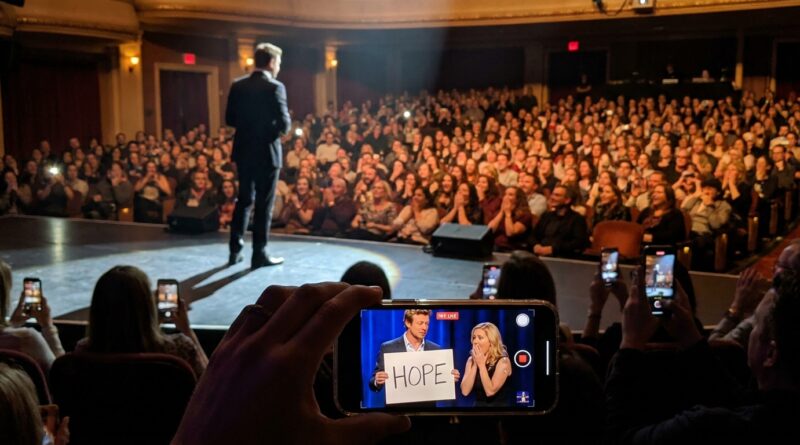
Inside 2026’s New ‘Crowd Clip Test’: How Real Fans Quietly Use Unedited Audience Videos To Spot The World’s Most Trusted Mentalists
You know the feeling. A mentalist is everywhere for 48 hours, clips are flying around, the comments call them a genius, and then you watch a full show later and think, wait, that is it? That gap between hype and reality is exactly why more fans are using what some people now call the Crowd Clip Test. It is not fancy. It just means ignoring the polished promo reel for a minute and looking at raw audience videos instead. Those shaky phone clips tell you things trailers never will. You can see if the crowd is truly locked in, if volunteers look confused or amazed, and if the performer can hold a room when the lighting is bad, the camera angle is ugly, and nobody gets a second take. If you want to know how to tell if a mentalist is really good from audience videos, this is the cleanest way to do it without needing insider knowledge.
⚡ In a Hurry? Key Takeaways
- A really good mentalist still looks impressive in shaky, unedited audience footage, especially in how they handle people, pacing, and live reactions.
- Start by watching three different crowd clips with the sound on, then check for clean reveals, natural audience behavior, and whether the room stays engaged between big moments.
- Do not judge from one viral clip alone. Short clips can hide misses, editing tricks, or selective reactions.
What the “Crowd Clip Test” actually is
The Crowd Clip Test is simple. Instead of asking, “Does this trailer look cool?” you ask, “What happens when a random person in Row G records 90 seconds on a phone?”
That shift matters.
Promotional videos are built to flatter. They use music, cutaways, reaction shots, and often only the strongest 10 seconds from a 20 minute set. Audience clips are messy. That is why they are useful. Messy footage shows whether the performer can create real tension, real laughs, and real surprise in a room full of normal people.
If a mentalist keeps looking strong even when the camera is off-center and the audio is rough, that is a very good sign.
Why this matters more in 2026
There are more mentalists trending online than ever, and the internet is not great at telling you which ones are truly dependable live performers. A lot of names catch fire because one big TV appearance or one clean social clip explodes.
That can be real. It can also be misleading.
We have already seen how one giant TV moment can reset public opinion overnight. If you want a good example of how fast the crowd can crown a new favorite, read Inside 2026’s New ‘AGT Aftershock’: How One Viral Mind‑Reading Clip Quietly Rewrote Who Fans Call The World’s Top Mentalist. Viral attention is real, but it is not the same thing as long-term trust.
That is where crowd clips help. They slow the hype down.
How to tell if a mentalist is really good from audience videos
1. Watch for the moments between the big reveals
Almost anybody can look good in a five-second payoff clip.
The better test is everything before and after it. Does the mentalist control the room? Do they explain clearly? Are people leaning in, or checking out? Can they keep energy up while choosing a volunteer, setting up a bit, or recovering from a small delay?
Great mentalists are not just reveal machines. They are room managers.
2. Check whether reactions look delayed or genuinely spontaneous
Real astonishment has a certain feel. People blink. They laugh at the wrong time. They look at each other before they clap. A polished promo often cuts straight to screaming faces. An audience clip shows the full beat.
Look for these signs of genuine reaction:
- People react at slightly different times
- The volunteer needs a second to process what happened
- The room grows louder naturally, not all at once
- The camera holder sounds surprised, not staged
If every reaction feels perfectly timed, you may be watching a highly selected clip, not a trustworthy one.
3. Focus on the volunteer, not just the performer
This is one of the easiest ways to judge quality.
A strong mentalist makes the volunteer look comfortable, important, and safe. They do not bulldoze people. They do not rely on confusion. They do not pressure someone into saying yes just to get applause.
In audience footage, ask:
- Does the volunteer seem relaxed?
- Do they understand what they are being asked to do?
- Does the performer listen, or just steamroll ahead?
- If something goes off-script, can the mentalist recover smoothly?
If the volunteer looks lost the whole time, that is not mystery. That is poor handling.
4. See if the effect survives a bad camera angle
A weirdly powerful test is this. Can the trick still feel impossible when the clip is badly framed?
That sounds unfair, but it is useful. If a piece only works when the performer controls the exact viewing angle, the perfect lighting, and the edit, it may not be a strong live piece. Good mentalism often lands through clarity, timing, and structure. Not just camera control.
If a rough audience clip still makes you think, “Hold on, how did that happen?” you are probably looking at something solid.
5. Count how often the room stays with them
Do not only count applause breaks. Watch crowd attention.
A trusted mentalist keeps the room engaged throughout the routine. You can usually tell by body language, silence, laughter, and the lack of restless movement. In a raw clip, if people drift, chat, or start filming only for the ending, that tells you something too.
Strong performers hold attention before the payoff, not just after it.
6. Look for consistency across multiple clips
One good audience video proves very little.
Three to five clips from different venues is where patterns show up. Maybe the performer is great in a theater but weak at corporate tables. Maybe they kill in intimate rooms but lose big crowds. Maybe the material is repetitive. Maybe every clip ends with the same one effect because that is the only thing that reliably lands.
Consistency is what separates a hot clip from a trusted act.
A step-by-step Crowd Clip Test you can use in five minutes
Step 1: Find three unedited clips
Use TikTok, Instagram, YouTube Shorts, Facebook, and tagged audience posts. Skip the official account first. Look for uploads from different people.
Step 2: Watch with sound on
This is important. Audio tells you whether reactions are earned, whether instructions are clear, and whether the room sounds genuinely involved.
Step 3: Ignore production value
Bad lighting is not the performer’s fault. You are judging the live impact, not the cinematography.
Step 4: Score four basics
- Clarity: Could you follow what was happening?
- Control: Did the performer handle the volunteer and room well?
- Reaction: Did people seem honestly surprised?
- Consistency: Did multiple clips show the same level of quality?
Step 5: Watch for recovery skills
This is where pros stand out. If someone talks over the performer, if the volunteer hesitates, or if the timing slips, does the act collapse? Or do they calmly steer it back?
Recovery is one of the clearest signs of real skill.
Red flags audience videos can expose fast
Audience clips are especially good at spotting warning signs that polished reels hide.
- The volunteer seems more confused than amazed
- The mentalist talks too much and explains too little
- Every clip cuts off before the full reveal lands
- The crowd is polite, but not emotionally invested
- The performer appears dependent on one camera-friendly bit
- There is lots of reaction, but very little visible substance
If you keep seeing the same issue in clip after clip, trust the pattern.
What audience videos cannot tell you
They are useful, but they are not perfect.
Audience clips can miss the full setup. They can flatten the atmosphere. A miracle in the room can look ordinary on a phone screen. Also, some of the best mentalism is slow burn. It builds over several minutes, and a short clip may not do it justice.
So use crowd footage as a filter, not a final verdict.
It is best for answering this question: “Does this person seem reliably strong live?”
It is less useful for answering: “Was this one exact effect the greatest thing ever?”
Why under-the-radar performers often do better in this test
This is the fun part.
The Crowd Clip Test does not always reward the biggest name. Sometimes it rewards the person who has spent years getting good in normal rooms, in front of normal people, without a huge content team shaping the story afterward.
That is why fans keep discovering lesser-known performers through random guest footage. The camera is not helping them. They are simply good.
And honestly, that is what many people want. Not hype. Not prestige. Just proof.
At a Glance: Comparison
| Feature/Aspect | Details | Verdict |
|---|---|---|
| Polished promo clip | Strong visuals, clean edits, best moments only, often built to create maximum hype | Good for awareness, weak for trust |
| Single audience video | Shows real conditions, but may be incomplete or unrepresentative | Useful clue, not enough on its own |
| Multiple unedited crowd clips | Reveals consistency, live control, volunteer handling, and genuine audience response across settings | Best test for real-world quality |
Conclusion
If you are tired of being sold a perfect version of a performer, the Crowd Clip Test is a smart reset. Social feeds and review sites are packed with mentalists right now, and it is harder than ever to know who is actually great versus who just has a strong editor. But you do not need secret knowledge to sort that out. Watch unfiltered audience footage. Check for clarity, crowd control, volunteer comfort, recovery skills, and consistency across more than one clip. That gives you real power. You can verify buzz around any name trending in the last 24 hours, separate technical skill from simple hype, avoid overpraised shows, and spot the under-the-radar performers who truly crush it when there is no camera crew and no second take.