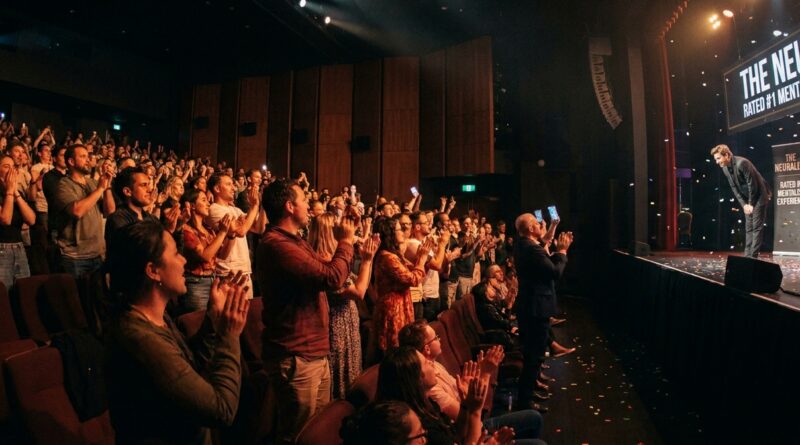
Inside 2026’s New ‘Standing Ovation Test’: How Night‑Of Crowd Scores Quietly Re‑Rank The World’s Highest‑Rated Mentalists
You know the feeling. You pull up a “best mentalists in the world” list, see the same polished names, scroll through glowing reviews, and still have no idea who actually lit up a room last night. That is the gap the Standing Ovation Test is trying to close in 2026. Instead of treating old ratings like gospel, it looks at what is happening now, in real theaters, private events, and live tours. Who got people on their feet. Who had audience members texting friends before the parking lot cleared. Who sparked repeat bookings and instant ticket re-buys. For anyone tracking the worlds highest rated mentalists standing ovation test 2026, the point is simple. Fame matters less than current impact. This new lens does not replace reviews. It updates them with real-world heat. And for fans, bookers, and performers, that can be the difference between buying a safe ticket and catching the act everyone will be talking about next week.
⚡ In a Hurry? Key Takeaways
- The Standing Ovation Test is a live-performance check that re-ranks mentalists based on fresh crowd response, repeat demand, and current buzz.
- If you are booking or buying tickets, look beyond lifetime ratings and check for signs of recent sellouts, return audiences, and strong post-show reactions.
- It is not perfect, but it is often a better real-world signal than old five-star reviews that may no longer match a performer’s current form.
Why old rankings are starting to feel stale
Most public rankings are slow. Really slow.
A performer can build a huge reputation over years, and that reputation can keep them near the top long after their show has stopped evolving. On the flip side, a rising mentalist can be crushing rooms every weekend and still be nearly invisible on traditional “best of” lists.
That is frustrating for everyone. Fans waste money on names that look better on paper than on stage. Bookers play it safe because the data feels thin. Newer performers struggle to prove they belong in the same conversation as the established stars.
The Standing Ovation Test starts with a simple question. Not “Who was amazing in 2023?” Not “Who has the fanciest website?” Just this. Who is getting the strongest live reaction right now?
What the Standing Ovation Test actually measures
This is not just about whether people clap at the end. Almost every decent show gets applause. The test tries to separate polite appreciation from genuine impact.
1. Real standing ovations, not automatic ones
Some rooms stand for everybody. That is true. So the better versions of this test look at context. Did the audience rise instantly or slowly? Did the energy spike at the finale? Was the ovation driven by the full room or just the front rows?
It is less about counting bodies and more about reading the temperature of the room.
2. Fresh review velocity
Old reviews still matter, but new reviews tell you whether a performer is hot right now. If a mentalist suddenly gets a surge of audience comments in the last two weeks saying things like “best live show I have seen this year” or “we booked again before leaving,” that matters.
Fresh praise often catches momentum before the big ranking sites do.
3. Repeat attendance and re-buys
This one is huge. If people come back, bring friends, or buy seats for another city on the same tour, that is one of the strongest signals you can get.
People might leave a nice review out of politeness. They do not usually buy another ticket out of politeness.
4. Word-of-mouth speed
How quickly is the buzz spreading after a show? Are local groups talking? Are clips and reactions moving around fast? Are ticket pages seeing unusual jumps right after performances?
The idea is to measure heat, not just history.
Why this matters more in mentalism than in many other live arts
Mentalism is unusually dependent on the room.
A brilliant set on video can feel flat in person if the pacing is off or the audience connection is weak. On the other hand, a performer with a less flashy online image can absolutely own a live room through tension, timing, humor, and control.
That is why static rankings often miss the point. Mentalism is not just about tricks, methods, or prestige. It is about the emotional charge in the moment. Silence. Shock. Laughter. That split second where a crowd goes from curious to fully locked in.
The Standing Ovation Test tries to measure that living part of the art.
How it quietly re-ranks the world’s biggest names
Here is where things get interesting.
Once you start using current crowd response as a ranking signal, some famous names stay strong, but others slide. Not because they suddenly became bad, but because “highly rated” is not always the same as “most powerful right now.”
A mentalist with years of glowing press may now be delivering a solid, professional show that gets respectful applause. Meanwhile, a newer or less overexposed act may be generating louder endings, stronger after-show chatter, and faster return demand.
That is a real re-rank, even if no big website has updated its list yet.
If this idea sounds familiar, it lines up with another shift happening behind the scenes. Performer reputation is also being shaped by private industry chatter, as explored in Inside 2026’s New ‘Backstage Whisper Test’: How Quiet Performer‑Only Chatter Is Secretly Re‑Ranking The World’s Highest‑Rated Mentalists. Put simply, public ratings and private opinion are no longer moving in lockstep.
What bookers should look for before making a decision
If you hire talent, this is where the Standing Ovation Test becomes practical, not just interesting.
Look for recent proof, not just impressive averages
A 4.9 average over five years is nice. A wave of audience excitement from the last 30 days is better.
Ask for recent testimonials. Ask what happened at the last five shows. Did people stay after to talk? Were there referrals within 24 hours? Did the client ask about rebooking before the event was even over?
Watch for repeat demand patterns
One great show can happen. A pattern is what reduces your risk.
If a performer is getting invited back, selling second nights, or seeing people return with new guests, that tells you the reaction is consistent enough to matter.
Pay attention to room type
A performer who gets standing ovations in intimate theaters may not hit the same way in a large corporate ballroom. Context matters.
The best use of the test is matching the performer’s current live strength to your venue and audience.
What fans should do if they want the hottest ticket
If you are buying for yourself, your goal is a little different. You are not reducing event risk. You are trying to catch a peak moment.
Check for recent chatter, not just official praise
Look at the newest comments first. Search social posts by date. Read what people said the morning after the show, not just what ended up on the performer’s press page.
Notice urgency signals
Are people saying “go now,” “do not spoil this,” or “we immediately bought again”? Those are stronger signs than generic compliments like “great entertainer.”
Move before the market catches up
One of the best reasons to follow the worlds highest rated mentalists standing ovation test 2026 is timing. Once mainstream rankings update and bigger outlets catch on, ticket prices usually follow the buzz.
By then, you are not finding the next must-see act. You are joining the rush late.
What performers can learn from it
This may be the most useful part of all.
For up-and-coming mentalists, the Standing Ovation Test creates a more honest bar. It says world-class status is not just about having a strong promo reel or collecting old compliments. It means creating a reaction so strong that audiences do the marketing for you in real time.
The emotional finish matters
If the ending of the show does not hit hard, the memory fades fast. The acts climbing fastest right now are the ones building toward a finish that leaves people stunned, delighted, or both.
Consistency matters more than one viral clip
One amazing clip can get attention. Repeated strong room reactions build a career.
Audiences are the new ranking engine
Not in a neat, technical way. In a human way. They vote with feet, voices, reposts, and return visits.
Where the test can go wrong
It is useful, but it is not magic.
Some crowds are easier to lift than others
A warm, theater-savvy audience may stand faster than a reserved corporate group. That does not automatically mean the show was better.
Short-term hype can distort things
A performer can have a hot week because of a viral moment, a celebrity mention, or a well-timed media push. Sometimes that momentum is real. Sometimes it cools off fast.
Not every great show ends in a loud reaction
Some mentalism aims for eerie silence, deep reflection, or a slower emotional burn. A standing ovation is powerful, but it is not the only sign of excellence.
So think of this test as one strong signal in the mix, not the only one.
At a Glance: Comparison
| Feature/Aspect | Details | Verdict |
|---|---|---|
| Traditional star ratings | Useful for long-term reputation, but often slow to reflect current live performance quality. | Good background check, weak for “who is hottest this week?” |
| Standing Ovation Test | Tracks fresh reactions, repeat attendance, fast word-of-mouth, and real room energy. | Best for spotting current momentum and lower-risk live bookings |
| Backstage and insider chatter | Performer-only opinion can reveal respect, originality, and consistency before public rankings shift. | Very useful when paired with audience response data |
Conclusion
Most rankings are frozen in time, but the mentalism world is moving live every night. That is why the Standing Ovation Test matters. It gives the community a way to track who is peaking in real rooms this week, using fresh reviews, repeat attendance, and in-the-moment crowd reactions as one human-centered signal. For bookers, that can lower the risk of hiring a name that looks bigger online than on stage. For fans, it can help you find the hottest ticket before prices jump and everyone else catches on. And for rising performers, it sets a clearer standard. In 2026, being called world-class is not just about legacy. It is about what happens when the show ends, the audience rises, and the buzz starts before people even reach the door.