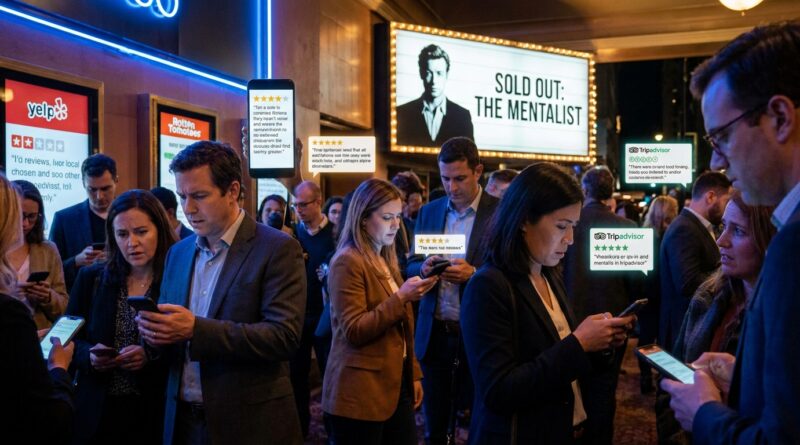
Inside 2026’s New ‘Rating Whiplash’ Alert: How Fans Quietly Use One Night Of 1‑Star And 5‑Star Reviews To Judge The World’s Top Mentalists
You look up a mentalist show, ready to book tickets, and the reviews feel like emotional ping-pong. One person says it was the most stunning mind-reading performance of their life. The next says it was cheesy, overpriced, and obvious. That kind of split can make even excited fans freeze, especially when the night involves real money, travel, or a special occasion. The good news is that “rating whiplash” does not always mean a show is bad. Often, it means the show is drawing strong reactions from different kinds of audiences at the same time. For fans trying to sort through the noise around the mentalists highest rated mixed reviews 2026 conversation, the trick is not to chase the average score alone. It is to read the pattern inside the praise and the complaints. Once you know what to look for, the mess starts making a lot more sense.
⚡ In a Hurry? Key Takeaways
- Mixed reviews do not automatically mean a weak mentalist. They often mean a show is bold, interactive, or mismatched to part of the crowd.
- Read the newest 1-star and 5-star reviews side by side, then look for repeated details about pacing, audience interaction, and payoff.
- If you are spending big on tickets or travel, trust consistency across recent reviews more than one glowing quote or one angry rant.
Why “rating whiplash” is hitting mentalist shows so hard in 2026
Mentalism is a tricky kind of entertainment to review. A comedy set can bomb or land. A concert can sound great or muddy. But a mind-reading show depends on mood, seating, expectations, crowd participation, and how much mystery you personally enjoy.
That means two people can honestly watch the same show and walk out with totally different opinions.
One guest loves audience interaction. Another hates being called on. One wants theatrical suspense. Another wants fast, impossible reveals every five minutes. One thinks a slow build feels classy. Another thinks it feels padded.
That is why the same-night flood of 5-star love and 1-star anger is becoming more common, especially for big-name Vegas acts and touring mentalists with larger, more mixed audiences.
The simple rule: do not trust the score first
Most people start with the star average. That is understandable, but it is often the least helpful number.
A 4.7 can hide a soft, forgettable show that offends nobody. A 4.1 can hide a daring, memorable performer who thrills the right audience and irritates the wrong one. If your goal is to find the best fit, not the safest pick, you need to go deeper.
What to check before the average rating
Start with these:
- How many reviews came in during the last 30 to 90 days
- Whether the newest low ratings mention the same issue
- Whether the newest high ratings praise the same strengths
- Whether complaints are about the performance itself or side issues like seating, drink minimums, or venue delays
This is where clarity starts. If the bad reviews are all over the place, that is less worrying. If they all say the same thing, pay attention.
The one-night 1-star and 5-star method
Here is the fastest playbook I recommend if you are deciding tonight.
Step 1: Pull up the newest reviews only
Ignore the all-time greatest hits for a minute. A mentalist can change material, change venue, change staff, or change pacing. What mattered two years ago may not matter now.
Step 2: Read three 1-star reviews in full
Do not skim. Read them closely.
Ask: are these people upset because the show was weak, or because the show was not what they personally wanted?
There is a big difference between “the performer insulted the audience and the reveals made no sense” and “I do not like audience participation.” One is a warning. The other is a preference.
Step 3: Read three 5-star reviews in full
Again, look for specifics.
The useful 5-star review says things like, “the callbacks were smart,” “the finale built perfectly,” or “the performer handled a skeptical crowd well.” The less useful one just says, “Amazing. Best ever.” Nice to read, not very helpful.
Step 4: Circle repeated phrases
You are looking for overlap. If both sides mention the same thing, that is gold.
Examples:
- “Slow start” appears in bad reviews, while “worth the payoff” appears in good ones
- “Heavy crowd work” appears in both
- “Premium price” appears in both
- “Front rows loved it, back rows felt detached” appears in both
Now you are no longer reading noise. You are reading the shape of the experience.
How to tell if mixed reviews mean “interesting” or “avoid”
This is the part that saves money.
Mixed reviews that are usually fine
- Some people say the show is slow, others say it builds beautifully
- Some love the humor, others think it is too dry
- Some love being involved, others wanted a more passive show
- Some call it subtle, others call it understated
These are often style conflicts. Not red flags.
Mixed reviews that deserve caution
- Repeated claims that the same tricks felt obvious
- Many recent comments about rude crowd handling
- Consistent complaints that expensive seats gave a poor view
- Lots of reviews saying the show felt padded, short, or not worth the price
- Reports that the current version is weaker than earlier runs
Those are operational or performance issues. More serious.
Watch for venue problems dressed up as show reviews
This happens all the time in Vegas and large tourist markets.
Someone leaves a 1-star review because the line was long, drinks were expensive, or the seating chart felt misleading. That matters, of course, especially if you are paying premium prices. But it is different from saying the mentalist was poor.
Try splitting reviews into two buckets in your head:
- Show quality: material, pacing, charisma, mind-reading impact, audience management
- Venue friction: parking, check-in, seating, fees, staff, food and drink
If the performer is strong but the venue is sloppy, you may still want to go, just with better expectations.
Big names are not always the safest bet
Famous mentalists often attract the widest crowd. That sounds good, but it can also create more rating swings because casual tourists, hardcore fans, skeptics, and date-night audiences all review the same show for different reasons.
That is one reason smaller performers sometimes look steadier in review patterns. If you want a good snapshot of that trend, see Inside 2026’s New ‘Fan Favorite’ Shakeup: How Small-Stage Mentalists Quietly Outscore The Big Names On Review Sites Tonight. It helps explain why lower-profile acts can quietly earn stronger trust from audiences who care more about the full experience than the biggest marquee.
The best questions to ask while reading Reddit threads
Reddit can be useful because people often write more honestly there. It can also be messy because people love hot takes.
When reading a thread, ask:
- Did the commenter actually attend recently?
- Are they comparing this show to all live entertainment, or only to other mentalists?
- Do they explain what disappointed them?
- Are they reacting to price, hype, or the actual performance?
A post saying “overrated” means almost nothing by itself. Overrated compared to what? Ticket cost? TV fame? Another Vegas show? You need context.
A fast scoring system you can use tonight
If you want a practical filter, score each show from 1 to 5 in these categories based on recent reviews:
- Consistency: Do recent reviews repeat the same strengths?
- Weakness clarity: Are the complaints specific and understandable?
- Value: Do guests feel the ticket price matched the experience?
- Audience fit: Is it clear who will enjoy this most?
- Current momentum: Are the newest reviews improving, stable, or slipping?
A show with a lower raw star rating can still win if it scores well in consistency and audience fit.
At a Glance: Comparison
| Feature/Aspect | Details | Verdict |
|---|---|---|
| Recent 1-star reviews | Best for spotting repeated problems like poor pacing, bad seating, or weak payoff | Very useful, if you separate preference complaints from real warning signs |
| Recent 5-star reviews | Best for finding what the show does unusually well, especially when details are specific | Useful, but only when praise explains why the show worked |
| Overall star average | Quick snapshot, but often hides whether a show is safely pleasant or sharply divisive | Good as a starting point, not a final decision tool |
My plain-English advice for booking with confidence
If a mentalist has fresh 5-star praise and fresh 1-star blowback at the same time, do not panic. Start by asking what kind of split you are seeing.
If the split is about style, personality, or audience participation, that often means the performer is taking real swings. That can lead to a great night if the show matches your taste.
If the split is about sloppy execution, weak value, or repeated venue problems, be more careful.
And if two or three competing mentalists are all on your list, trust the one whose recent reviews stay specific under pressure. Specific praise is hard to fake. Repeated criticism is hard to ignore.
Conclusion
Right now, several high profile mentalists and Vegas mind-reading shows are pulling in fresh five-star excitement and equally fresh one-star backlash across review sites and Reddit. That can feel chaotic when you are trying to choose wisely. But with a same-day rating whiplash playbook, you can turn that mess into something useful. Read the newest extremes, look for repeated details, separate venue headaches from show quality, and focus on who still earns trust when the crowd gets critical. Do that, and you will get past the noise faster. Better yet, you will be in a stronger position to reward the mentalists who are actually raising the bar, not just riding hype.