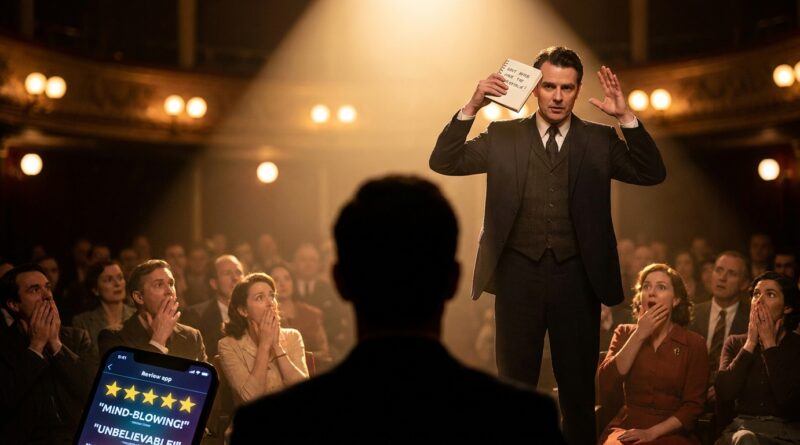
Inside 2026’s New ‘Fan Favorite’ Shakeup: How Small-Stage Mentalists Quietly Outscore The Big Names On Review Sites Tonight
It is frustrating when every “best mentalist” list looks copied from the same TV booking sheet. You see the same celebrity names, the same old blurbs, and very little that tells you what audiences are saying right now. That matters if you are buying tickets tonight, planning a private event, or trying to avoid paying top dollar for a name that may not give the best live experience anymore.
When you dig into the highest rated mentalists reviews 2026 across Google, TripAdvisor, and Trustindex, a quieter trend shows up. Smaller-room performers, private club regulars, and mid-tier touring mind readers are often earning stronger review language than the big names. Not always more reviews. But better ones. Fans keep praising intimacy, audience interaction, clear pacing, and a feeling that the show was built for the room, not for television. That gap between fame and fresh audience feedback is the real story, and it is changing how smart fans and careful bookers should search.
⚡ In a Hurry? Key Takeaways
- Verified review sites in 2026 are showing that some lesser-known mentalists are beating celebrity names on audience satisfaction.
- Check recent review wording, not just star averages. Look for comments about pacing, crowd connection, and consistency.
- Big-name rankings can be useful, but they are not a safe shortcut if you want the best live show or best value.
The shakeup hiding in plain sight
The old pattern was simple. TV exposure drove public rankings. Public rankings drove ticket sales. Ticket sales reinforced the idea that the same few stars must be the best choice.
That still happens. But review platforms have made the picture messier, and honestly, more useful.
When people leave rave reviews after a live show, they usually do not talk like critics. They talk like customers. They mention whether they felt seen. Whether the performer was funny. Whether the room worked. Whether the show dragged. Whether the mentalist stayed after for photos, handled volunteers kindly, and gave them a night worth talking about the next morning.
That kind of feedback often favors small-stage mentalists. Why? Because the room is tighter, the connection is stronger, and little details stand out more.
Why small-stage mentalists are scoring so well
They build the show for the room they are actually in
A celebrity mentalist may bring a polished act that worked in theaters, on TV, or in a casino residency. But a 60-seat room or private club needs different timing. It needs flexibility. It needs cleaner audience management.
Under-the-radar performers often live in that world every week. They know how to work close. They know when to slow down. They know when to stop talking and let a moment land.
Reviews reward personal connection
Fans rarely say, “The billet switch was technically excellent.” They say, “He made my wife cry in a good way,” or “She remembered details about our table and made the whole room feel included.”
That is where many mid-tier performers are winning. Their reviews are packed with human language, not just generic praise.
Smaller rooms expose weak spots fast
In a theater, a famous name can coast a little on scale and expectation. In a boutique room, there is nowhere to hide. If the pacing is off, people feel it. If the script sounds canned, people notice. If the performer seems rushed, cold, or too rehearsed, that goes straight into the reviews.
So when a small-stage mentalist keeps pulling five-star reactions, it usually means they are doing a lot right.
What review sites are showing in 2026
The most useful pattern is not just the star count. It is the review language.
Across Google, TripAdvisor, and Trustindex, audience comments for lesser-known mentalists often lean heavily on phrases like “best live show we saw on the trip,” “more interactive than expected,” “worth every penny,” and “felt completely personal.”
By contrast, reviews for bigger names can be more split. You still see plenty of praise, of course. But mixed comments show up more often around price, distance from the action, repeated material, and a feeling that the performer relied too much on fame.
That does not mean the stars are suddenly bad. It means review sites are finally making room for a more honest middle. Fame gets you attention. Live audience care gets you loyalty.
If you want another angle on this shift, Inside 2026’s New ‘Underground Five‑Star’ Shock: How Private Club Mentalists Quietly Outscore Every TV Mind Reader Tonight lines up with the same trend. The names people search are not always the names audiences are rewarding most enthusiastically.
How to read reviews without getting fooled
Do not stop at the average rating
A 4.9 can mean a lot of things. So can a 4.6. A performer with fewer but fresher reviews may be a better bet than a big star carrying older momentum from a stronger run years ago.
Look at the date spread. If praise is piling up in the last three to six months, that matters.
Read the three-star and four-star reviews
This is where the useful truth usually sits. Five-star reviews tell you what people loved. Mid-range reviews tell you what can go wrong.
For example, if several people mention bad sightlines, slow starts, heavy audience humiliation, or uneven sound, take that seriously.
Watch for repeated specifics
If ten strangers mention “incredible crowd work” or “our skeptical friend was blown away,” that is stronger than a vague “Great show.”
The same goes for negatives. If different reviewers say the ending felt abrupt or the show leaned too hard on old material, that is a pattern, not a fluke.
What bookers should care about most
If you are hiring for a company event, wedding, club, or private dinner, celebrity status is not your safest shortcut. Fit is.
A mentalist who thrives in a small room, reads a crowd well, and earns detailed praise for professionalism may be a better choice than a bigger name with broader recognition but weaker live-event adaptability.
Look for reviews that mention:
- Easy communication before the show
- On-time arrival and setup
- Respectful handling of volunteers
- Clear sound and pacing
- Strong reactions from mixed age groups
- Whether guests kept talking about it afterward
Those are the details that turn a good booking into a smart one.
What performers can learn from this
This trend is not just good news for audiences. It is a roadmap for working mentalists.
The five-star surges are not random. Review language keeps circling back to a few things: intimacy, clarity, warmth, and respect. People love feeling amazed, yes. But they also love feeling comfortable and included.
If a lesser-known performer is quietly beating bigger names in reviews, chances are they are doing some very practical things well:
- Writing scripts that sound natural in live rooms
- Cutting dead time between effects
- Making every volunteer look good
- Adjusting material to the audience size
- Ending strong instead of just ending loud
That is not flashy advice. It is just what audiences keep rewarding.
Why “fan favorite” means something different now
For years, “fan favorite” often meant “person you already know from television.” In 2026, that phrase is starting to split in two.
There is mainstream fan favorite. Then there is review-site fan favorite.
The first is driven by fame. The second is driven by current experience.
And if you are spending real money on tickets or a booking fee, current experience should probably win.
At a Glance: Comparison
| Feature/Aspect | Details | Verdict |
|---|---|---|
| Celebrity rankings | Often shaped by TV exposure, old publicity, and recycled “Top 10” lists | Useful for awareness, weak for choosing the best live show tonight |
| Verified review platforms | Show fresher audience reactions on pacing, value, interaction, and consistency | Best place to spot rising small-stage favorites |
| Small-stage and private-room performers | Often earn stronger praise for intimacy, flexibility, and audience care | Frequently the better value, especially for live bookings |
Conclusion
The big story in highest rated mentalists reviews 2026 is simple. The loudest names are not always getting the most enthusiastic live feedback anymore. That helps the community right now because fans and bookers are making real choices based on old rankings while newer review data is telling a different story. If you check verified reviews, read the wording carefully, and pay attention to recent audience experience, you have a much better shot at finding a great show instead of just a famous one. And for performers, the lesson is just as clear. Five-star growth is coming from smart staging, stronger scripting, and better treatment of the people in the room. Fame still matters. But tonight, audience care is scoring points faster.