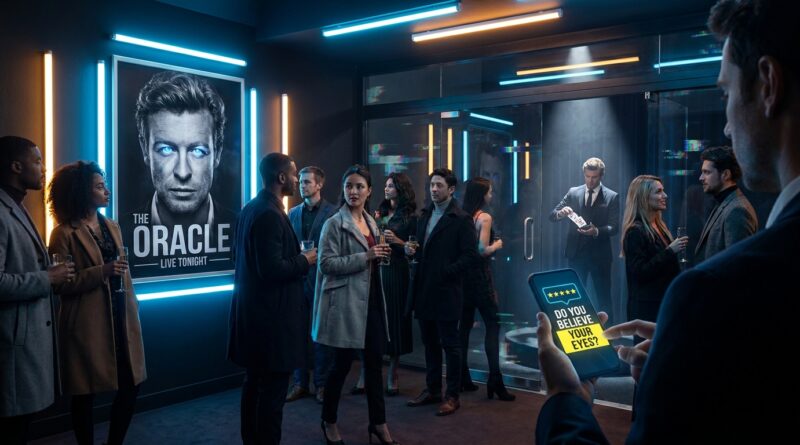
Inside 2026’s New ‘AI Proof’ Mentalist Test: How Fans Quietly Use One Simple Question To Spot The World’s Real Mind Readers
You are not being picky. It really is hard to figure out how to tell if a mentalist is really the best when every clip looks polished, every poster says “highest rated,” and every comment section feels oddly perfect. That is the headache in 2026. Fans are swimming in edited reels, copied buzzwords, fake social proof, and performances built to look stronger on a phone than they do in a room. The good news is that people who book great live entertainment have started using one simple test. They ask a mentalist, or look for the answer in reviews and interviews: “What happens when a routine goes wrong live?” It sounds small, but it tells you almost everything. Real mind readers can talk about misses, recovery, and audience care without panic. Fakers usually dodge, get vague, or hide behind hype. That one question is becoming the quiet shortcut for spotting the real pros.
⚡ In a Hurry? Key Takeaways
- The fastest way to judge a mentalist is to ask how they handle a routine that misses or changes live.
- Look for clear, calm answers backed by live reviews, not just slick clips and “best in the world” claims.
- This simple filter can save you money, avoid a flat night out, and help you reward real talent over hype.
The new “AI proof” test is surprisingly human
The reason this works is simple. AI can help polish promo copy. Camera edits can make weak material look sharp. Friends can flood a comments section with praise. But a live performance is still a live performance.
And live mentalism has friction. People answer unexpectedly. Rooms are noisy. Volunteers freeze. Timing shifts. A brilliant performer knows how to steer through that without embarrassing anyone or breaking the mood.
So when you want to know how to tell if a mentalist is really the best, stop asking who has the most dramatic trailer. Ask what they do when things are not perfect.
The one question fans are using
Ask this
“What happens when a routine goes wrong live?”
Why this question works
A real pro will not act shocked by the question. They know live entertainment is messy. They will usually say some version of this:
They build shows with flexibility. They have outs. They protect the audience member. They can turn a miss into a laugh, a surprise, or even a stronger moment. Most importantly, they do not blame the volunteer.
That is the giveaway. Great mentalists do not promise robotic perfection. They promise control, recovery, and a good experience in the room.
What strong answers sound like
If the mentalist is the real deal, their answer tends to be specific.
- They mention adapting to different audience types.
- They talk about keeping the volunteer comfortable.
- They explain that some routines are designed with multiple paths.
- They focus on entertainment, not just “fooling” people.
- They sound relaxed, not defensive.
That calm confidence matters. It usually means they have done this in front of real crowds, not just in front of a lens.
What weak answers look like
This is where the simple question becomes useful fast.
Red flag 1: “That never happens”
That sounds impressive, but it is not believable. Every live performer has unpredictable moments. Saying otherwise can mean the person has little real-world experience, or they are selling an image instead of a show.
Red flag 2: Vague word soup
If the answer is all “energy,” “vibration,” “mastery,” and no concrete detail, be careful. Fancy language is often a smokescreen.
Red flag 3: Blaming the audience
If they suggest failures only happen because a volunteer was “difficult” or “not open,” that is a bad sign. Strong performers take responsibility for the room.
Red flag 4: Only sending edited clips
If you ask about live misses and the response is just another sizzle reel, that tells you something too.
Why this matters more in 2026
The flood of AI-assisted promo has made it easier than ever to sound elite. A performer can now produce polished descriptions, glowing-seeming blurbs, and slick social content without much proof behind it.
That is why many fans now pair this question with review checking. If you want to go one step further, this piece is worth reading: Inside 2026’s New ‘Fact‑Check My Feed’ Habit: How Fans Quietly Use Live Reviews To Catch Fake Viral Mind Readers In 5 Minutes. It lines up perfectly with this test. Ask the question, then see if real audience reviews describe the same calm professionalism.
How to use the test without sounding awkward
If you are buying tickets
You may not be able to ask the performer directly. That is fine. Look for interviews, Q and A clips, podcast appearances, and audience reviews. Search for words like “interactive,” “handled a tough crowd well,” “made the volunteer feel safe,” or “even the unexpected moments were amazing.”
If you are booking for an event
Ask directly over email or on a call. Keep it simple. “How do you handle moments when audience participation goes off script?” A seasoned performer will usually give you a thoughtful answer quickly.
If you are comparing several names
Write down each answer. The best one will almost always be the most grounded, specific, and audience-first.
The bigger truth about “the best”
There is no universal scoreboard for the world’s best mentalist. Taste matters. One person may love dark psychological theatre. Another may want warm, funny, corporate-friendly mind reading.
But there is a dependable way to spot quality. The best performers do not just create impossible moments. They create trust in the room. They are good when things are smooth, and even better when real life barges in.
That is why this one question has caught on quietly among fans and buyers. It cuts through branding and gets to craft.
At a Glance: Comparison
| Feature/Aspect | Details | Verdict |
|---|---|---|
| Answer to the “what if it goes wrong?” question | Specific, calm, audience-focused explanation with examples of recovery and flexibility | Strong sign of a seasoned live mentalist |
| Promo clips and social hype | Can look amazing, but may hide edits, selective takes, or influencer-style exaggeration | Useful for style, weak for proof |
| Live reviews and audience feedback | Comments about how the performer handled real people, real tension, and unexpected moments | Best backup check before spending money |
Conclusion
If you have been wondering how to tell if a mentalist is really the best, start here. Ask what happens when a routine goes wrong live, or hunt down the answer in reviews and interviews. It is a fast, concrete filter that works in a review-driven, AI-flooded world where “world class” gets thrown around far too easily. For casual fans, it can save you from wasting a night out on a flat show. For serious bookers, it can protect your budget and your reputation. Better still, it helps reward the performers who have real skill, real control, and real respect for the audience. That quietly raises the bar for everyone, which is exactly what “world class” should mean in 2026.