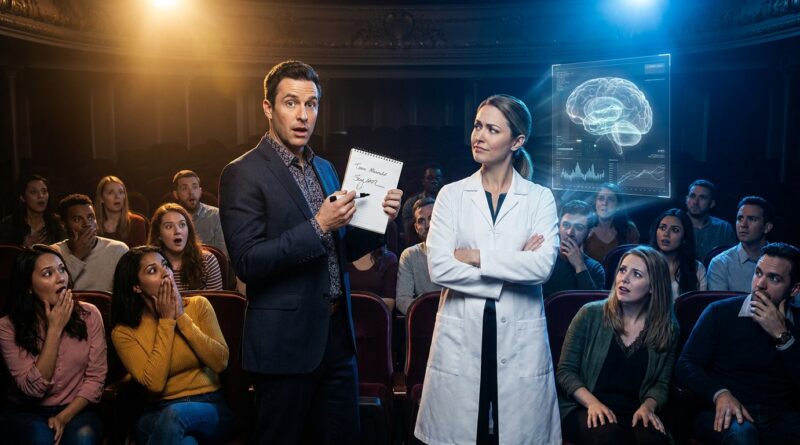
Inside 2026’s New ‘Psychics vs Science’ Showdown: Why A Touring Skeptic-Mentalist Duel Is Quietly Rewiring How 5‑Star Fans Judge Mind‑Readers
If you love high-end mentalism, you have probably felt this tug-of-war yourself. One minute you are amazed. The next, you are wondering if you just watched brilliant psychology, a clever magic method, or someone nudging the crowd toward belief they did not fully agree to. That tension has only gotten stronger after the White House mess, social media pile-ons, and the usual TV edits that make everything look cleaner and more supernatural than it really is. That is why the quiet rise of the psychics vs science mentalist tour 2026 matters more than it first appears. It is not just another stage gimmick. It is a live stress test. Put a skeptic-scientist on one side, a polished mentalist on the other, and suddenly the audience starts judging differently. They stop asking only, “Was it impossible?” and start asking better questions. Was it fair? Was it honest about the frame? Did the performer respect the crowd while still creating real astonishment?
⚡ In a Hurry? Key Takeaways
- This 2026 tour matters because it shifts the debate from “Is it real?” to “Is it skillful, fair, and clearly framed?”
- Use a simple checklist when watching or booking a mentalist: framing, consent, method transparency, audience treatment, and repeatability.
- The real value is not debunking wonder. It is protecting great performers from backlash and helping fans reward ethical, world-class work.
Why this showdown is getting attention
Most fans do not actually want a lecture on cold reading. They want to be fooled beautifully. They want that sharp intake of breath. They want the moment that makes a whole room go quiet.
But fans also do not want to feel played in a bad way. That is the key difference.
The psychics vs science mentalist tour 2026 seems to understand this. Instead of pretending the old argument is settled, the show turns that argument into the engine of the evening. One person presents mystery. The other pushes back with scientific skepticism, psychology, probability, memory bias, and audience dynamics.
That friction changes the room.
It makes viewers more active. They are no longer passive recipients of “impossible” moments. They are judges. Not of whether psychic powers are real, necessarily, but of how responsibly and artfully the mystery is being built.
What has changed since the backlash years
Mentalism used to get more of a free pass. If a performer wanted to sit in the hazy space between trickery, suggestion, intuition, and paranormal claims, many audiences were happy to leave it there.
That is harder now.
Viewers are more media-literate. They know editing can fake a lot. They know crowds can be steered. They know suggestion is powerful. They also know some performers hide behind “entertainment” language in the fine print while selling something much stronger on stage.
That gap has become a problem for both fans and bookers.
Fans wonder if they are rewarding artistry or manipulation. Bookers worry about reputational risk. Reviewers struggle to explain why one act feels classy and another feels slippery, even when both get gasps.
This is where a science-versus-showmanship format becomes useful. It does not kill wonder. It gives people a better way to sort it.
The big shift. Fans are judging the frame, not just the feat
The old scorecard for a mentalist was simple. Did they blow the roof off the room?
Now there is a second scorecard. Did they earn that reaction in a way the audience can live with afterward?
That sounds soft, but it is not. It is a serious change in standards.
1. Framing now matters as much as method
If the performer says, clearly, “This is a mix of psychology, influence, showmanship, and techniques you may not notice,” people tend to relax. They can enjoy the ride. If the performer heavily implies supernatural certainty, then hides behind ambiguity later, people feel tricked in the wrong way.
2. Respect for volunteers is now part of the review
Audiences are much quicker to notice when a volunteer is being pressured, embarrassed, or turned into a prop. A world-class performer can create mystery without making a helper look foolish.
3. Consistency matters more than one killer moment
A polished TV-style miracle can still wow a crowd. But live audiences are increasingly impressed by clean structure, fair conditions, and repeatable excellence. One stunning hit means less if the rest feels padded, selective, or suspiciously edited by memory.
Why the scientist on stage changes everything
Adding a scientist, skeptic, or psychology-forward counterweight does something very clever. It acts like a pressure test in real time.
If the mentalist is genuinely strong, the show gets better, not worse.
The challenge sharpens the performance. Claims have to be more precise. Language has to be tighter. The audience sees where expectation, observation, and misdirection start to blur. Ironically, that often makes the mentalist look more impressive, not less.
Why? Because audiences can sense discipline.
When a performer can survive scrutiny and still create astonishment, it reads as confidence. Not bluster. Confidence.
A practical checklist for fans and bookers
If you are trying to decide whether a performer belongs in the “best mentalist” conversation, start here. This is the most useful takeaway from the psychics vs science mentalist tour 2026 trend.
Check 1. What exactly is being claimed?
Listen to the wording. Is the act presented as entertainment rooted in psychology, suggestion, intuition, and theatrical method? Or is it nudging the audience toward literal paranormal belief without owning that claim?
Clear framing is a green flag.
Check 2. Do the conditions feel fair?
You do not need to know the secret. You just need to notice whether the rules keep changing. Are selections handled openly? Are misses brushed aside too fast? Are there too many vague statements that the audience finishes for the performer?
Fair-feeling conditions build trust.
Check 3. How are volunteers treated?
Great mentalists protect the people helping them. They guide without bullying. They keep dignity intact. If the act depends on making volunteers confused, exposed, or emotionally cornered, that is not sophistication. That is a warning sign.
Check 4. Is the science used honestly?
Some acts use scientific language as decoration. They throw in words like micro-expressions, priming, NLP, or neuroscience to make ordinary methods sound deeper than they are. That does not make the show smarter. It makes it foggier.
Good performers use science to frame, not to bluff.
Check 5. Does astonishment survive scrutiny?
This is the big one. If you ask basic questions after the show, does the act still feel impressive? Not “paranormal.” Impressive. If yes, you probably saw high-grade work.
What fans should write in reviews now
Reviews have been too lazy for too long. “I still do not know how he did it” is fine, but it is not enough anymore.
Stronger reviews talk about:
- How clearly the act framed its claims
- Whether the audience interaction felt respectful
- How well the show balanced skepticism and wonder
- Whether the strongest moments felt earned, not forced
- How the room responded once the initial shock wore off
That helps everyone. It helps fans compare shows more intelligently. It helps bookers spot quality. And it helps serious performers stand apart from people selling mystery with a wink and a disclaimer.
What this means for the “Best Mentalist” crowd
The best mentalist debate used to get stuck in two camps. One camp wanted pure mystery. The other wanted total exposure and skepticism.
Neither camp really wins on its own.
The new sweet spot is harder and more interesting. It is the performer who can create impossible-feeling experiences while staying honest about the kind of experience the audience is having. Not by revealing methods. By framing the event responsibly.
That may sound subtle, but it is becoming a real advantage.
Fans are rewarding it. Bookers are noticing it. And in a climate shaped by public controversy and TV backlash, it may be the safest long-term path for the art.
Why this is quietly rewiring the market
Tours like this do not need to become massive mainstream hits to matter. They can shift taste quietly.
Once an audience has seen a mentalist work under skeptical pressure, they bring that standard with them to the next show. They notice puffery faster. They value clean structure more. They become more generous to performers who are clear and more impatient with performers who are slippery.
That is how a niche format ends up changing the whole conversation.
It creates a better-informed fan base without turning them into cynics.
At a Glance: Comparison
| Feature/Aspect | Details | Verdict |
|---|---|---|
| Show Framing | Presents mystery alongside open skeptical challenge, which forces clearer claims and cleaner language. | Strong positive. Better for trust. |
| Audience Experience | Fans still get astonishment, but also leave with tools to judge fairness, ethics, and skill. | Best of both worlds when done well. |
| Booking Value | Reduces reputational risk for venues and events by avoiding murky supernatural claims while keeping the act exciting. | Very useful in the current climate. |
Conclusion
The real lesson from the psychics vs science mentalist tour 2026 is not that science kills mystery. It is that good standards protect it. If you are a fan, this gives you a smarter way to enjoy elite mind-reading without feeling naive. If you are a reviewer, it gives you better language than “amazing” or “fake.” If you are a booker, it offers a practical filter for spotting performers who can create wonder without dragging your event into the usual argument. That is why this matters to the Best Mentalist community right now. It cuts through the noise after the White House chaos and TV backlash. Instead of fighting over whether mind-reading is “real,” you get a concrete checklist built from a live 2026 showdown between skepticism and showmanship. Use it to spot world-class work, write sharper reviews, and reward mentalists who respect both science and astonishment.