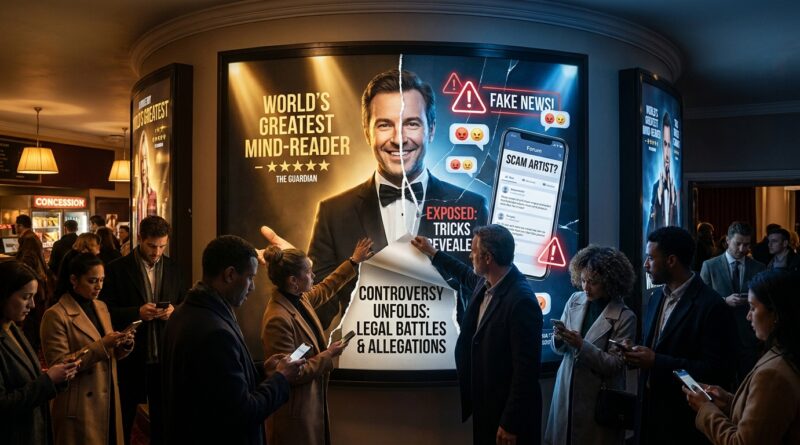
Inside 2026’s New ‘Ethics Shock Test’: How Fans Quietly Use Scandals To Re‑Rank The World’s Highest‑Rated Mentalists Overnight
You are not imagining it. One week a mentalist is being called the greatest mind reader alive, with glowing five-star reviews and sold-out clips all over social media. The next week, a Reddit thread blows up over fake science, psychic language, planted testimonials, or aggressive PR. If you are a fan, it is exhausting. You just want to know who is genuinely brilliant, who is honest about what they do, and who is quietly bending the truth to climb the rankings. That is why the best ethical mentalists 2026 reviews matter so much right now. Fans are not only rating skill anymore. They are running a kind of ethics shock test. When a scandal hits, people re-rank performers fast. Sometimes overnight. The good news is you do not need to guess. There are clear signs that help you sort strong performers from slick reputation management.
⚡ In a Hurry? Key Takeaways
- Fans in 2026 are re-ranking mentalists fast when ethics concerns surface, not just when show quality changes.
- Check how a performer describes their abilities, handles criticism, and earns reviews before trusting “world’s best” claims.
- A great live act and good ethics can exist together. You do not have to ignore red flags to enjoy mentalism.
Why reputations are flipping so quickly in 2026
The big change is speed. A few years ago, reputation shifts took months. Now a single clip, podcast, leaked promo email, or fan-made thread can change the conversation by dinner.
Mentalism is especially vulnerable because the line between performance, psychology, suggestion, hypnosis, and supernatural claims has always been blurry. Some fans love that mystery. Others feel misled when the marketing starts sounding less like theater and more like science or psychic proof.
That is the heart of the ethics shock test. People are asking a simple question. Is this performer amazing because they are skilled, or because they are selling confusion in a way that crosses a line?
What fans are actually judging now
Most review scores used to focus on entertainment. Was the show thrilling? Did the audience gasp? Did the tricks land?
Now fans are adding a second score in their heads. Call it the trust score.
1. Claims about real powers
If a performer strongly hints they have psychic gifts, supernatural insight, or medically useful mind-reading, fans react much more sharply than they used to. Even people who enjoy spooky framing are less patient when the wording feels designed to fool vulnerable viewers.
2. Fake science language
This is one of the biggest flashpoints. Watch for phrases that sound scientific but stay just vague enough to dodge scrutiny. Things like “reading micro-signals at superhuman speed” or “using advanced neuroscience to predict your thoughts” can impress casual viewers while frustrating fans who know better.
Good performers may use psychology as part of their presentation. Ethical performers are usually careful not to oversell it as proven super-ability.
3. Review inflation and shady PR
Five-star reviews are not worthless, but they need context. Fans have become much more alert to review floods, suspiciously similar wording, generic praise from new accounts, and press coverage that reads like paid promotion dressed up as independent reporting.
4. How criticism is handled
This tells you a lot. Ethical performers usually answer concerns clearly, or at least let the criticism stand without trying to bury it. The more insecure approach is to threaten critics, mass-report comments, or post vague victim language instead of addressing the issue.
How to read reviews without getting fooled
A high average score is no longer enough. You need to read reviews the way you would read product listings for a gadget with suspiciously perfect ratings.
Look for specifics, not hype
The best reviews mention concrete details. Did the performer treat volunteers respectfully? Did they make clear it was entertainment? Did audience members feel amazed without feeling manipulated?
Weak reviews are often all heat and no light. “Changed my life.” “100 percent real.” “Best on earth.” Those lines can be genuine, but they are not useful on their own.
Check the timing
If dozens of glowing reviews appear right after a controversy, be careful. That can signal a cleanup campaign. It does not prove anything by itself, but it should make you slow down.
Compare fan spaces with public platforms
Mainstream review sites often skew positive. Fan forums, Reddit threads, and long comment discussions usually give you more texture. That is often where concerns first show up.
If you want a useful companion read, Inside 2026’s New ‘Ethical Rating’ Shockwave: Why Mentalists Who Show Their Methods Are Quietly Winning The World’s Highest Reviews helps explain why audiences are rewarding more transparent performers.
The quiet split happening among top mentalists
The scene is starting to divide into two camps.
The mystery-first camp
These performers protect the aura at all costs. Some do it artfully and ethically. Others push too far, hinting that what they do is more than performance. This group can still get huge reactions, but they are also more exposed when ethics debates hit.
The transparency-first camp
These performers make the frame clearer. They may not reveal methods, but they signal that the experience is theater, influence, misdirection, showmanship, and human skill. Fans increasingly trust this camp more, especially after recent scandals.
That does not mean transparent performers are always better entertainers. It means they are less likely to trigger the kind of overnight trust collapse that sends fans back to the rankings page.
A practical ethics checklist for fans
If you are trying to sort through the best ethical mentalists 2026 reviews, use this quick filter.
Ask these five questions
1. Does the performer clearly frame the act as entertainment?
2. Do they avoid exploiting grief, illness, trauma, or spiritual belief?
3. Are their reviews varied and detailed, or suspiciously polished?
4. When challenged, do they explain, ignore, or attack?
5. Would you feel comfortable recommending them to a skeptical friend without adding a bunch of warnings?
If you answer “no” or “not sure” to several of those, pause before treating the rating as meaningful.
What a real reputation shock looks like
It usually follows a pattern.
Stage one: glowing consensus
The performer looks untouchable. Great clips. Big reactions. Impressive quotes. Lots of stars.
Stage two: a trigger event
A podcast interview, old footage, a fan exposé, or misleading ad copy gets attention.
Stage three: fan re-audit
People go back and re-read reviews. They start noticing details they overlooked before. Praise gets questioned. Old concerns resurface.
Stage four: new ranking logic
The performer may still be considered talented, but no longer “best in the world.” Fans start separating technical skill from ethical standing.
That is the key shift. In 2026, rankings are no longer just about who can blow minds. They are about who can do it without playing games with public trust.
Can you still enjoy a controversial mentalist?
Yes, but with open eyes.
You do not need to act like every problematic performer is talentless. Some are genuinely brilliant. The question is whether brilliance should outweigh misleading behavior. Different fans draw that line in different places.
The healthier approach is honesty. Say, “This person is a powerful performer, but I have concerns about how they market what they do.” That is a much more useful judgment than blind praise or total cancellation.
At a Glance: Comparison
| Feature/Aspect | Details | Verdict |
|---|---|---|
| Marketing claims | Clear entertainment framing is safer than heavy hints of psychic or scientific superpowers. | Green flag when honest. Red flag when vague on purpose. |
| Review quality | Specific, mixed, detailed reviews carry more weight than floods of generic praise. | Trust detailed feedback over raw star counts. |
| Response to criticism | Respectful answers or calm silence suggest confidence. Attacks and cleanup campaigns suggest trouble. | One of the strongest signals in 2026. |
Conclusion
Mentalism fans have had a rough few months. Great performances are being mixed with messy ethics debates, exposés, and heated arguments about manipulation, fake psychology, and misleading press. No wonder people feel torn. The good news is you do not have to give up the joy of mind-reading to keep your standards high. If you track how a performer frames their work, read reviews for detail instead of hype, and take ethics concerns seriously without rushing into mob judgment, the picture gets a lot clearer. That is how confusion turns into clarity. And it gives fans a better shared language for deciding which so-called world-class mentalists actually deserve that label in 2026.