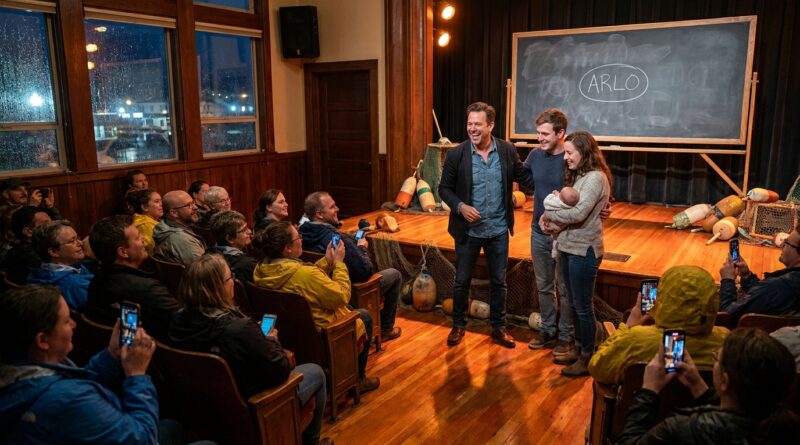
Inside 2026’s New ‘Baby Name Mind Reader’ Buzz: Why A Tiny Coastal Mentalist Show Is Quietly Pulling 5‑Star Raves From Around The World
If you have ever scrolled through page after page of magician reviews that all say “amazing,” “mind-blowing,” and “highly recommended,” you already know the problem. None of that tells you who can create the one moment people keep talking about in the car ride home. In 2026, that moment is often a hyper-personal reveal. A baby name. A first-date location. A private family memory. That is why the sudden buzz around a small coastal mentalist show matters. It was not pushed by a giant TV booking or a flashy ad campaign. It got attention because a local newspaper feature triggered a wave of detailed 5-star reviews describing one very specific kind of reaction: guests stunned that a performer appeared to know something deeply personal. For parents, party hosts, and planners, this is useful. It gives us a better way to judge baby name mentalist reviews 2026 style, based on what audiences actually remember, not generic praise.
⚡ In a Hurry? Key Takeaways
- Specific reviews beat star counts. Look for mentions of exact reveals like baby names, anniversaries, or private memories.
- Ask performers what kind of personal moments they regularly build into shows, and how those moments are handled respectfully.
- If reviews sound copied, vague, or focused only on “funny” and “on time,” you may be booking a competent act, not a memorable one.
Why this tiny show is getting real attention
The interesting part is not that a mentalist is trending. Social feeds are full of that right now. The interesting part is how this one spread.
A modest coastal performer, the kind many people outside the area had never heard of, picked up a local newspaper feature. Normally, that would be a nice little bump. Instead, it seems to have acted like a trust signal. People who had seen the show started leaving detailed reviews. Not lazy one-liners. Actual stories.
That matters because detailed reviews tend to be harder to fake and more useful to read. When several strangers describe nearly the same kind of emotional high point, you learn something. In this case, the pattern is not “good tricks.” It is “he somehow knew the baby name,” or “she revealed something personal without making it feel creepy.”
That difference is exactly why the phrase baby name mentalist reviews 2026 is getting search interest. People are tired of buying general entertainment. They want moments.
What audiences are rewarding in 2026
For years, a lot of magic and mentalism marketing leaned on big claims. TV appearances. Corporate logos. Photos with celebrities. Those things still help. But they do not always predict whether your guests will feel something.
Right now, audiences seem to be rewarding intimacy over scale.
Small reveals are beating big props
A sealed-envelope reveal of a future baby name can land harder than a stage illusion if the room knows how much that name means. It is personal. It feels impossible. And it gives guests a story they can retell in one sentence.
That last point is huge. The best viral moments are easy to explain. “He guessed our baby’s name” travels further than “there was this long routine with lights and boxes.”
Emotion is doing the heavy lifting
People remember how a performance made them feel. Surprise mixed with warmth tends to generate stronger reviews than technical skill alone. A review that says “we still talk about that moment months later” is worth more than ten reviews saying “great entertainer.”
Local credibility still matters
Oddly enough, the newspaper angle makes sense. A local feature can feel more grounded than a polished social clip. It says, “real people saw this nearby and cared enough to write about it.” In a world full of edited reaction videos, that kind of plain validation goes a long way.
How to read reviews without getting fooled
If you are booking a mentalist for a baby shower, gender reveal, family event, or private party, here is the practical part. Do not start with the star rating. Start with the nouns.
Look for concrete details
Good reviews mention specifics. They say things like:
- He revealed our chosen baby name.
- She brought up our first holiday together.
- He involved grandma without embarrassing her.
- The room went silent, then everyone lost it.
Those details tell you what kind of experience the performer actually creates.
Be careful with generic praise
“Amazing,” “professional,” and “everyone loved it” are nice. They are also useless on their own. A wedding DJ, caterer, or caricature artist could earn the same review.
If a mentalist has 200 glowing reviews but almost none mention a personal reveal, there is a decent chance the act is broad and reliable, not especially moving.
Check for repeated emotional language
When multiple reviews independently use phrases like “still talking about it,” “personal,” “chills,” “tears,” or “how did he know,” that is usually a good sign. Not because emotional words are magical, but because they point to an effect that landed hard enough to stick.
Watch for respect and boundaries
This is especially important with baby names and family topics. You want a performer who creates surprise without crossing into discomfort. The best reviews often mention that guests felt seen, not exposed.
The “baby name” moment works because it hits three buttons at once
There is a reason this type of reveal is spreading.
It is easy for guests to understand
No setup manual needed. Everybody gets why a baby name matters.
It carries emotional weight
For many parents, choosing a name is loaded with meaning, compromise, family history, and hope. A reveal tied to that choice naturally feels bigger than a random card selection.
It photographs and retells well
You get the facial reaction, the gasp, the hand-over-mouth shot. Then guests retell it later in a single clean sentence. That is perfect review fuel.
A practical checklist before you book
Here is the simple filter I would use if I were helping a friend hire a mentalist right now.
1. Ask what the signature moment is
If the answer is vague, keep digging. A strong performer can usually explain the kind of emotional peak they build toward, even if they do not reveal the method.
2. Ask whether the show can be personalized
Not every mentalist does this well. Some are excellent at stage material but weaker with family-specific reveals. Ask what sort of personal information, if any, is used and how it is handled.
3. Read the worst reviews, not just the best ones
This is often where you spot patterns. Was the performer too broad? Too cheesy? Too intrusive? Did the show feel like standard tricks instead of tailored moments?
4. Look for review depth over review volume
Twenty detailed reviews can tell you more than two hundred blurbs.
5. Ask for examples of audience reactions
Not just promo video clips. Ask what moments guests most often mention afterward. You are trying to learn what the act leaves behind in people’s memory.
What working performers should notice here
If you are a performer reading this, there is a useful business lesson in the trend.
Audiences are not only rewarding technical mystery. They are rewarding relevance. The under-the-radar acts getting traction seem to be the ones making people feel that the show happened for them, not at them.
That does not mean every act should pivot into baby-name reveals. It does mean this: if your reviews never mention a specific emotional beat, your show may be enjoyable but forgettable.
The coastal performer at the center of this buzz appears to have benefited from a simple chain reaction. A trusted local media mention brought attention. Detailed audience reviews did the real selling. The reviews worked because they described exact moments, not just competence.
Why hype grows fast when trust is already low
Part of the reason this story is getting traction is that buyers are worn out. Event planners and parents have been burned by polished websites before. Everyone says they are five-star. Everyone says they are unforgettable. After a while, those words stop meaning anything.
So when a small act suddenly gets praise that sounds human, detailed, and oddly consistent, people notice. It feels different from marketing copy because it usually is.
That does not mean every rave is proof. It means you finally have something measurable to look for. Not “Is this person popular?” but “Do real guests describe a personal reveal strong enough to retell?”
At a Glance: Comparison
| Feature/Aspect | Details | Verdict |
|---|---|---|
| Generic 5-star reviews | Lots of praise, but little about what actually happened during the show | Useful for reliability, weak for judging emotional impact |
| Detailed personal-reveal reviews | Mentions baby names, family stories, guest reactions, and how the moment felt | Best sign the act creates memorable, talk-worthy moments |
| Big-profile marketing claims | TV credits, celebrity photos, polished trailers, broad testimonials | Can signal experience, but not a guarantee of a personal connection |
Conclusion
The buzz around this coastal mentalist is not really about one performer. It is about a shift in what people now value. Social feeds are crowded with clips of mind readers naming babies, first dates, and secret memories. The smart question is no longer “Who has the flashiest promo?” It is “Whose reviews prove they create specific, emotional moments that guests remember?” That is the real use of studying baby name mentalist reviews 2026 style. It helps parents, planners, and curious readers separate hype from reality. And for performers, it offers a clear signal from the market. In 2026, intimate and personal beats loud and generic. If a review can make you picture the exact gasp in the room, you are probably looking at the real thing.