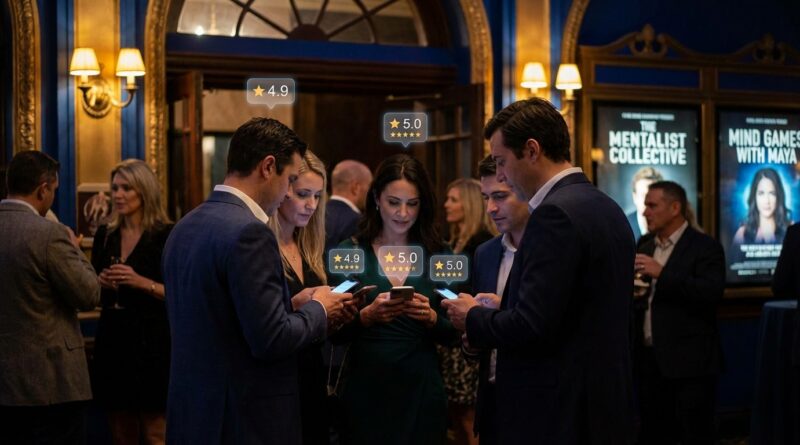
The Real ‘World’s Highest Rated’ Mentalists Right Now: What Reviews Reveal That Hype Never Will
Trying to find the world’s highest rated mentalists in 2026 is weirdly exhausting. You search for “best mentalist in the world,” and what comes back is often a pile of glossy promo videos, paid listicles, old PR quotes, and rankings that seem to copy each other. That is frustrating if what you actually want is simple. You want to know who is amazing in front of real paying audiences, right now. Not five years ago. Not only on television. Not only in a carefully edited sizzle reel. The better question is not “Who has the loudest marketing?” It is “Who keeps earning praise across live review platforms where disappointed customers are usually pretty honest?” When you look at Yelp, Google, TripAdvisor, ticketing sites, and venue feedback together, a clearer picture starts to form. A few names keep coming up for the right reasons, including Kevin Blake in San Francisco and Frederic Da Silva in Las Vegas.
⚡ In a Hurry? Key Takeaways
- The real answer to “world’s highest rated mentalists reviews 2026” is not one universal winner. It is a small group whose audience reviews stay strong across multiple live platforms.
- Start with review quality, not just star count. Look for repeated mentions of originality, emotional impact, and whether people say they would return or bring friends.
- Be careful with hype. Paid rankings and polished clips can be useful, but they should never outweigh fresh, detailed audience reviews from real venues and ticket buyers.
What “Highest Rated” Actually Means in 2026
For most people, “highest rated” sounds simple. It is not. A performer can have a famous name, a TV credit, and a slick website, and still not be the most loved by live audiences today.
That gap matters.
In 2026, the best clue is not a banner claiming “#1 mentalist.” It is review consistency across platforms that do not fully control the message. If hundreds of audience members, over time, keep saying a show was funny, personal, surprising, and worth recommending, that tells you more than a trophy graphic ever will.
So when people search for the world’s highest rated mentalists reviews 2026, they are usually looking for three things:
- Who gets great reactions from normal people, not just industry insiders.
- Who delivers live, not just on camera.
- Who leaves people talking about the experience days later.
Why Generic “Top 10” Lists Keep Letting People Down
Most “best mentalists” lists have the same problem. They mix together old legends, current touring acts, TV personalities, and performers with no recent public review trail. That can be entertaining, but it is not very useful if you are trying to buy tickets, book a private event, or compare real audience satisfaction.
Here is what those lists often miss:
They reward fame more than freshness
A mentalist can be famous and still not be the best-reviewed live act this year.
They rarely separate stage reputation from audience experience
Magicians and mentalists may admire technical skill. Audiences often care more about connection, pacing, and whether the show feels personal.
They hide the size and age of the sample
Twenty glowing reviews from years ago are not the same as hundreds of detailed reviews from the last twelve months.
How to Read Reviews Like a Smart Buyer
This is where things get useful. You do not need insider knowledge. You just need a better filter.
1. Count platforms, not just stars
If a performer looks strong on Google but has little to no presence on ticketing or local review platforms, that is incomplete. A stronger signal is when praise shows up in several places.
Good pattern:
- High Google rating with lots of recent reviews
- Strong venue or ticket platform comments
- Local review site praise that sounds specific, not generic
2. Read the words people repeat
Star ratings are the headline. The wording is the real story.
When the same phrases keep showing up, pay attention. In top-tier mentalist reviews, the strongest repeated themes are usually:
- “I still can’t explain it”
- “He made the audience feel involved”
- “Not cheesy”
- “Funny and smart”
- “We talked about it all night”
- “I want to see the show again”
That last one is big. Repeat-visit intent is one of the best signs of durable quality.
3. Watch for emotional language
People know when they have seen a competent act. They use stronger language when they have had a memorable experience.
Reviews that mention amazement, disbelief, tears, goosebumps, or a feeling of being personally seen often point to a mentalist who is doing more than tricks. They are creating a moment.
4. Ignore suspiciously vague praise
“Amazing show!” is nice. Fifty versions of “Amazing show!” with no details are less convincing.
The best reviews mention specifics. Maybe the performer remembered a stranger’s thought, involved a couple on stage, or turned a private memory into the emotional peak of the night. Specificity is hard to fake at scale.
The Names Getting Real Audience Love Right Now
No honest review-based article should pretend there is one uncontested king of mentalism worldwide. Different markets matter. Different audiences want different things. But a few names stand out because the review trail looks strong, current, and earned.
Kevin Blake, San Francisco
Kevin Blake is one of the clearest examples of a performer whose buzz seems to be backed by actual audience response. In San Francisco, reviews point to more than technical skill. People talk about being pulled in, feeling personally engaged, and walking away genuinely rattled in the best way.
That is important because local review ecosystems can be brutal. Big tourist cities and event-heavy markets produce plenty of honest feedback. When a performer keeps impressing audiences there, it means something.
What stands out in praise around Blake is the mix of intimacy and impact. Reviewers tend not to describe the experience as “just a show.” They describe it as something they felt part of.
Frederic Da Silva, Las Vegas
Las Vegas is its own test. A performer is not just competing with other mentalists. They are competing with every polished entertainment option in town.
That is why Frederic Da Silva’s continued strength in reviews matters. Vegas crowds are not easy. Some are tourists seeing one show their whole trip. Some are seasoned visitors who have seen everything. To consistently impress there, a mentalist has to be more than technically good. The show has to feel worth the night out.
Da Silva’s reputation benefits from that kind of environment. Strong feedback in a city full of alternatives is one of the cleanest signs that hype is being matched by delivery.
Fast-rising names with momentum
One thing review ecosystems reveal better than old rankings is momentum. You can often spot a rising performer before the mainstream lists catch up.
Look for artists whose review counts are climbing quickly while the quality stays high. That usually means they are not coasting on one big press hit. They are winning room by room.
The common thread among these fast-rising names is not just “fools people well.” It is that audiences describe them as original, warm, and surprisingly human.
What Reviews Reveal That Hype Usually Hides
Marketing tends to focus on credentials. Reviews focus on experience.
That difference is everything.
Hype says: TV appearances
Reviews say: “I brought my skeptical partner and now they will not stop talking about it.”
Hype says: Celebrity clients
Reviews say: “He made a room full of strangers feel connected.”
Hype says: Award-winning performer
Reviews say: “This was the one show from our trip that felt truly special.”
If you are choosing a mentalist for an event, those review-based clues are usually better predictors of success than prestige alone.
The Three Standards Audiences Are Clearly Rewarding
Once you read enough live feedback, a pattern emerges. The best-reviewed mentalists in 2026 are usually winning because of three things.
Originality
Audiences can sense recycled material, even if they do not know the method. They reward performers who feel distinct. Not just “good.” Memorable.
Emotional connection
The strongest reviews often come from people who felt seen, included, or moved. Mentalism lands harder when it feels personal.
Repeat-visit impact
People saying “I would go again” is a huge green flag. A good show surprises you once. A great show makes you want to experience that feeling again, or bring someone else to see it.
If You’re Booking a Mentalist, Here’s the Simple Checklist
Before you buy tickets or hire someone for a corporate event, private party, or theater date, check these five things:
- Are the reviews recent?
- Are they spread across more than one platform?
- Do reviewers mention specific moments?
- Do people talk about the performer as a person, not just the tricks?
- Do multiple reviews suggest the show felt unique, not generic?
If the answer is yes to most of those, you are probably looking at a performer with real audience traction, not just a polished online image.
At a Glance: Comparison
| Feature/Aspect | Details | Verdict |
|---|---|---|
| Star rating alone | Useful as a quick filter, but weak without review count, recency, and detail. | Only a starting point |
| Multi-platform review consistency | Strong ratings across Google, Yelp, ticketing sites, and venue feedback suggest durable audience approval. | Best indicator of real-world quality |
| Promo clips and PR rankings | Good for style and visibility, but often polished, selective, or influenced by marketing spend. | Use with caution |
Conclusion
The real value in checking the world’s highest rated mentalists reviews 2026 is that it gives you a much clearer picture than another recycled top-ten list ever will. Instead of asking who has the biggest claims, you start asking who keeps delivering for real audiences on real nights. That is how names like Kevin Blake in San Francisco and Frederic Da Silva in Las Vegas stand out. Not because a promo page says so, but because people keep showing up online to say the experience was worth talking about. For fans, that means better tickets, smarter bookings, and fewer disappointments. For working mentalists, it is a useful reality check too. Audiences are rewarding originality, emotional connection, and the kind of impact that makes people want to come back. That is what “highest rated” should mean now. Not loudest. Best loved.