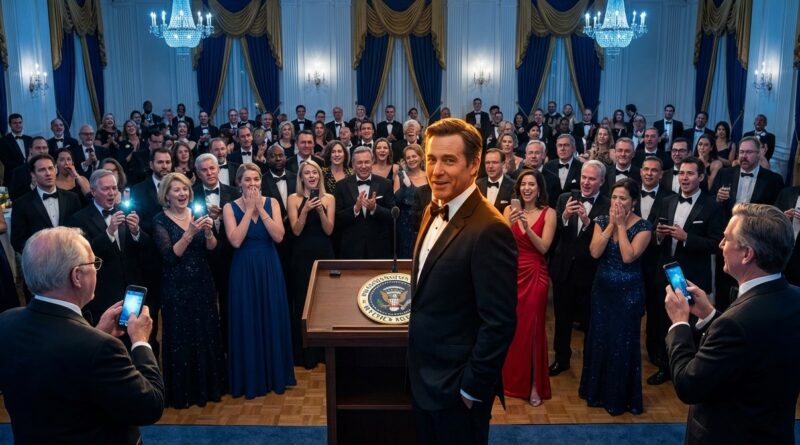
Inside Today’s ‘Oz Pearlman Problem’: Why The World’s Most Visible Mentalist Is Quietly Forcing A Rethink Of 5‑Star Mind Reading
A lot of mentalists are tired right now. Every time Oz Pearlman lands another giant mainstream spot, especially something as high profile as the Oz Pearlman White House Correspondents Dinner mentalist conversation, the reaction splits in two. One side says he is saving the art. The other says he is flattening it into polished TV bait. Neither side is fully wrong, and neither is especially helpful on its own. What working performers and serious fans actually need is a calm read of what this moment means. Pearlman is not just having a hot streak. He is becoming the public template for what “mind reading” looks like at the luxury, celebrity, five star level. That changes how buyers book talent, how audiences review shows, and how younger performers think they need to present themselves. If you care about the craft, this is bigger than whether you personally like his style.
⚡ In a Hurry? Key Takeaways
- Oz Pearlman’s mainstream rise matters because it is reshaping public expectations of what a top mentalist should look and feel like.
- If you discuss his work, separate method, ethics, editing, and showmanship. That keeps the conversation fair and useful.
- The real value here is perspective. Hype and backlash both miss how one star can affect bookings, reviews, and the next wave of performers.
Why this story has people so worked up
The White House Correspondents’ Dinner is not just another corporate gig with better table settings. It is a symbol booking. It says the performer is safe for a high pressure room, fast on their feet, camera ready, and trusted around people who are used to top shelf entertainment.
That matters because mentalism has always had a strange public position. Audiences love it, but many buyers still struggle to sort the serious pros from the flashy pretenders. A booking like this cuts through that confusion in one stroke. To the outside world, it signals elite status.
So when people search for an Oz Pearlman White House Correspondents Dinner mentalist breakdown, they are not just asking, “Was he good?” They are asking a bigger question. “Is this what modern mind reading is now?”
What Oz Pearlman is actually changing
1. He is setting the five star standard for presentation
Pearlman’s biggest impact may not be any single effect. It is the total package. He is polished, fast, well dressed, camera fluent, and easy for mainstream outlets to explain in one sentence. That sounds simple, but it is rare.
A lot of gifted mentalists can fry a room of 80 magicians and still lose a TV producer in the first 20 seconds. Pearlman understands the opposite skill. He knows how to make impressive things look clean, social, and easy to book.
That is huge for five star events. Luxury buyers are not only purchasing astonishment. They are purchasing confidence. They want someone who can mingle with executives, celebrities, political figures, and skeptical guests without making the room feel awkward or weird.
2. He is changing what audiences think “real” looks like
This is where the temperature rises. The more visible one mentalist becomes, the more the audience uses him as the baseline. That affects everyone else.
If viewers mostly see highly polished clips, quick reactions, and famous faces, they may start to think great mentalism should always be immediate, impossible, and socially smooth. That is not always how live performance works. Some mentalism is slower. Some is darker. Some is more theatrical. Some is more playful.
Once one style becomes the public default, other styles can look “wrong” to newcomers even when they are excellent.
3. He is pushing reviews toward surface signals
Mainstream visibility also changes how people write and talk about the craft. Instead of asking whether a performer built tension, handled volunteers well, or shaped a believable premise, reviews often collapse into two lazy buckets. “He fooled me, so he is amazing.” Or, “It must be a trick, so he is overrated.”
That is bad for the art. Mentalism is not judged well if the only scale is whether someone on TikTok felt personally annihilated.
The part critics get wrong
Some criticism of Pearlman is fair. Any widely seen performer should face real analysis. But a lot of online criticism cheats. It treats popularity itself as evidence of artistic compromise.
That is too easy.
Mainstream success usually requires discipline that many insiders underestimate. You need material that reads quickly, pacing that works for mixed crowds, a persona that does not scare off planners, and consistency under brutal conditions. That does not mean every choice is artistically pure. It does mean the job is harder than sniping from the sidelines suggests.
There is also a bad habit in magic and mentalism circles where people confuse “I know methods exist” with “therefore this performer is not special.” That is like saying a great chef is overrated because knives are common.
The part fans get wrong
On the other hand, pure hero worship is just as unhelpful. It can make honest discussion feel taboo. If every question about editing, framing, stooging policies, or ethical claims gets treated as jealousy, then the community loses the ability to think clearly.
Good analysis should be able to hold two ideas at once. Pearlman can be extremely skilled, commercially important, and healthy for public interest in mentalism. He can also raise tricky questions about what audiences think they are seeing, especially when television, podcast clips, and social media compress context.
That is not an attack. It is basic grown up criticism.
How to talk about his work without tearing the art down
Separate method from effect
You do not need to expose anything to speak intelligently. Just describe the audience experience first. Did it feel direct? Personal? Fast? Fair? Did the volunteer seem comfortable? Did the reveal land emotionally or only logically?
That tells you more than a smug “I know how that’s done” ever will.
Separate ethics from dislike
Not every stylistic complaint is an ethical issue. If someone says, “I prefer a more mysterious or theatrical performer,” fine. If they say, “This claim crosses a line because audiences may take it literally,” that is a different conversation.
Mixing the two leads nowhere.
Separate editing from live ability
TV and online clips are built differently from ballroom sets or private event walk around. A performer can be excellent live and still benefit from smart editing. Both things can be true. If you are reviewing fairly, say which environment you are judging.
What this means for working mentalists
Clients will compare you to the version of mentalism they already know
This is the practical part. When one performer becomes the famous face of the category, everyone else inherits the comparison. That can help you or hurt you.
If your style is sharp, corporate friendly, and interactive, Pearlman’s rise may make buyers more comfortable booking you. They now understand what “mentalist” can mean at a premium level.
If your style is slower, stranger, or more theatrical, you may need stronger language to explain your difference. Not apology. Framing.
For example, do not say, “I’m not like the TV guys.” Say, “My show is designed more like a live psychological theater experience than a fast cocktail party demonstration.” Same truth. Better positioning.
Ticket buyers may expect impossible pacing
Viral clips train people to expect every moment to hit fast. That is rough on live performers. Real rooms breathe differently. Volunteers hesitate. Humor takes time. Suspense takes time.
So the lesson is not “copy the clip style.” It is “understand why the clip style works, then build live structure that gives audiences enough movement and enough payoff.”
Professionalism is now part of the magic
One thing Pearlman’s run makes painfully clear is that top level success in mentalism is not only about methods. It is about trust, polish, stamina, and clarity. For younger performers, that may be the most useful takeaway of all.
Being mysterious is not enough. Being brilliant in a back room is not enough. If you want elite bookings, the show has to be bookable.
What this means for newcomers who just discovered him
If Oz Pearlman is your entry point into mentalism, that is not a bad thing at all. The key is not to assume he represents the whole art.
He represents one very successful branch of it. A mainstream, elegant, socially fluid branch. There are other branches too. Psychological illusion. theatrical mentalism. bizarre performance. comedy mentalism. intimate close up work that feels almost literary.
So enjoy the polished version, but stay curious. The craft is much bigger than one star, even a very visible one.
The quiet rethink happening inside the craft
This is the real story under the noise. Pearlman is quietly forcing a rethink of what counts as top tier mind reading in public view.
For years, many insiders judged greatness mostly through fooling power, technical subtlety, and underground respect. Those still matter. But mainstream success adds another test. Can the act travel across TV, podcasts, political rooms, celebrity spaces, and luxury events without losing its identity?
That is a different kind of excellence. Not better in every way. But very real.
The smart response is not to crown him the final form of mentalism or dismiss him as overmarketed. It is to admit that he has exposed a gap between what insiders reward and what the world actually books, shares, and remembers.
How the community can respond better right now
Start with better language. Instead of “fraud” or “genius,” try terms that actually help.
- Commercially excellent
- Strong at mainstream framing
- Built for mixed rooms
- Ethically conservative or ethically aggressive
- Clip friendly but not necessarily stage defining
- Emotionally strong, technically simple
- Technically rich, less broad in appeal
That kind of language lets people disagree without turning every conversation into a loyalty test.
At a Glance: Comparison
| Feature/Aspect | Details | Verdict |
|---|---|---|
| Mainstream visibility | White House Correspondents’ Dinner and viral media spots make Pearlman the public face of premium mentalism. | Good for awareness, but it narrows public expectations. |
| Impact on working performers | Clients now have a clearer reference point for what a “high end mentalist” looks like, which helps some acts and pressures others. | Useful if you position yourself well. |
| Effect on criticism | Discussion often slides into hype or hostility instead of separating showmanship, ethics, and media framing. | The craft needs more precise, calmer analysis. |
Conclusion
The Pearlman moment matters because it is not just about one performer getting big applause in big rooms. It is about what happens when one very visible mentalist starts defining the category for everybody else. That affects ticket sales, buyer expectations, review language, and the next generation of performers deciding what kind of mind reader they want to be. Right now, when the conversation is peaking, the most useful thing the community can do is stay nuanced. You do not have to fawn. You do not have to sneer. You can say that Oz Pearlman has achieved something rare, that his success is changing the market, and that the craft still needs thoughtful discussion about ethics, method, framing, and style. That kind of grounded talk helps newcomers learn faster and helps working pros respond with clarity instead of panic. And honestly, the art will be healthier for it.